
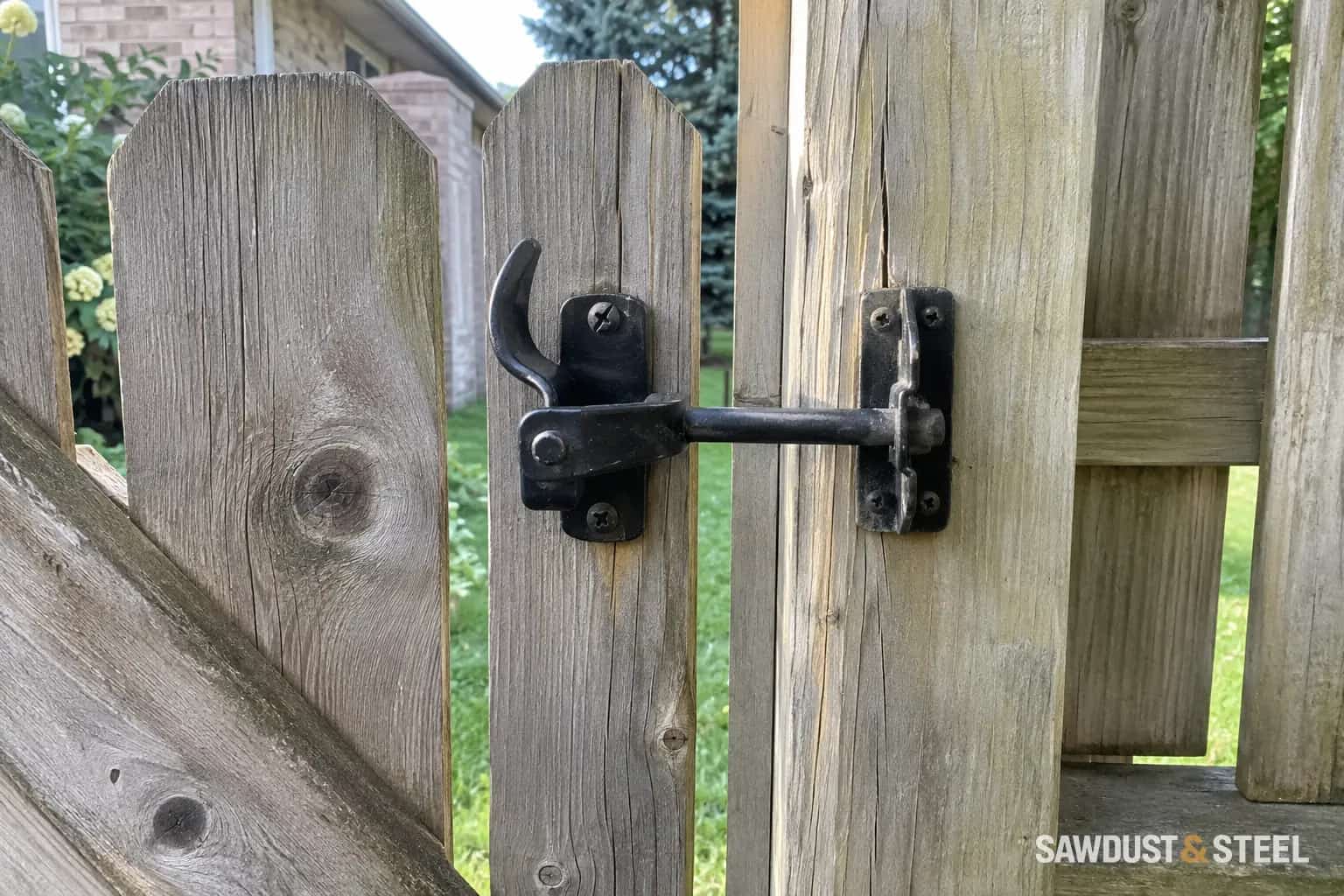
Map the crack before hiding it
Photograph the dry board with a ruler alongside the crack and note whether it runs from the end, crosses a fastener or appears on both faces. Do not pry it open to measure depth. Check whether the piece is a decorative cap, an infill board, a rail or part of a structural support. The same visible line has different consequences in each location.
Decorative surface
Assess appearance, splinters and water exposure.
Fastener line
Check whether the connection still bears on sound wood.
Structural support
Get the member and repair assessed before altering it.
Pay attention to fasteners and ends
Cracks near the end of a board may leave a fastener holding a small separated strip of wood. Tightening the screw harder can worsen that separation. A repair needs adequate sound material and the correct fastening pattern, not simply a longer screw driven wherever it reaches. On a gate, note whether the crack changes when the leaf moves; movement at the joint needs attention.
If the split sits beside rusted hardware, investigate Orange Stains Around Outdoor Screws as well as the wood.
Choose replacement when the connection is compromised
For a damaged replaceable trim piece, replacement may give a cleaner result than a large filler patch exposed to weather. For a split connection or structural member, have the repair specified before removing fasteners or cutting anything. Finish-compatible end treatment can be part of new work, but it does not restore lost strength. Keep comparison photos if a sound nonstructural check is being monitored.
Real Cedar identifies end spacing, edge spacing, moisture and service conditions as factors in mechanically fastened joints; a crack at a connection should not be judged by width alone. Real Cedar: outdoor fasteners.
Before you finish
- Record location and board function.
- Avoid tightening a split closed by force.
- Do not hide a moving crack under filler.