Sawdust & Steel
framing & structural

Framing & structural work.

Load-bearing walls, beams, room additions, and the structural repairs that the rest of the renovation has to land on. Engineer-stamped on every job.

Walls, beams, posts, and everything that carries a load. This is the work that has to be right the first time, because nothing finished can go on top of framing you're not sure about. The drywall, the trim, the floors — they all sit on whatever the framer left behind.

plain english

What structural work actually is.

Structural work is what holds the rest of the house up. Floor joists carry your furniture, the walls carry the floor above, the beams carry the walls when there shouldn't be a wall, and the foundation carries everything.

When something is wrong with the bones — a sistered joist that wasn't bolted, a beam that's undersized, a header missing on a window — the rest of the house finds out eventually. Usually as a sloping floor.

Most renovation surprises end up in a structural conversation. Knob-and-tube wiring inside a wall we wanted to remove. A floor that's not actually level because the joists below it have crowned and there's no blocking. A previous renovation that opened a wall without spec'ing a new beam.

Half our framing work isn't new builds — it's pulling the surprise back into spec, getting the engineer to sign off on the fix, and then handing the rest of the renovation a clean substrate to land on.

Richmond Hill · load-bearing wall removal

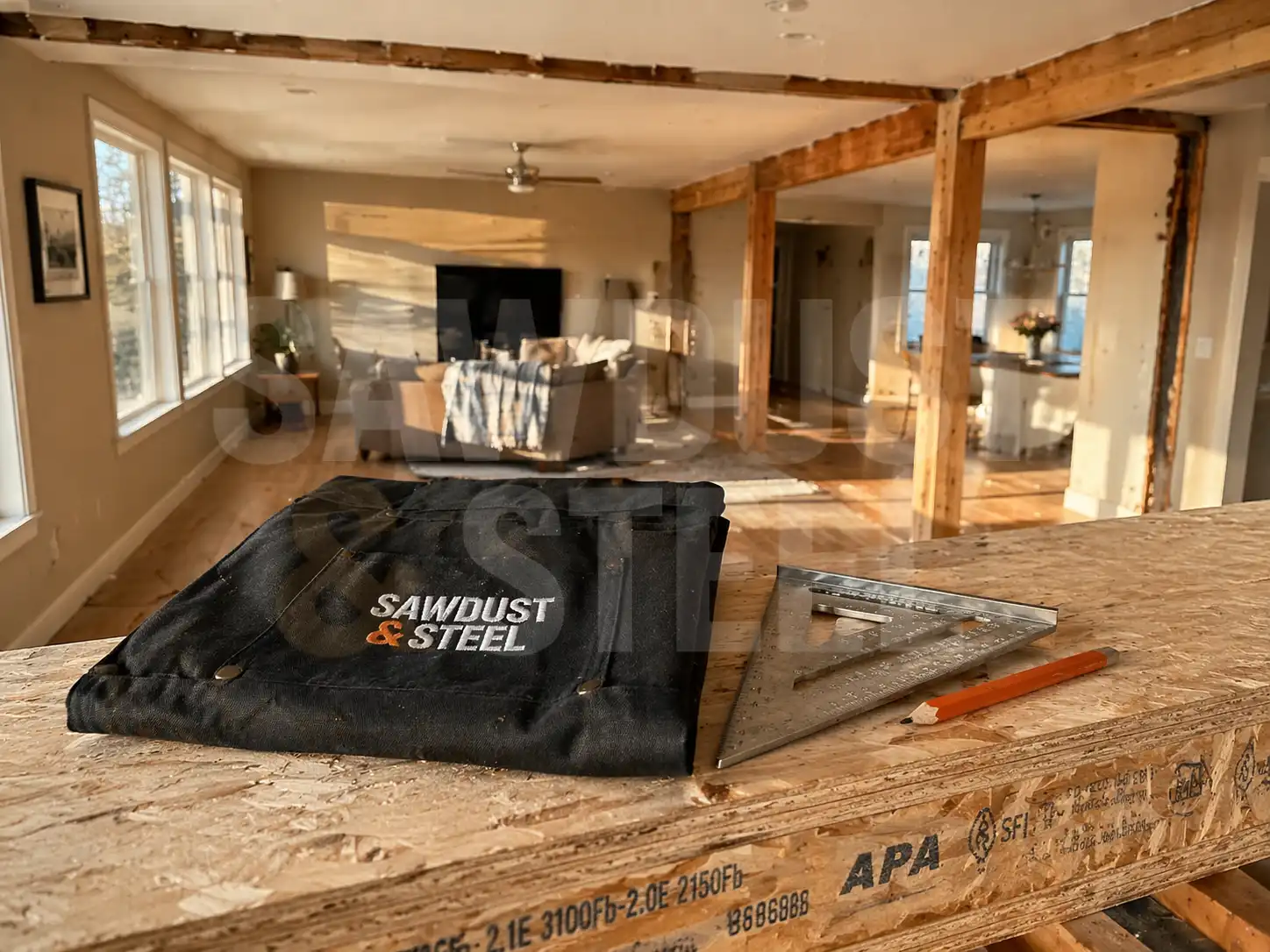
Twenty feet of LVL, two posts, one open kitchen.

Open-concept kitchen with exposed LVL beam and steel post after wall removal
  • Beam20-ft LVL, 3 plies, glued and bolted — engineer-stamped.
  • PostsLVL posts at each end, stacked over a doubled bottom plate.
  • DropBeam soffit dropped 2.5" below ceiling, wrapped in painted MDF.
  • PermitPulled, scheduled, inspected, and closed before drywall.

The Liu family in Richmond Hill wanted the kitchen open to the dining room. They'd lived with the wall for twelve years and finally couldn't stand it.

The wall was load-bearing — bearing point for half the floor joists upstairs and a portion of the roof — so removing it was a structural job, not a demo job.

We brought in our structural engineer (we've worked with the same PEng for five years; she reviews every load-bearing modification we touch). She specced a 20-foot LVL beam in three plies, glued and bolted, carried at each end on stacked LVL posts that landed on a doubled bottom plate over a section of the foundation we confirmed was bearing.

The beam needed to drop two and a half inches below the existing ceiling, which the family agreed to in advance — wrapping the beam in painted MDF made it read like an intentional architectural element rather than a structural compromise.

Day one we built two temporary walls on opposite sides of the wall to remove, perpendicular to the joists, with double bottom plates and screw jacks at each stud — overkill, on purpose, because temporary walls don't get inspected.

Day two we cut the wall studs free of the joists with a recip saw and pulled them. Day three the LVL went in: three plies craned through a window, lifted into place by four guys, supported on the temporary walls until the posts were bolted in. The temp walls came down on day four, after the engineer signed off in person.

The kitchen has been open eight months now. The floor above is exactly where it was the day we started. The Lius eat dinner facing the kitchen instead of facing a wall, which was the entire point.

We got an open kitchen and a beam I forget is even there.

Wei L., Richmond Hill
beforeafterLVL
the load path

Where the load goes when the wall comes out.

A load-bearing wall is just a long, distributed bearing point. When you remove it you have to replace it with something that takes the same load and routes it to the same places — the foundation. An LVL beam carried by two posts at each end does that: the posts pick up the load that the wall used to carry, route it down to a doubled bottom plate, and from there to the foundation below. The diagram on the left is the simplest version. Real jobs have more detail — bearing plates, hold-downs, sometimes a pad footing under the post — but the idea is the same.

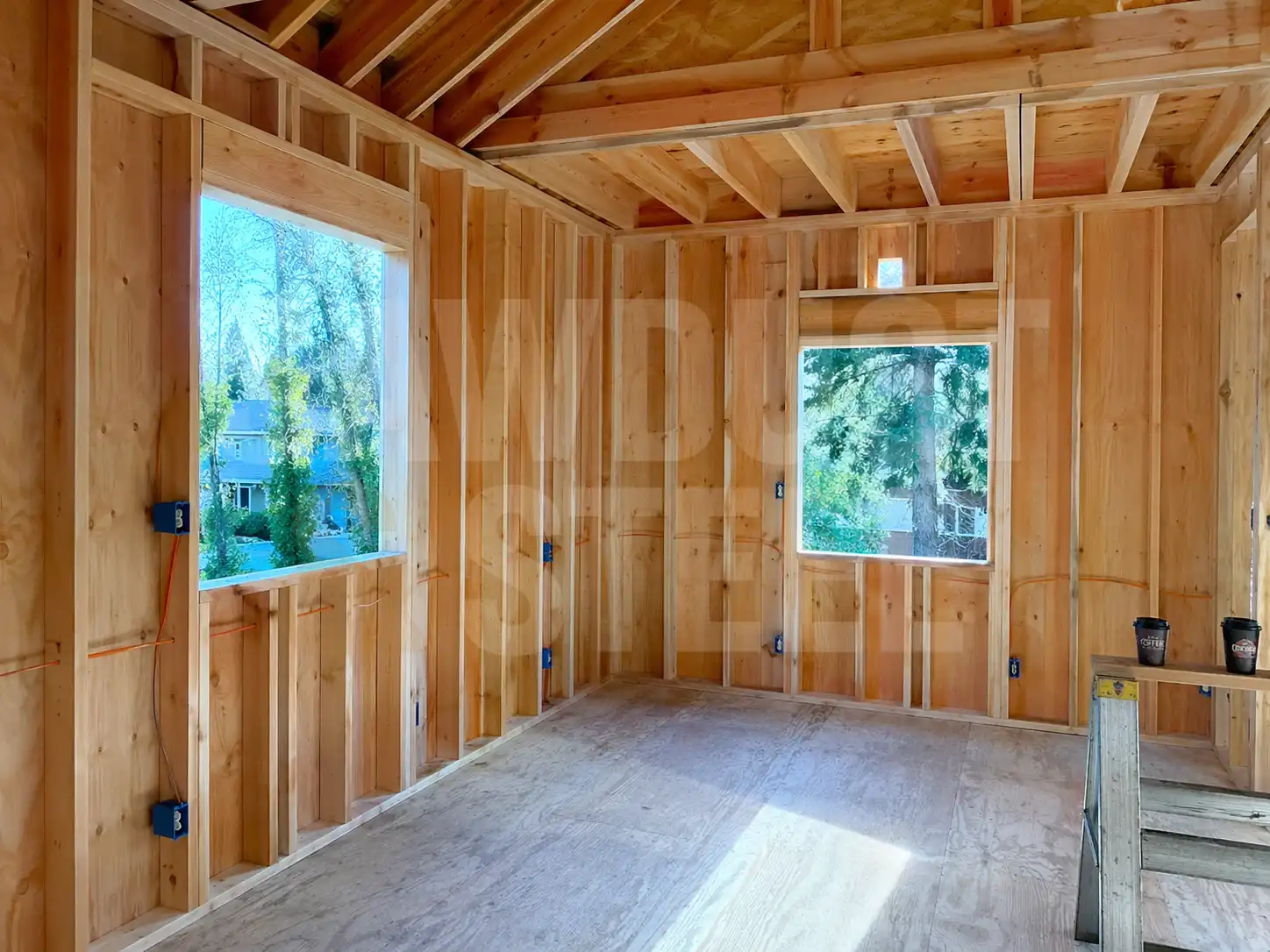
Interior wall studs with window openings during framing stage
the temporary walls

How we hold the roof up while we swap a wall for a beam.

Temporary walls are studs nailed top and bottom to long horizontal plates, run perpendicular to the joists above the wall we're removing. We put them on both sides — six to eight feet back — and add screw jacks under each stud to dial out any deflection. They look overbuilt because they are: temporary walls don't get inspected, so we make them obviously stronger than they need to be. They come down once the LVL is bolted in and the posts are doing their job.

recent framing

Framing and structural jobs across the GTA.

scope

What we handle on a structural job.

New construction framing, load-bearing wall removals, structural repairs after water damage, beam and post installs, room additions and second-storey adds, garage conversions to living space, basement underpinning coordination, full demo and rebuild scopes, sistering joists, blocking, and any small structural fix that the previous contractor didn't take seriously enough.

working with the engineer

Five years, one PEng, every drawing stamped.

Every load-bearing modification we touch goes through a structural engineer before we cut anything. We've worked with the same PEng for five years — long enough that she knows what we'll ask for and how we build, and we know what shapes of fix she'll sign off on before we propose them.

She reviews the existing framing in person on jobs over a certain scope, marks up our beam and post specs, and stamps the drawings before we pull the permit.

On smaller fixes — a header to size, a window opening to enlarge, a beam to replace — we send her photos and existing dimensions and get a marked-up sketch back inside two days. The cost of an engineer review is small enough on most jobs that it's never the reason a homeowner says no.

The cost of skipping one is finding out three years later that the floor above is sagging.

On site we use a laser distance measurer for spans and bearing locations, a moisture meter on every sill plate before sistering, and screw jacks under every temporary wall stud so we can dial out any deflection before we cut.

questions & answers

Things homeowners ask.

  • Yes, this is one of the most common structural jobs we do across the GTA. We bring in a structural engineer to spec the beam and posts, pull a permit, build temporary walls to carry the load during the swap, install the beam, and pass inspection. Most jobs run 4–7 days from temporary walls up to inspection signed off.

Want one of these for your house?

Tell us about your framing & structural workproject. We’ll come out, walk the space, and send a line-item quote within three days. No sales pitch.