
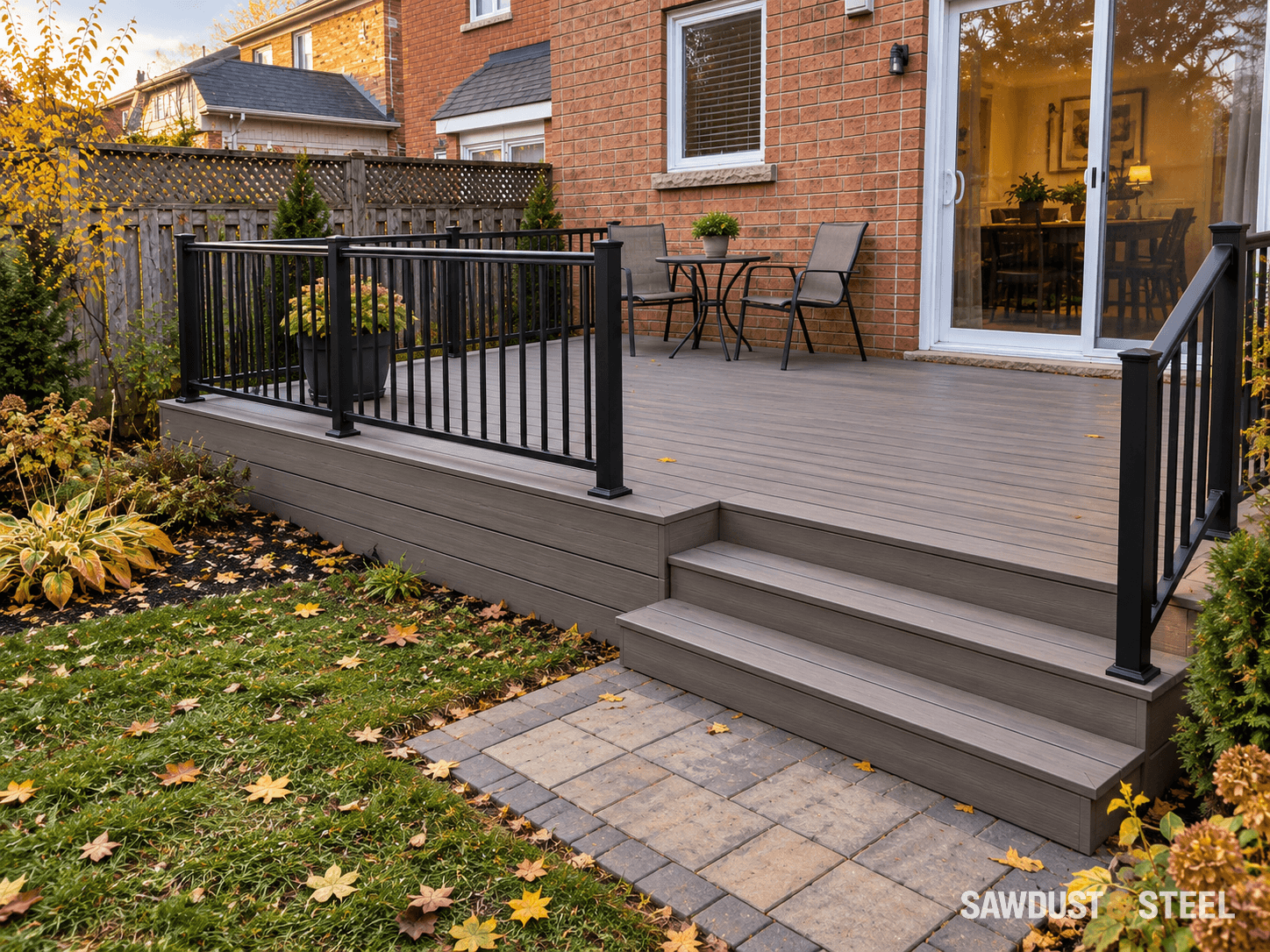
Decks & outdoor living6 min read
Ontario Deck Permit Rules 2026: Do You Need One?
The 60 cm rule is useful, but it is not the whole answer. Here is the short permit check to do before concrete, lumber, or optimism arrives.
Read the guide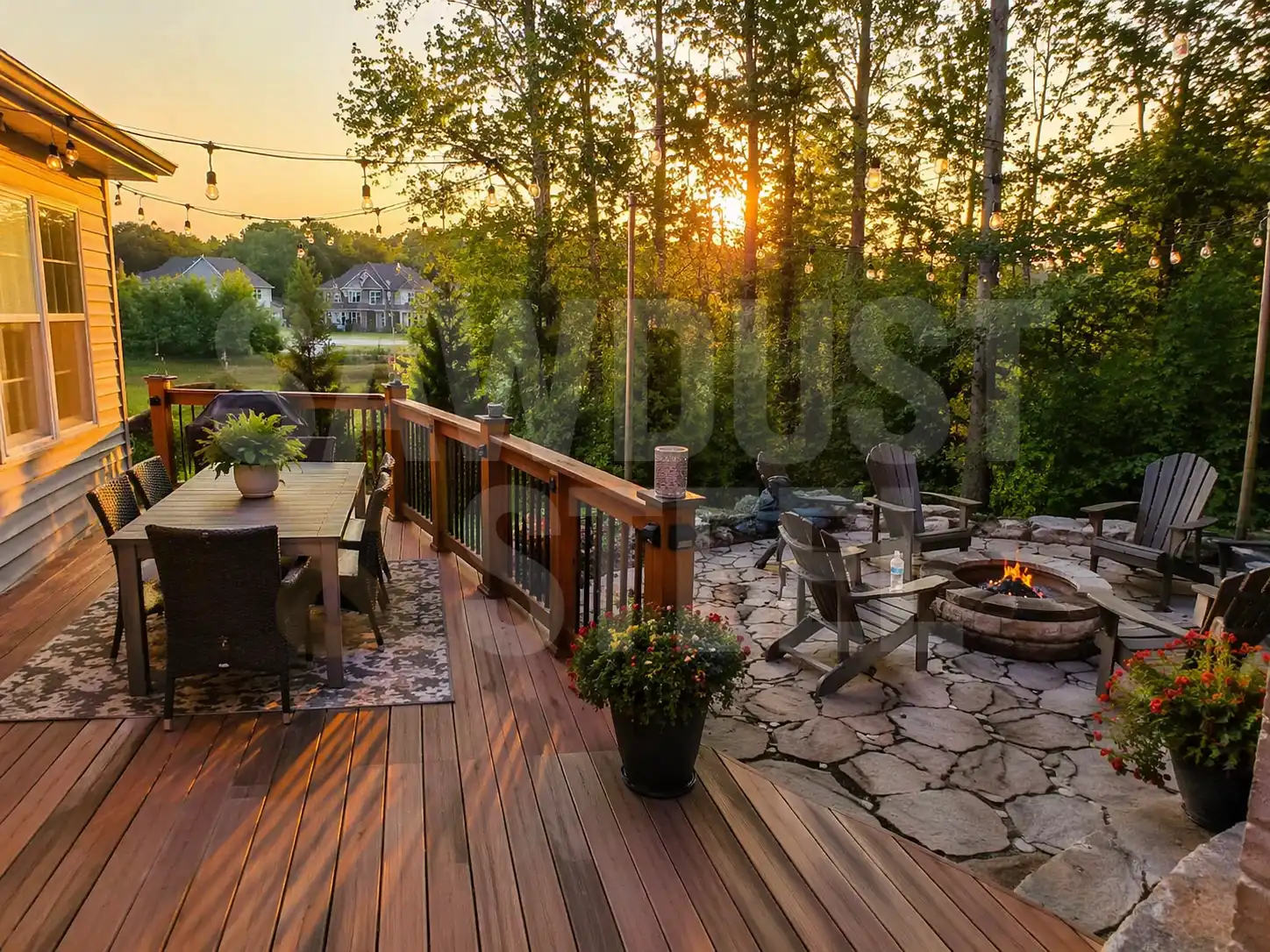
Room for dinner. Room to put your feet up. Cedar, composite, and pressure-treated decks shaped around your yard.
Start with how you want to use the yard: a table near the kitchen, space for a grill, a quiet seat, or an easier route to the garden. We build cedar, composite, and pressure-treated decks with the structure, drainage, stairs, and railings planned together. Compare decking materials and the items that shape a deck quote before choosing the finish.
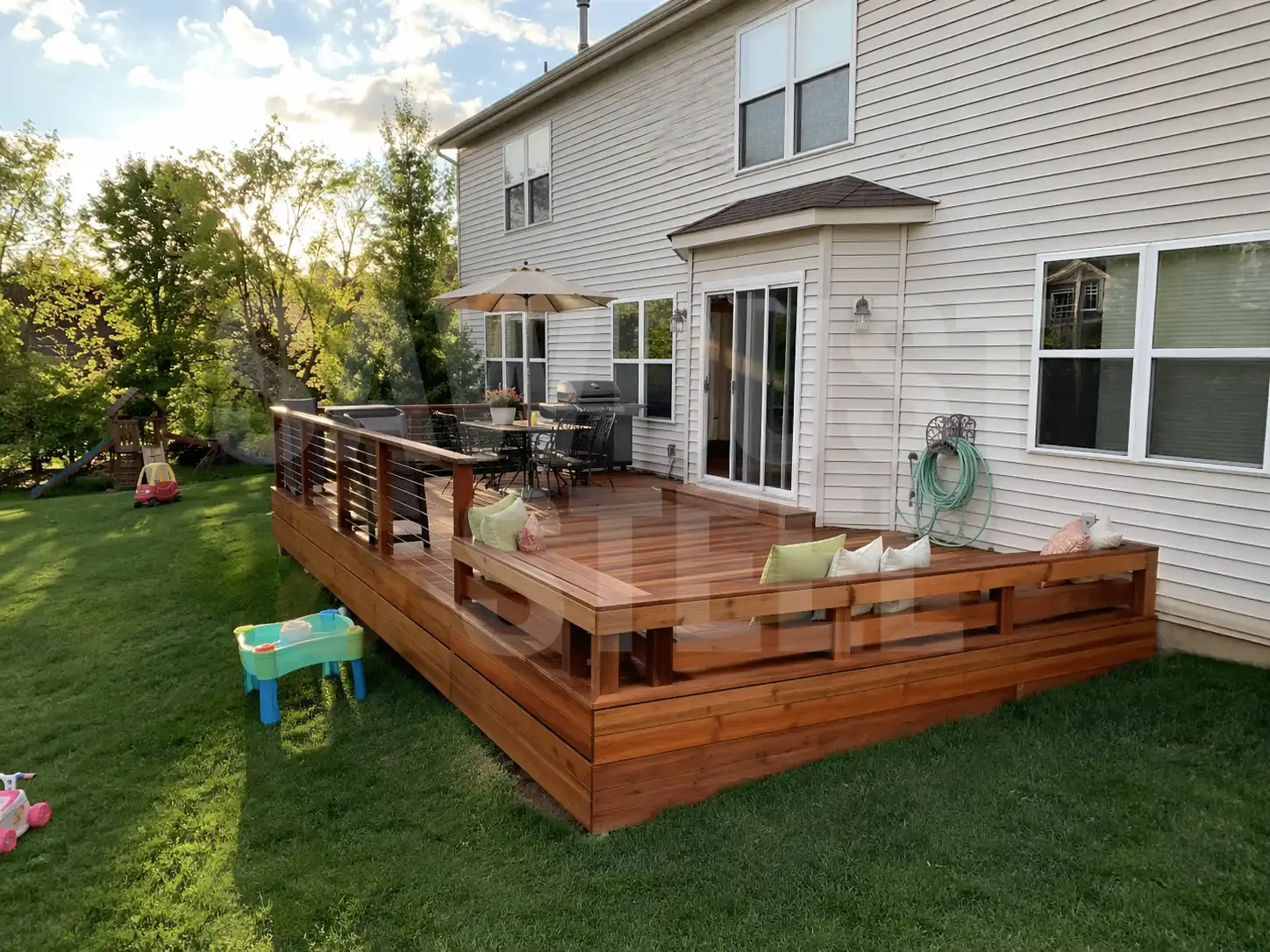
Nora and Ben thought the old deck needed new boards. The surface looked tired, but the loose rail and a dropping corner made the framing and foundations the first conversation. The rebuild scope followed that assessment rather than starting with a colour sample.
Their wish list was simple: dinner outside, somewhere for herbs, and stairs that did not land in the wettest part of the garden. The first layout looked generous until they put six chairs around the table and pulled them out. The path to the stairs disappeared.
The second plan shifted the stair and traded a decorative corner for usable floor space. They chose cedar after comparing its feel with the upkeep it would need. Ben wanted the wood to stay brown; Nora liked the idea of letting it weather. That debate lasted longer than the railing decision.
On the finished layout, people could get up from dinner without asking half the table to move. The herb pots ended up by the kitchen door, where someone might actually remember to water them.
“We use the whole deck now. Before, we mostly used the bit that was easiest to get to.”
The footing system has to suit the soil, loads, access, and accepted design. Helical piles and concrete foundations each have useful applications. Ask how frost effects and bearing capacity will be addressed, and what installation records and inspections are included.
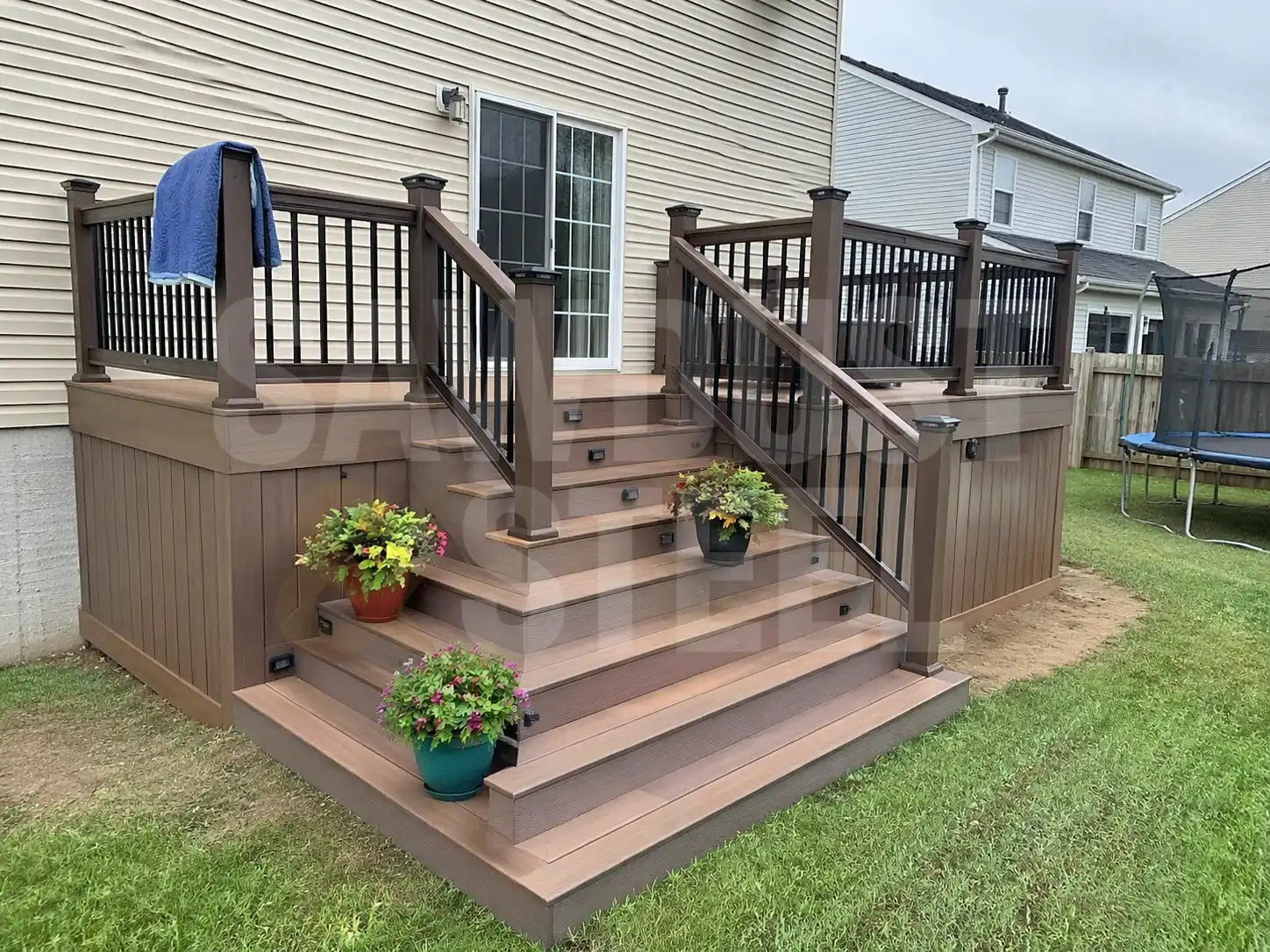
Connections deserve the same attention as the boards you can see. Specify fasteners and connectors that suit the treated wood, exposure, and manufacturer requirements. Stainless and hot-dip galvanized systems have different applications; mixing components without checking compatibility can create problems.
Cedar and composite decks, pressure-treated platforms, raised and multi-level layouts, porches, pergolas, benches, stairs, and railings. Repairs can include damaged boards or local framing, provided the remaining structure is suitable. Send photos of the whole deck and the area of concern so we can discuss repair versus replacement.
Start with a measured footprint, doors, stairs, furniture, and the route into the yard. Walk the proposed layout on the ground. A chair pulled out from the table takes more space than a chair neatly tucked in.
Then settle the structure, drainage, materials, and required approvals. Bring wide photos and approximate dimensions with your inquiry; the site review can confirm the details.
Cedar offers natural grain and a wood surface that can be refinished. Composite reduces periodic staining but still needs cleaning, correct installation, and attention to heat and traction. Compare samples, upkeep, and complete installed quotes.
The better option depends on soil, access, loads, obstructions, and the accepted foundation design. Ask how bearing capacity, frost effects, installation records, and inspections will be addressed for your site.
It depends on the municipality, height, attachment, size, and other features. Confirm the current local requirements before construction and identify who prepares drawings, applies, and books inspections in the quote.
Possibly. Drainage, clearance, foundations, access, and the patio’s condition need review. Send wide photos and approximate changes in height; a site visit can establish what the design needs.
The 60 cm rule is useful, but it is not the whole answer. Here is the short permit check to do before concrete, lumber, or optimism arrives.
Read the guide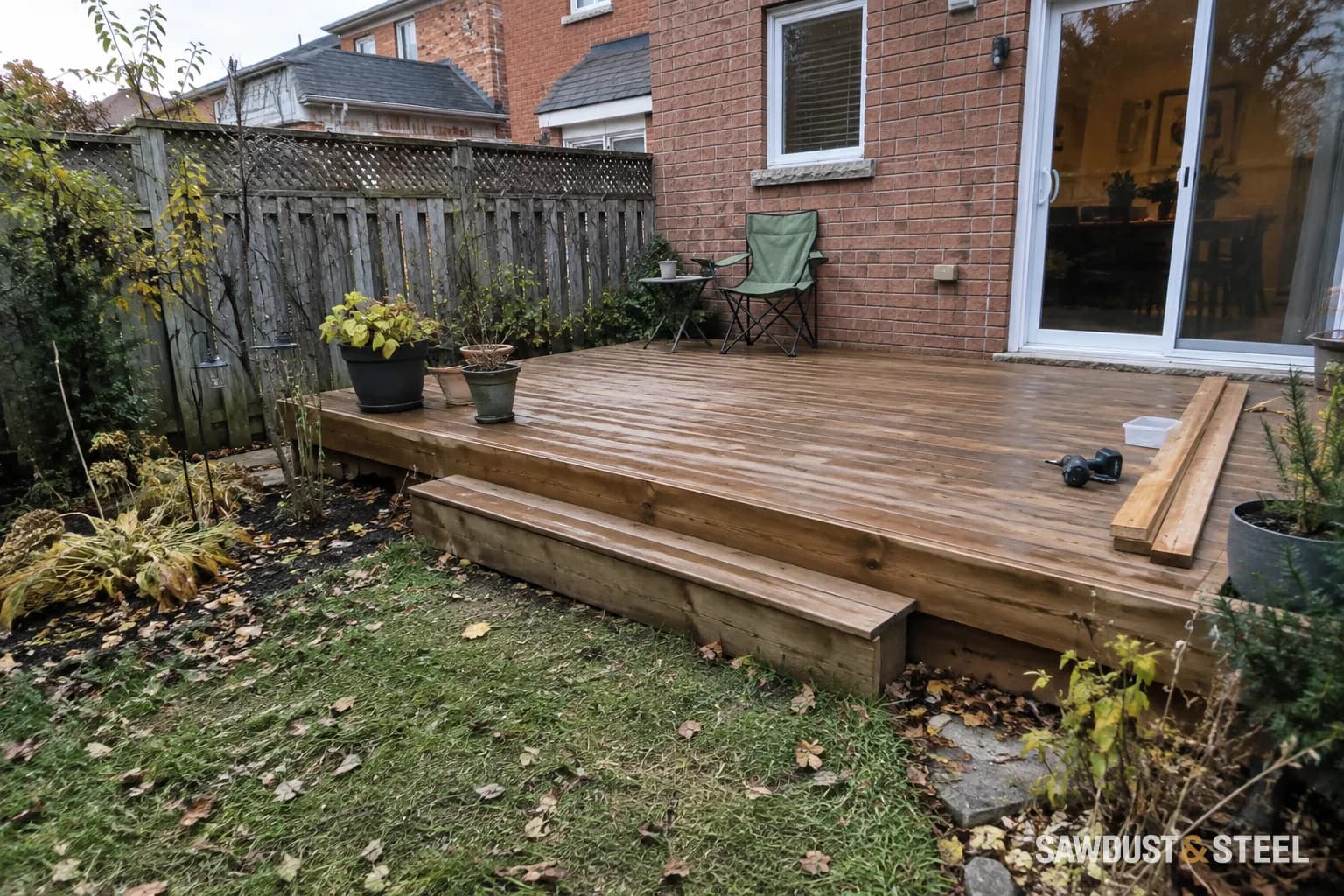
The best deck board is the one whose care, feel, and installation rules fit your house. Here is how to choose without relying on a showroom sample alone.
Read the guideDecide whether to keep the frame, repair it or rebuild. Check joists, ledger, footings, demolition access and the replacement decking system.
Read the guidePlan an Ontario deck from the ground up: permits, supports, materials, stairs, and the details that keep an outdoor room comfortable.