
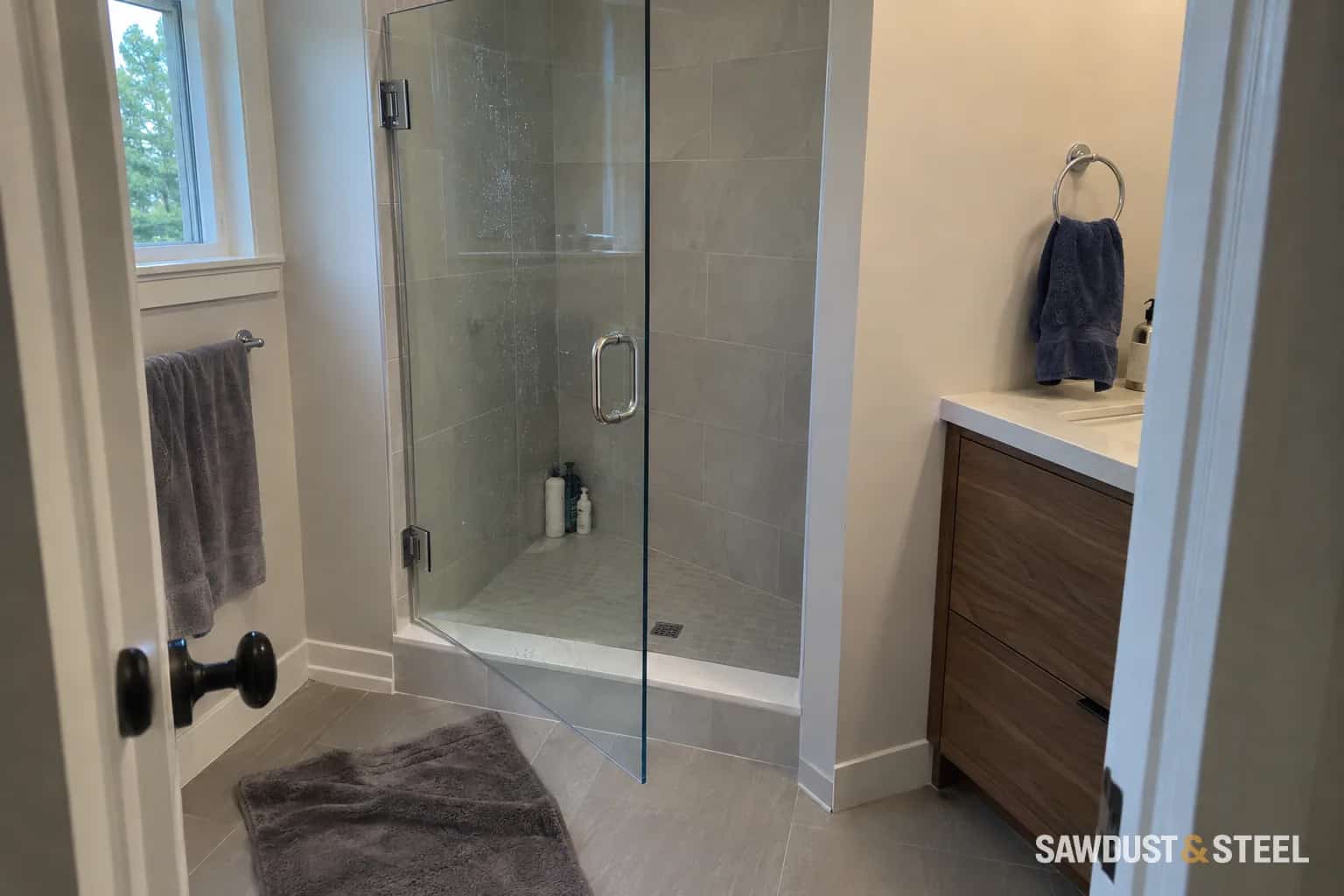
The sink is comfortable, but the shower goes from chilly to alarming within a few millimetres of handle movement. That is a reason to stop and investigate, not train everyone in the house to remember the magic handle angle.
Describe what changed
Tell the plumber whether the problem affects only the shower or other outlets, whether it began after a cartridge or trim change, and whether the temperature jumps when another fixture runs. Save the valve model and any installation paperwork. If a child or someone unable to react quickly uses the shower, keep it out of use until the issue is resolved.
A single-outlet problem and a whole-house problem can need different investigations. Do not turn the water-heater setting up or down as the first universal fix. The supply system, storage temperature, mixing arrangements and fixture controls have different jobs, and the plumber should identify the relevant one.
The limit stop and the valve are different parts of the answer
Delta's rotational-limit-stop instructions explain how specified valves limit the handle's travel toward hot and require an outlet-temperature check. They also show that adjustment direction varies by valve series. Advice to "turn the little wheel clockwise" is incomplete without knowing which valve is installed.
The stop sets the permitted travel; the cartridge and valve control how the water is mixed. A stop adjustment does not establish that a faulty or incorrectly installed cartridge is working properly. Ask the plumber to identify the control type and verify its operation, rather than treating the visible handle as the entire mechanism.
Ask for a measured check
Have the installer verify the actual outlet temperature using the manufacturer's procedure and the applicable requirements for the installation. Write down the valve identity, final measured result and any settings changed. A position marked warm on the trim is not a measurement, and an installer's hand is not a thermometer.
Do not test an unexpectedly hot shower by standing under it or asking a vulnerable user to try it. Keep children away during assessment. Where the manufacturer gives different procedures for different series, use the exact current instructions. US examples on a manufacturer's website should not be presented as the temperature law for every Ontario installation.
A recent cosmetic change can still matter
If the trouble began after a new handle or plate, confirm the trim and cartridge belong with the valve. The trim compatibility guide explains the identification problem. Reusing an old part because it physically fits is not enough to confirm correct control.
During a larger renovation, also decide whether the person can reach and understand the controls before entering the spray. That is separate from the maximum-temperature check. Pair the selected control with the handheld shower position, seat and assistance needs.
If other parts of the bathing routine are becoming difficult, compare walk-in tub and shower use with the person involved. Reliable temperature control belongs in either choice. It should not depend on a warning shouted from the hallway.