
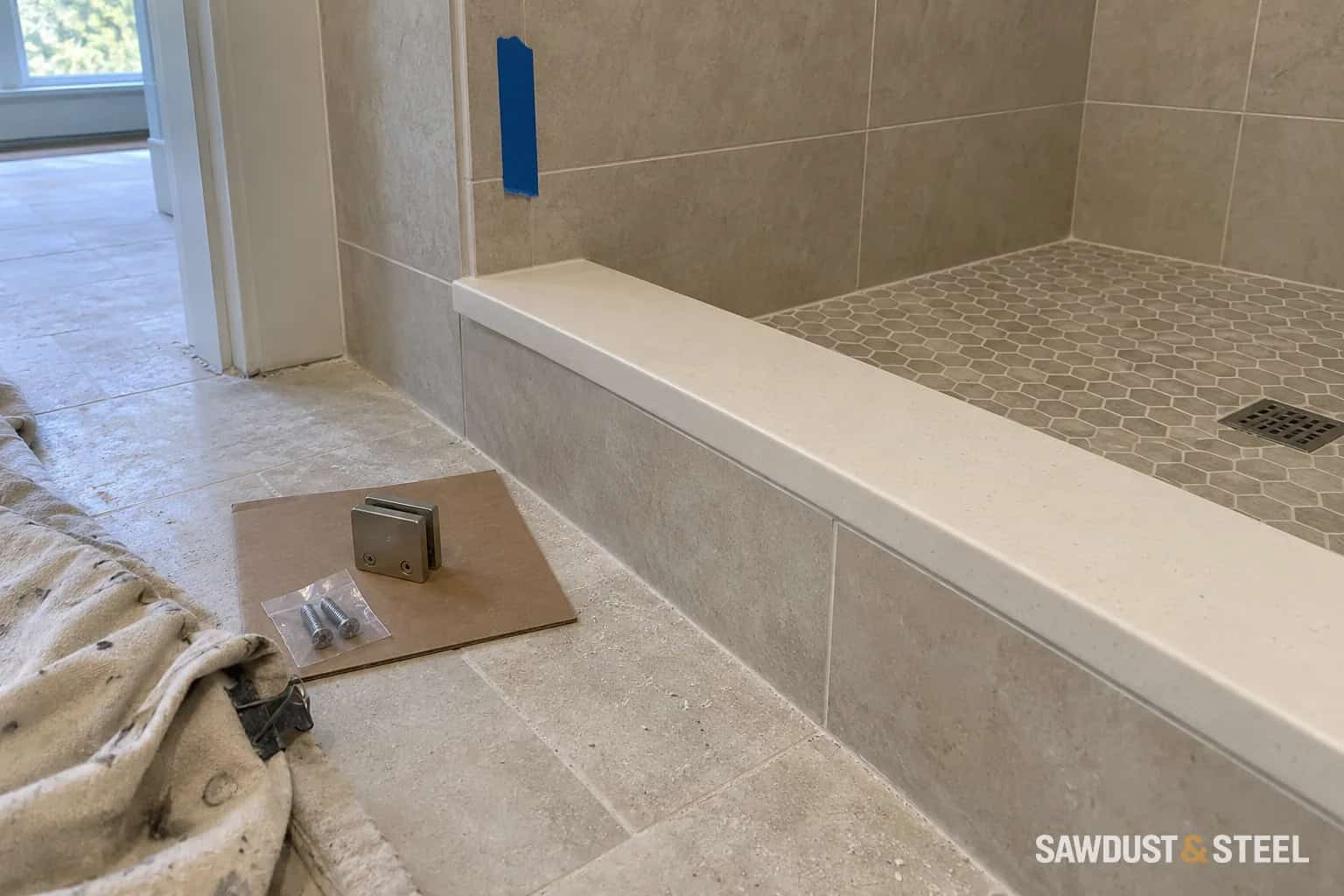
Choose the location with the wall construction in mind
Tape the accessory in place and try its use before marking holes. Check door swing, reaching from the shower and whether a towel will hang into water. Then identify the backing from construction photos or reliable inspection. A detector reading through tile is one clue, not clearance to drill beside a shower valve.
Ask for the accessory template and fixing instructions. The intended anchor depends on the substrate, finish thickness and load. A long screw can reach a stud but also reach a pipe. More length is not automatically more security.
Position
Check reach, clearance and the accessory’s template.
Behind the tile
Locate support and concealed services with appropriate inspection.
Assembly detail
Confirm fastening depth and the waterproofing repair or seal.
Installation
Use the tile and accessory makers’ drilling and fixing instructions.
Waterproofing is a separate part of the job
Schluter’s KERDI-BOARD system seals joints and fastener penetrations as part of its waterproofing assembly. The relevant detail depends on when and where the penetration is made; a bracket installed over finished tile needs the system’s applicable retrofit guidance. Schluter: Waterproofing and penetrations.
Do not assume a decorative escutcheon makes a hole watertight. Nor should a dab of general-purpose sealant replace a manufacturer’s specified treatment. Obtain an assembly-compatible detail for the actual penetration, particularly where water lands regularly. Horizontal curbs and seats deserve special attention; avoid creating unnecessary holes there.
Let the tile determine the drilling method
Porcelain, glazed ceramic and natural stone require different tooling and handling. Follow the bit and tile instructions, support the work appropriately and avoid improvised impact methods. If the tile cracks or a fixing spins, stop rather than tightening harder to hide the problem. The repair may require removing the accessory and restoring more than the visible surface.
If suitable support cannot be established, choose another location or an accessory system approved for the available surface and intended use. Adhesive accessories have their own limits and are not substitutes for grab-bar support. A towel-bar repair starts with the same question: what actually carries the load?