
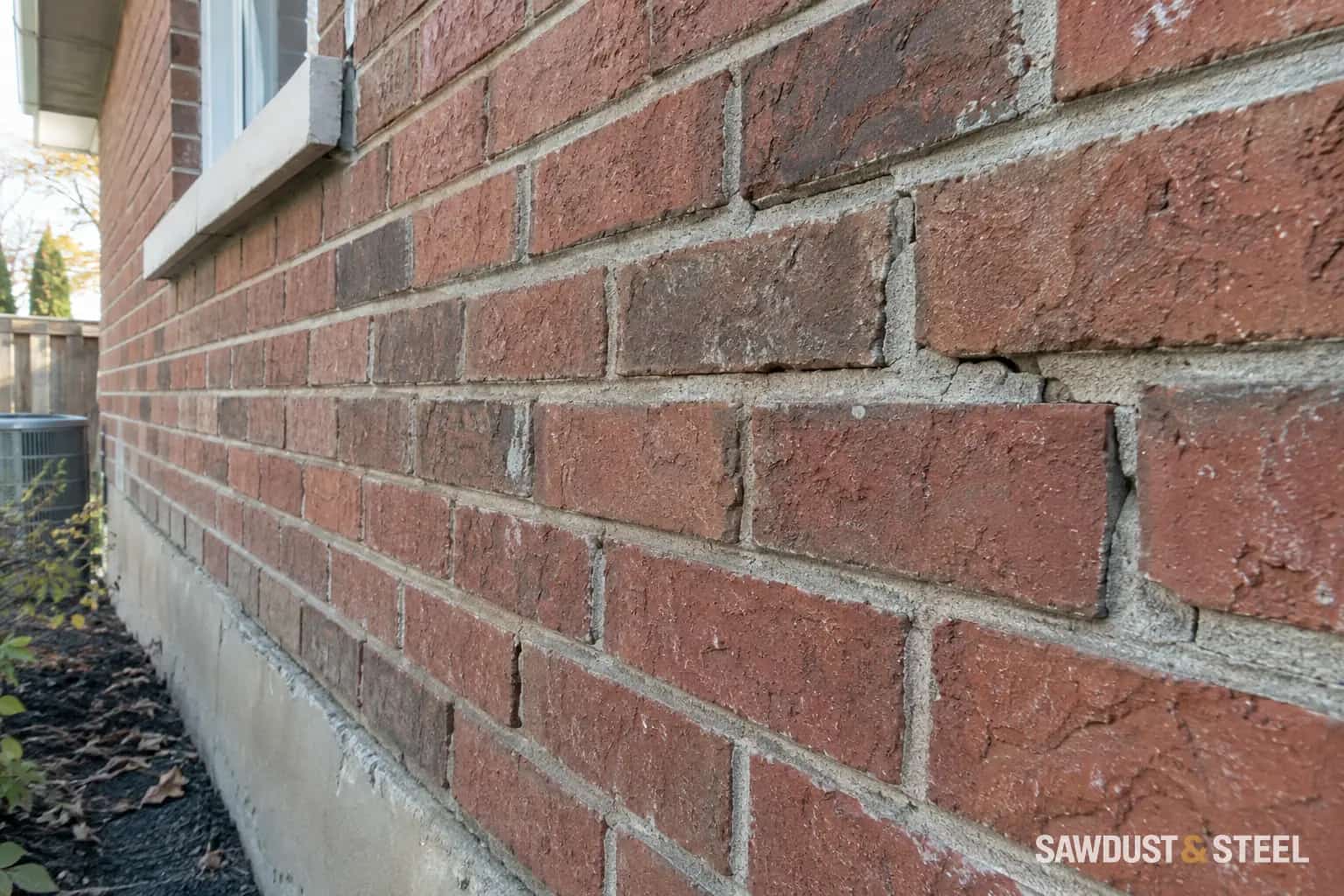
Fresh mortar can be the most visible part of an old brick wall. A bright, hard stripe around every brick is not automatically a better repair. The right job starts with the wall you have, including the parts that are still performing well.
Decide what actually needs repair
Photograph eroded joints, cracks and damaged brick faces separately. Mark whether the deterioration is widespread or concentrated under a gutter, at ground level or beside an opening. Record changes over time. A pattern crossing several bricks is a different concern from mortar gradually weathering out of otherwise stable joints.
Weathered joints
Assess localized repointing and water exposure.
Cracking with movement
Investigate the wall and supports before specifying mortar.
Soft historic brick
Seek a repair approach compatible with the original masonry.
Mortar compatibility includes more than colour
National Park Service: repointing historic masonry explains why replacement mortar must be compatible with historic masonry. A very strong modern mix is not a universal upgrade for a softer old wall. Use this as a conservation principle, not an Ontario code specification.
Ask the mason how the existing mortar and brick will be assessed. For an older or heritage building, an experienced conservation mason may be appropriate. Do not prescribe a bagged mortar type from a photograph; original materials, exposure and previous repairs affect the choice.
Approve a small sample before the whole elevation
A sample area helps compare joint profile, aggregate texture and colour after curing. Look at it from the distance where the wall is normally seen, then inspect it close up. Agree on the sample in writing so a crew change does not turn the next section into a different repair.
The work plan should also describe careful removal of failed mortar without damaging brick edges, dust control and curing protection. Those details belong with the mason's method, not a homeowner grinding experiment.
Keep the drainage details visible
If the original problem was a leaking roof edge or buried weep openings, fix that condition alongside the joints. Repointing cannot make a drainage defect disappear. Flaking foundation parging is a separate coating question and should not be assigned the same mortar by default.