
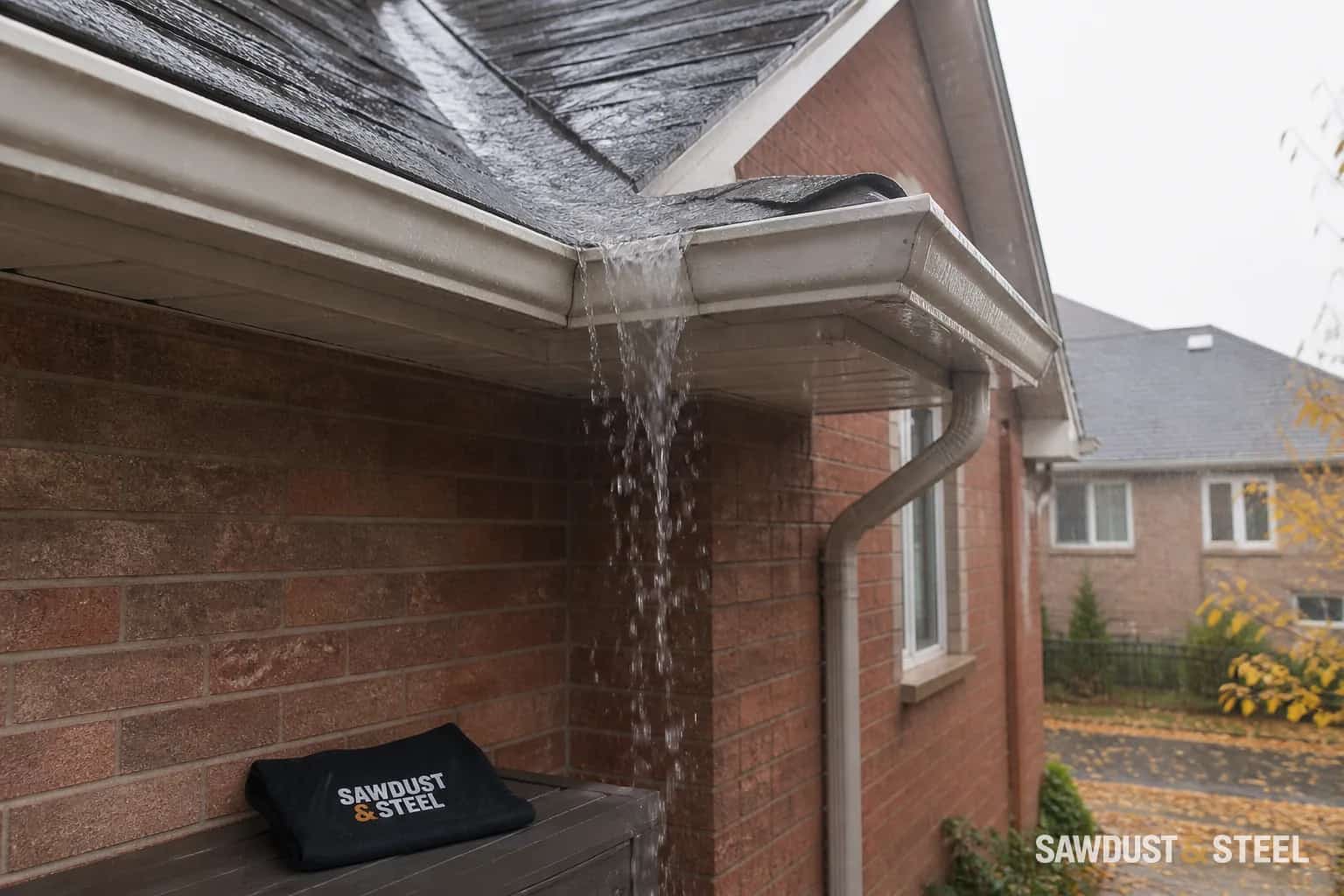
A drip lands on your neck at the back door, and the gutter gets the blame. It may deserve it. But water crossing the front lip and water tracking behind the gutter are different clues, and the repair needs the right one.
Watch the first wet minutes from the ground
Take a short video from shelter, keeping away from loose materials. Record whether water comes over the front, appears between the gutter and fascia, or emerges from a joint. Note whether it starts in light rain or only when the roof is shedding a lot of water.
Over the front edge
Ask about obstruction, capacity, pitch and concentrated roof runoff.
Behind the gutter
Ask about the roof-edge flashing and its relationship to the gutter.
At a seam or corner
Have the joint and nearby attachment inspected.
The roof edge and gutter need to work together
IKO Blueprint for Roofing identifies the drip edge as the flashing that directs water away from fascia into the gutter. A gutter cleaning alone cannot establish that this interface is correct. Conversely, seeing water behind it does not prove a particular flashing defect without an inspection.
Ask the contractor to show photographs of the relevant edge and explain the route water is taking. Roof slope, shingle projection, metal edge details and gutter position should be considered together. Avoid asking for one generic strip of metal before the cause is known.
Do not seal away the symptom
A bead squeezed from below may hide an observation without correcting the roof-side detail. Do not lift shingles, lean out of a window or climb onto a wet roof to test a theory. Roof-edge work needs safe access and a product-compatible repair.
If the fascia feels or looks damaged, include a fascia assessment in the scope. If nearby soffit panels move, the supporting channels also need checking. These can be consequences of the same wetting, but each connection still needs inspection.
Verify during comparable rain
Keep the original video and compare the same location after repair. A sunny completion photograph proves the finish looks tidy, not that the runoff path changed. Record any remaining drip promptly, including the rain intensity and location, so the contractor can revisit the right detail.