
When the top hinge lets go, the lower hinge suddenly has a job it was never meant to do alone. Keep the door out of use and support its weight. This is the moment to remove it carefully, not to see whether one very long screw will hold until the weekend.
Find the damaged part of the hinge connection
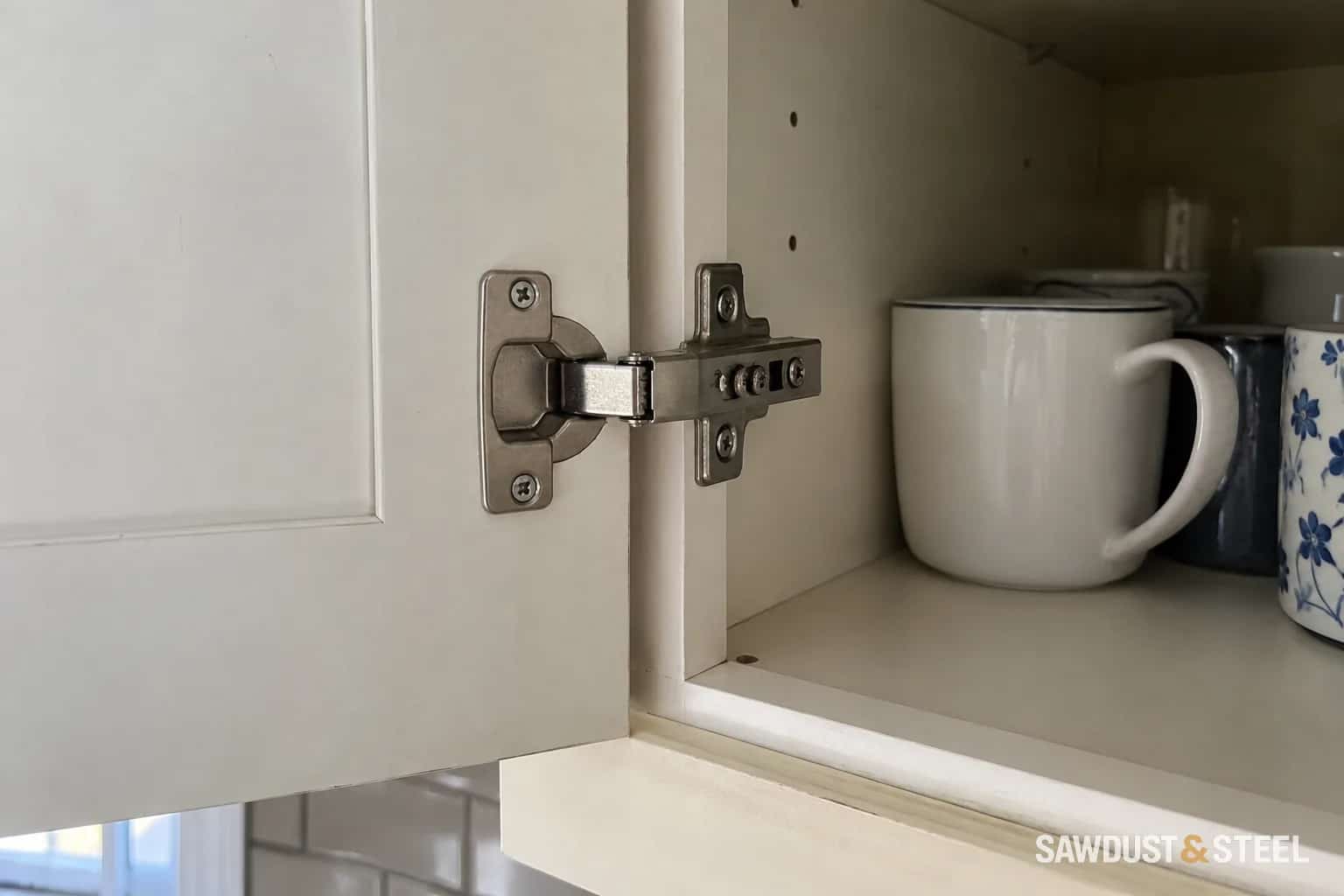
A concealed hinge has a cup in the door and a mounting plate on the cabinet. These are different repair locations. A plate sold to surround the cup hole is not automatically suitable for torn holes in the cabinet side. Take photographs of the hinge, mounting plate and exposed damage before asking for parts.
Inspect the material beyond the screw holes. If only the immediate holes are stripped and the rest is firm and flat, there may be enough sound panel for a compatible repair. If the surface is bulging, the chips fall away over a broad area or the side is cracked through, treat that as panel damage. Check for a leak if several edges are swollen.
Local screw-hole failure
A model-compatible repair plate may spread the attachment into undamaged material. Confirm its thickness and hole pattern.
Swollen or crumbling panel
A wider plate cannot restore missing panel strength. Repair or replace the affected cabinet component.
A repair plate changes more than the screw location
Extra thickness can move the hinge toward the door and reduce the available adjustment. Confirm the plate works with the actual hinge and cabinet construction. IKEA's SEKTION installation guide treats fitting the doors and adjusting their position as separate steps; getting the attachment secure comes before setting the gaps.
Use the repair system's specified fasteners and pilot holes. A screw that is too long can emerge into the next cabinet or through a finished end panel. Do not assume screws supplied for a different panel thickness are suitable. Ordinary decorative wood filler is not a rated hinge anchoring repair, and tightening a screw into loose crumbs does not make them solid.
Remove the extra strain
Look for a bent hinge, a door forced beyond its opening range, a handle hitting an adjacent wall or contents preventing the door from closing. A door used as a handhold needs its behaviour changed as well as its hardware repaired. Check the other mounting points before reinstalling it; they may have been taking the load for some time.
Refit with support, align the door and open it slowly through its normal travel. The mounting plate should remain still against the side panel. If the substrate moves, stop using the door and have the cabinet assessed. Where the panel edge is also lifting, the edge-banding checks help separate a cosmetic strip failure from a larger moisture problem.