
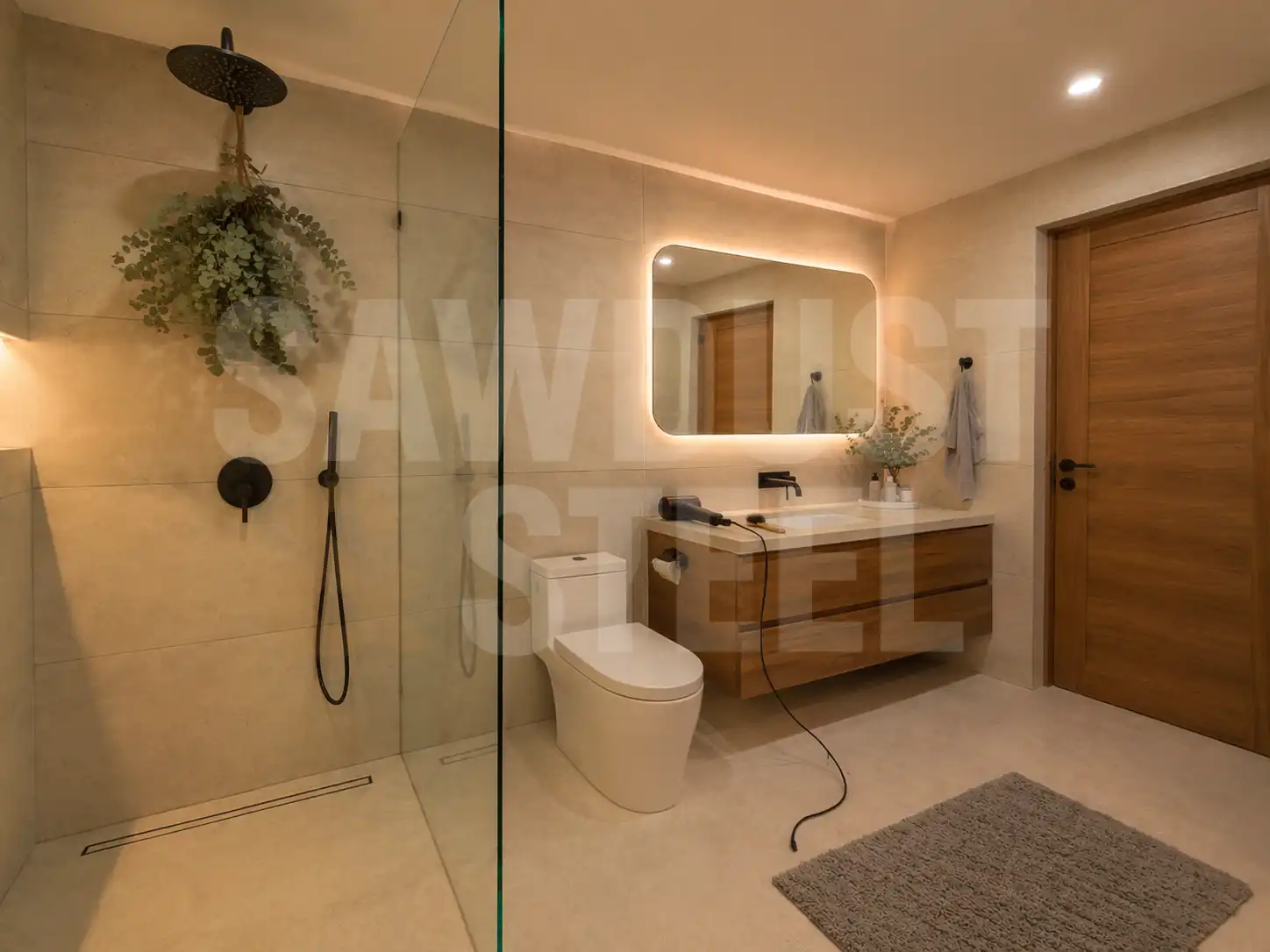
The grout board offers a reassuring idea: pay more now and spend less time scrubbing later. That may be a sensible trade, but the word epoxy does not tell you whether the chosen product suits your tile, installer or shower detail.
Compare complete grout systems rather than treating cement and epoxy as two fixed recipes. Cement-based products vary, and ready-to-use products form other categories. The useful question is which exact grout can be installed well in your selected joint and maintained with the cleaners you intend to use.
Compare the actual product sheets
| Decision | What to compare |
|---|---|
| Tile compatibility | Actual tile finish, joint width and product limitations |
| Installation | Mixing, working time, cleanup method and installer experience |
| Daily care | Permitted cleaners and product-specific stain resistance |
| Water control | Separate membrane, drain connections and movement-joint details |
MAPEI's Canadian Kerapoxy CQ technical data describes a two-component epoxy grout with stain and chemical resistance. Those are product characteristics, not a guarantee that every spill, cleaner or installation condition is harmless. Read its limitations alongside the tile manufacturer's guidance.
For the cement-based alternative, obtain an equally specific data sheet. Compare permitted joint widths, tile types, exposure conditions, mixing, cleaning and time before shower use. Do not assume all cement grout needs the same sealer or that a ready-mixed tub is simply the same material with water already added.
Ask the installer which products they regularly use and what the quote includes. Familiarity matters because mixing, working time and cleanup are part of the finished result. A premium material applied with the wrong method can leave a more troublesome surface than a well-executed simpler system.
Make a small tiled mock-up
Use offcuts of your actual tile, the chosen joint width and the proposed grout colour. Include a textured or cut edge if the design has one. Review the sample after the specified cleanup and cure period, not while it is still wet and darker than the finished result.
The mock-up helps reveal whether the grout or cleaning method affects the tile surface and whether residue remains in its texture. Polished, porous, decorative and textured materials can have different requirements. Ask whether pre-treatment or another procedure is required, and confirm that it belongs to the approved product combination.
Look at the colour under the bathroom lighting. A very contrasting joint can emphasise irregular tile edges and alignment. A close colour can make the field calmer but may hide the intended pattern. Neither is automatically easier to maintain; choose with the finished sample in front of you.
Price the installation and cleanup
Epoxy products may require a different working rhythm and cleanup process from the cement grout your installer usually uses. Ask how batches will be handled, how residue will be checked and what happens at the end of the working day. Do not split multi-component kits casually unless the manufacturer provides a reliable permitted method.
Include return visits and the required waiting period before the shower is used. The family schedule matters here: a shower that looks finished is not necessarily ready for water or cleaning chemicals. Put the product-specific return-to-service timing in the handover instead of guessing from how firm the joint feels.
Discuss future repairs too. Keep the exact product and colour record. A repaired joint may remain visible because age, wear and batch variation affect appearance. If a tile must be removed later, the grout choice does not eliminate the need to protect the underlying assembly during that work.
Waterproofing is a separate decision
Grout is not the plan for keeping water out of the structure. Schluter's shower-system guidance presents waterproofing, drains and related components as a coordinated assembly. The membrane and its connections need to be correct before the grout is installed.
Changes of plane and movement joints also need the specified treatment. Do not fill every corner with rigid grout simply because the chosen grout is durable. Follow the installation system's details for flexible joints and compatible sealants. Our linear-versus-centre drain guide explains another decision that must be coordinated beneath the tile.
For an existing shower, our grout-sealer guide addresses maintenance rather than choosing a new grout system. Do not apply a sealer or harsh cleaner without checking the installed grout's instructions.
Epoxy earns its extra cost when its specific benefits match your use and the installer can deliver a clean, compatible finish. A good cement-based product may remain the sensible choice for another shower. Make the decision from the sample, technical sheets and complete installation quote, not a promise of a bathroom that never needs cleaning.