
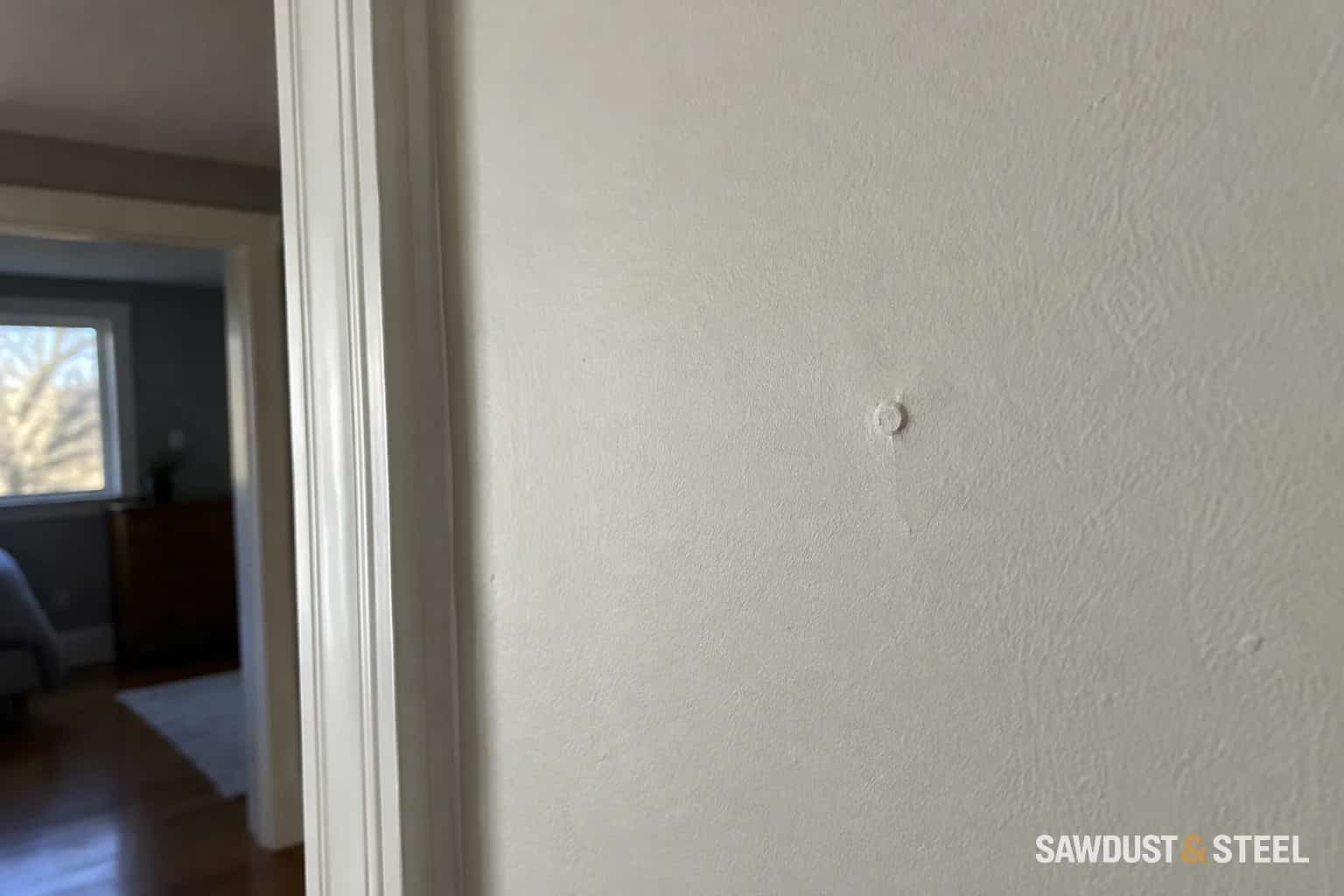
A small round bump appears, gets sanded and filled, then returns in the same place. Photograph the area before the next repair. A single familiar pop is one clue; a new line of them across a ceiling, with cracks or sagging, deserves a different level of investigation.
Confirm what is actually moving
A circular blemish may sit over a nail or screw, but appearance alone does not identify the fastener or establish why it moved. Check the pattern, nearby seams and any water staining. Avoid repeatedly pressing a ceiling to test it. If the surface is sagging, wet or separating, keep clear and arrange an assessment before cosmetic work.
Repair the attachment before the finish
USG Sheetrock drywall repair application tips treats a popped nail as a fastening repair followed by compound, sanding and primer. That sequence matters more than copying an isolated fastener dimension. The repairer must identify suitable framing, existing services and the correct fastener for the assembly. Random extra screws are not a substitute for knowing what is behind the board.
Attachment
Confirm the board is supported and secure at the affected location.
Surface
Restore the damaged face and feather the compound.
Decoration
Prime the repaired area and match the surrounding finish.
Recurrence
If the same movement returns, investigate the cause instead of adding more filler.
Keep a simple record of repeat locations
Mark the locations on a photo rather than drawing on a newly painted wall. Note the date, season and whether doors have started sticking or adjacent cracks have changed. A cluster following new construction may have a different explanation from a sudden change after a leak. Give that history to the person assessing it, without assuming every pop is structural or every pop is harmless.
Let the repair disappear in ordinary light
Once secure, the patch still needs a smooth transition and compatible primer. Inspect from the doorway and with light across the wall, not just while standing directly in front of it. If the repaired circle is flat but a different sheen, read why patches show through paint before adding another mound of compound.
For older surfaces, resolve material concerns before sanding. Health Canada: asbestos and renovation advises testing suspect older materials before renovation; the tiny size of a repair does not identify its contents. A loose seam rather than a round fastener mark belongs in the bubbling tape check.