
The moss makes the roof look older than the house feels. A pressure washer promises a dramatic before-and-after photograph. The part missing from that photograph may be protective shingle granules.
Cleaning can cause the damage you hoped to prevent
IKO's moss-removal guidance warns against pressure washing and aggressive removal methods. Ask a qualified roofer to distinguish the growth from other staining and assess shingle condition. A clean-looking surface is not the only measure of a successful treatment.
Separate growth, staining and missing surface
| Appearance | Question | Avoid concluding |
|---|---|---|
| Raised green clumps | Is this moss, and is it affecting shingle edges or drainage? | That blasting it away restores the roof |
| Flat dark streaks | Is this algae staining or another condition? | That dark colour alone requires replacement |
| Exposed-looking or thin granular areas | Is the protective surface worn, abraded or damaged? | That cleaner can replace missing granules |
These are observation categories, not a diagnosis from a distant photograph. Ask for labelled close photographs taken by someone with safe access. Cleaning cannot restore a shingle whose surface or bond has already failed. Use the inspection warning signs if the complaint includes missing material, leakage or a changed roofline.
Consider why that roof area stays damp
Review debris accumulation, overhanging vegetation, and drainage as part of maintenance. Any tree work needs appropriate expertise and local permission where required. Obtain the proposed cleaner and method in writing, including protection of nearby plants and surfaces. Ask what the roof should look like immediately afterward and what may take time to change. That expectation matters: trying to remove every trace in one visit can encourage exactly the scraping or blasting the shingles shouldn't receive. Agree on the follow-up observation from the ground before the crew leaves. Stay on the ground rather than climbing onto a wet or mossy roof.
Agree treatment expectations and runoff protection
IKO: moss removal from shingles warns that scrubbing and pressure washing can remove granules or damage the shingle bond. Ask the roofer to name the cleaner, its label directions and the shingle manufacturer's permitted method. A low-pressure description alone does not identify the chemical or make every application suitable.
Before treatment, identify the plants, painted surfaces, outdoor furniture and drainage outlets below the work. Agree the product-specific protection and rinse procedure, how runoff is managed and what must be moved. Do not mix cleaners or substitute a stronger concentration to chase an instant colour change.
Record what the contractor expects to remain immediately after the visit, what changes over time and when they will reassess. If growth is stubborn, that follow-up is preferable to a promise to scrub until every trace disappears. Keep children and pets clear according to the product and work plan.
Include debris control and any necessary tree assessment in the maintenance plan. An algae-resistant shingle is not automatically moss-proof, and changing the shade does not restore damaged material. Confirm the actual condition before deciding whether treatment, local repair or a wider roof project makes sense.
Before the next step
- Identify the growth and condition before choosing treatment.
- Check the roof manufacturer's approved cleaning approach.
- Arrange safe access and review the causes of persistent dampness.
Ask what improvement to expect now and what will take time, then leave the roof to the approved treatment. A slower change in appearance is easier to accept when you've agreed on it before the cleaning starts.
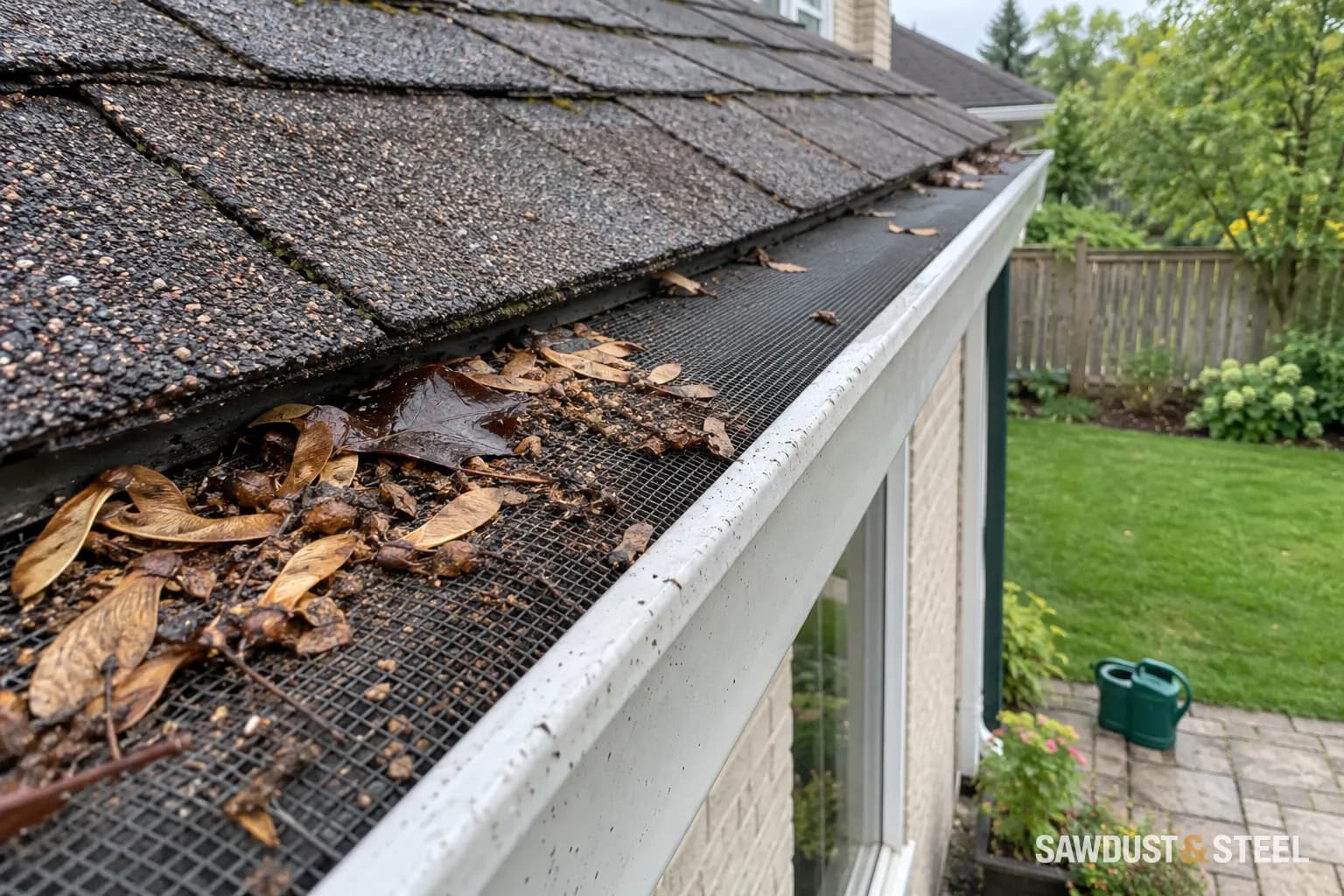
If debris is collecting at the eaves too, include gutter-guard cleaning and access in the maintenance visit.