
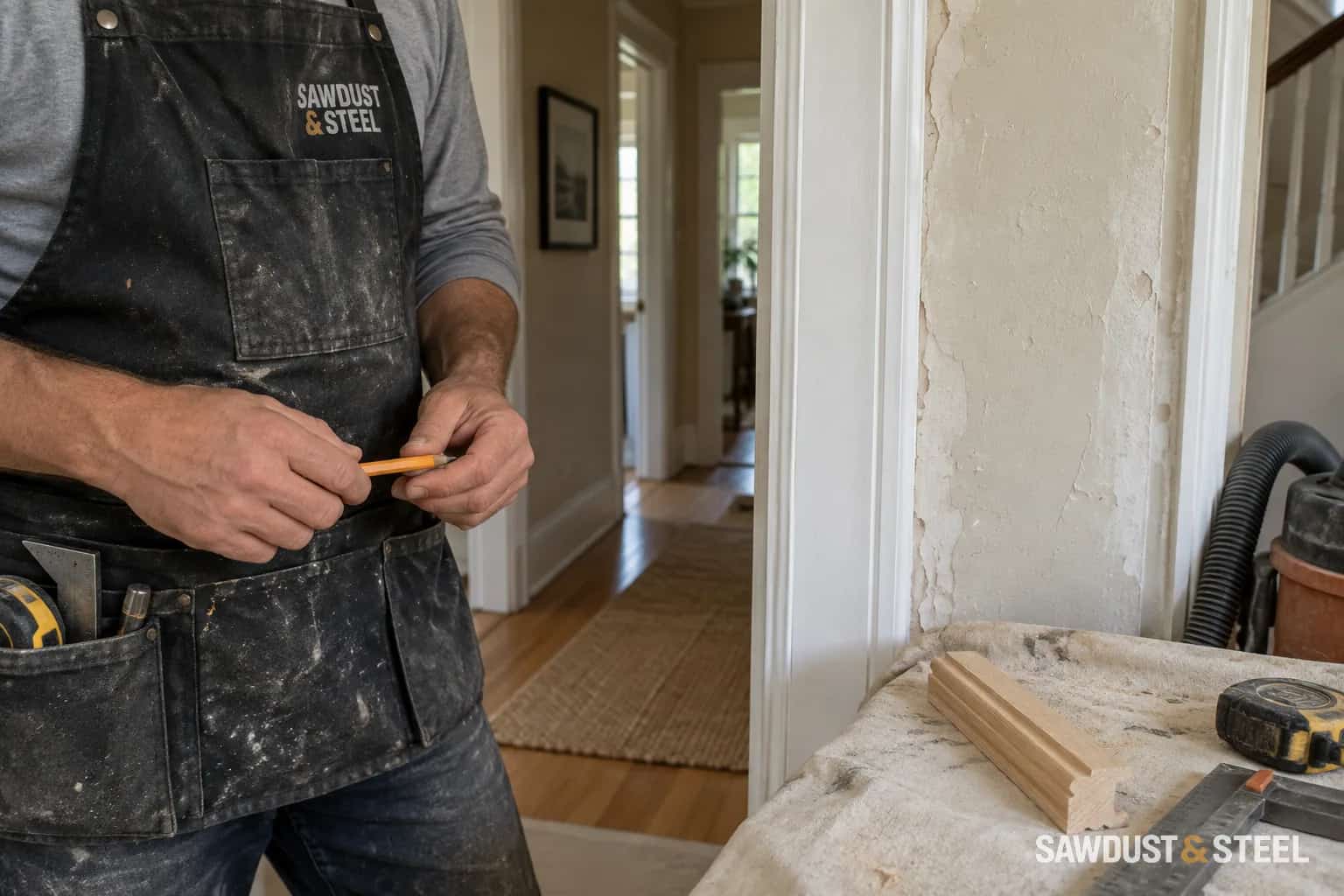
The hallway is original, the kitchen was renovated and nobody knows when the bedroom wall changed. Treat each area on its own evidence. The house's age narrows the possibilities but does not identify every wall, especially where old repairs have been covered by newer finishes.
Use a view you already have
An existing damaged edge, renovation photograph or accessible unfinished area may show paper-faced gypsum board, several plaster coats or lath behind a finish. Do not probe around electrical boxes or remove live fittings to investigate. If the material remains uncertain, a repair professional can identify it while planning a controlled opening rather than leaving you with an extra hole.
A surface patch cannot restore missing support
National Park Service: repairing historic flat plaster describes plaster supported by wood, metal and gypsum lath, including the keys that hold plaster around wood lath. That construction explains why a loose section can need attachment work as well as filling. Sagging ceilings, broad bulges and movement deserve assessment before anyone treats the surface as an ordinary cosmetic crack.
Paper-faced board
Check the gypsum core, board support and joint treatment.
Plaster on lath
Check the plaster's attachment and the condition of its backing.
Mixed old repairs
Identify the junction and choose compatible materials.
Loose overhead finish
Keep clear and arrange assessment before cosmetic work.
Ask what will bond the new material to the old
The repairer should explain surface preparation, any bonding treatment, the supporting layer and the finish coat. A strong-looking filler is not necessarily the right material for a particular old plaster. Ask how the patch will meet the existing thickness without changing the reveal of nearby trim or creating a broad hump.
Resolve dust hazards before cutting or sanding
Health Canada: asbestos and renovation identifies older plaster and surface treatments among materials that may contain asbestos and recommends professional testing before renovation. Health Canada: lead-based paint also covers risks from disturbing older paint. Have those questions resolved at the planning stage; appearance and hardness cannot rule them out.
If the wall proves to be drywall with damaged facing, follow the torn-paper preparation sequence. When the underlying repair is sound, paint and texture blending is the final job, not a substitute for fixing its support.