
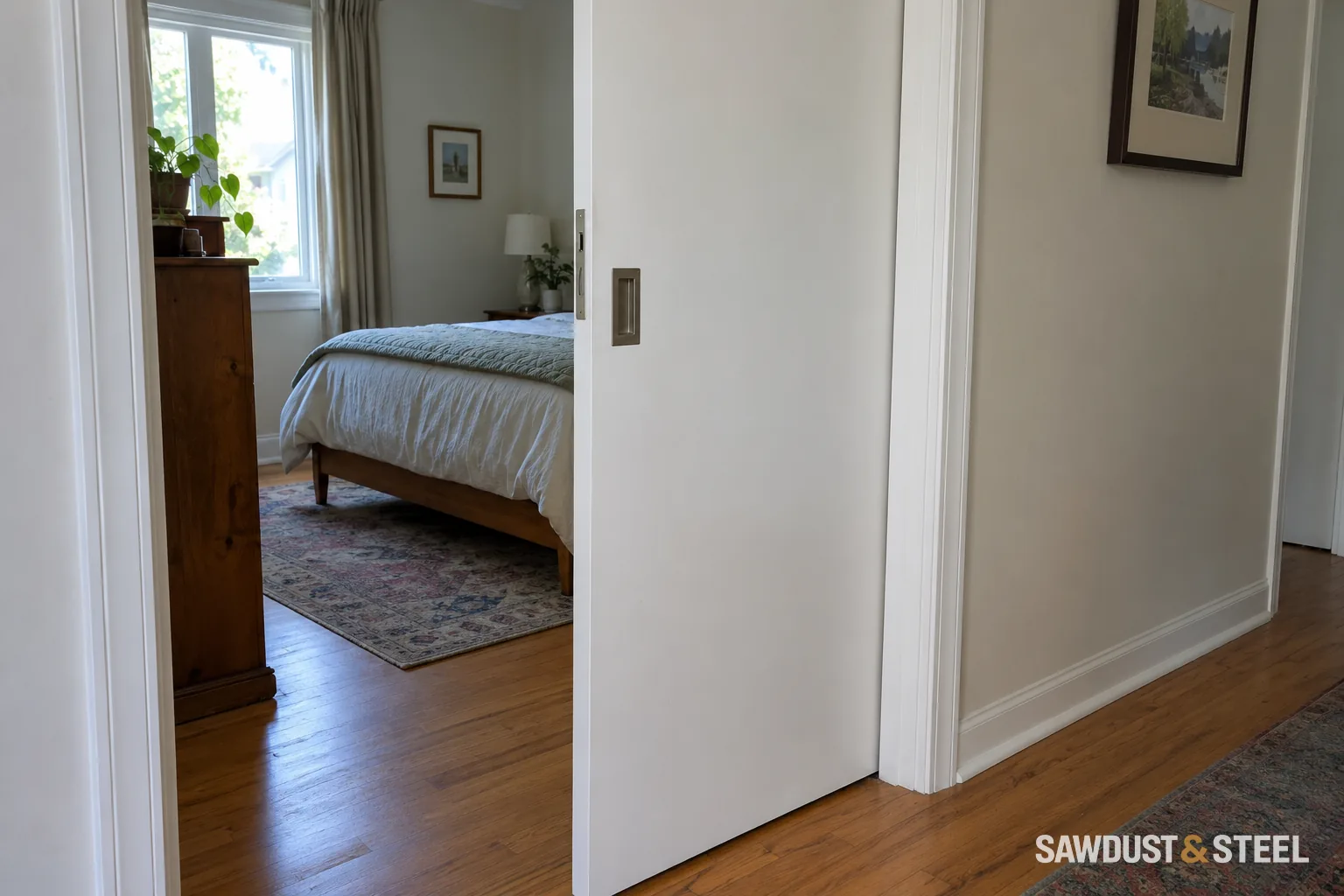
The door swing steals the best corner of the room. Sliding it into the wall seems wonderfully efficient. The wall may already have tenants: wiring, a pipe, or something supporting the floor above.
Check the frame, not just the door width
Johnson Hardware's frame specifications show that pocket systems have defined wall, door-size, and weight requirements. Use the exact kit's rough-opening instructions. A drawing of the visible doorway leaves out much of the space the installation needs.
A specific example is the Johnson 1500SC installation sheet: rough-opening width is twice the door width plus 1 inch, and height is door height plus 4-1/2 inches. A 30 by 80 inch door therefore calls for a 61 by 84-1/2 inch rough opening under that sheet. Confirm the exact kit and floor reference before using those numbers; they are not a universal pocket-door formula.
Passage
The visible doorway is only part of the rough opening.
Pocket
The door slides into this space; protect it from services and later shelf or towel-bar screws.
Header and access
Confirm structural work and the specified removable track/hardware access before closing the wall.
Mark the pocket on both room elevations. If a wall cupboard is planned on the reverse side, settle its attachment with the frame system before fabrication. Check built-in power and access where relocating a switch affects the adjoining cabinet.
Decide what the wall still needs to do
Have structure and concealed services assessed before opening or altering it. Review sound, privacy, hardware access, and any applicable fire or accessibility requirements. Coordinate shelves, towel bars, and future fixings near the pocket so fasteners do not enter the door path. We mark the full pocket on the room drawing and take a photograph before closing the wall. It is easy to remember the sliding door today and forget it when someone wants a hook there next year. Check how the rollers and track are serviced before choosing a trim detail that hides their access. Keep the serviceable parts accessible as the system requires.
Before the next step
- Draw the full frame and pocket footprint.
- Assess structure, services, and the wall function.
- Test handles, privacy, and future maintenance access.
Resolve the full pocket and the services in its way before ordering the frame. If the wall can't accommodate it sensibly, changing the swing or the nearby storage may still give you back that crowded corner.
Before assuming the wall is non-bearing, check why joist direction alone cannot establish its role.