
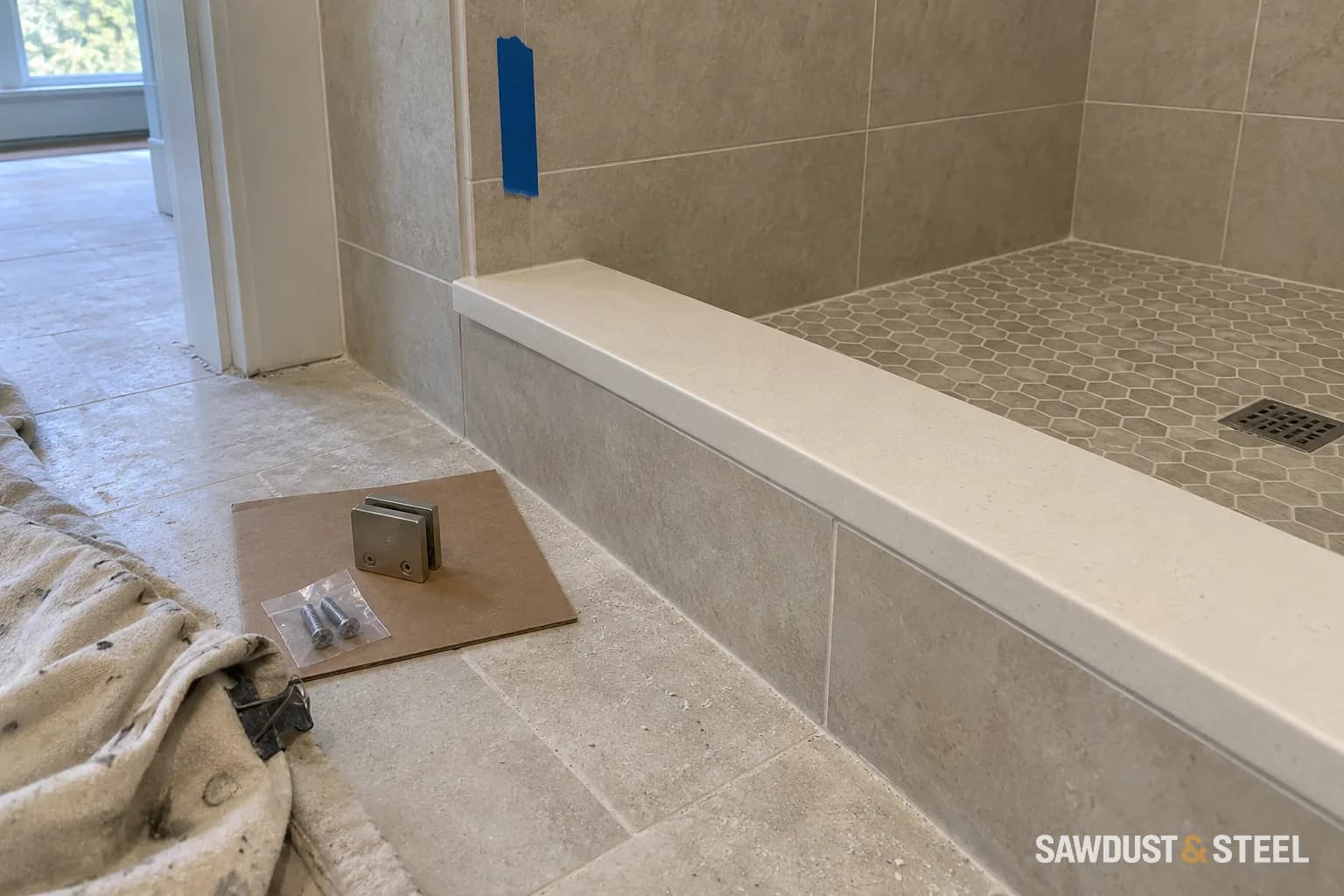
The sample looks good, the salesperson says it is floor tile, and the box has a slip number. Before ordering twenty boxes, ask one more question: does this exact size and finish belong on a shower floor? A kitchen floor and a soapy shower are different uses.
What the number actually answers
DCOF means dynamic coefficient of friction: a test of sliding friction under specified conditions. The TCNA-hosted ANSI A326.3-2021 standard, clauses 3.1 to 3.4, explains why the result must be considered alongside the application. Its shower-floor discussion does not give one universal DCOF cutoff; assembly drainage, joints, surface structure and barefoot use matter. The often-quoted 0.42 figure is not a shower safety certificate.
That also means a lower number cannot be approved by a casual rule such as "small tiles have enough grout." Ask the manufacturer or technical representative for the stated application. If the answer is unclear, choose a product with clear shower-floor suitability rather than becoming the test case.
Read the exact product row
Daltile's Portfolio Noce page includes an application table separating shower floors from other uses. It is an example of the information to request, not a blanket endorsement of every tile in a collection. A large field tile, polished version and matching mosaic may have different permitted applications.
Keep the product code, size, finish and current technical sheet with the order. If the retailer substitutes a finish or size, review that application again. "Same colour" does not mean the same surface. Ask the installer whether the selected format works with the drain and planned slopes before the cartons arrive.
Consider the floor you will clean
A strongly textured tile may feel reassuring in the showroom but demand more effort to remove soap residue. A smoother tile may be easier to wipe but unsuitable for the intended use. Ask for the manufacturer's care instructions and examine a full sample in realistic bathroom light. Do not conduct an improvised wet slip test by standing on an unsecured sample.
Compare the cleaning implications with stone versus porcelain shower care. Include the people doing the cleaning: a floor that requires frequent kneeling and scrubbing may be a poor match for someone planning easier daily use.
Keep drainage and support in the same decision
Even a suitable tile does not correct a floor that leaves puddles. Ask for the full arrangement: drain position, slope, cuts, grout and movement joints, waterproofing and any shower seat. Where mobility is a concern, coordinate the surface with the chosen bathing routine and an appropriate accessibility assessment.
The best order record contains that answer, not just a screenshot of a star rating. At handover, keep the cleaning instructions and investigate standing water or a surface that becomes difficult to maintain. Slip resistance is a property to manage in a working bathroom, not a promise that nobody can fall.
When the shower floor keeps a puddle
A scattering of droplets after a shower is different from a connected pool trapped behind a tile edge. Clean the floor using its approved method, then observe an ordinary rinse from outside the shower. Note where water starts collecting, whether the drain takes water freely, and whether the same pocket remains after surrounding surfaces have drained. Photograph immediately and again later from the same position. Record the elapsed time rather than choosing a universal drying deadline; temperature, ventilation and surface texture all affect drying.
| Pattern | What to investigate |
|---|---|
| Small isolated beads across the surface | Surface texture, cleaning residue and drying conditions. |
| One persistent pool behind an edge | Local tile setting or grout ridge that interrupts the route. |
| Broad pool away from the drain | Overall slope and the built assembly. |
| Water rises around the drain during use | Accessible strainer blockage or waste-line performance. |
| Moisture outside the shower | Leak investigation, not simply a drying complaint. |
Do not add extra grout across a low area or cover the floor with another tile layer without a repair design. Raising one patch may move the pool elsewhere, obstruct drain adjustment or leave a new lip. A straightedge and level can help an installer map the tile surface; they cannot prove the concealed membrane has the correct slope. Keep the original tray, drain and waterproofing details available for that discussion.
Repair the drainage without sacrificing the waterproofing
A local setting defect may allow a limited repair, while the wrong underlying slope can require rebuilding a larger area. Tile removal can damage the waterproof layer, so the proposal should explain the removal boundary, approved waterproofing repair, drain connection and verification before retiling. A promise to swap the offending tile is incomplete until those details are settled. Water testing before tile explains one part of that verification.
A shower seat, mobility aid and the route to the controls also belong in the safety decision. Do not test a questionable floor by deliberately sliding bare feet across it. Keep soap film under control, have persistent standing water assessed, and choose a surface the household can maintain. Small mosaics add joints but do not excuse poor application suitability or bad drainage.
Keep the standard and product record together
The explanation above uses the cited 2021 edition of ANSI A326.3. Check TCNA's DCOF resources and the requirements applicable to your project when specifying tile. Save the exact product application sheet with your order and recheck any substitution.