
A sample looks excellent draped over one tread. The full stair adds turns, uneven old edges, a landing and two places where the runner has to stop cleanly. Ask the installer to inspect the whole route before converting the sample width into an order.
Repair the stair before covering it
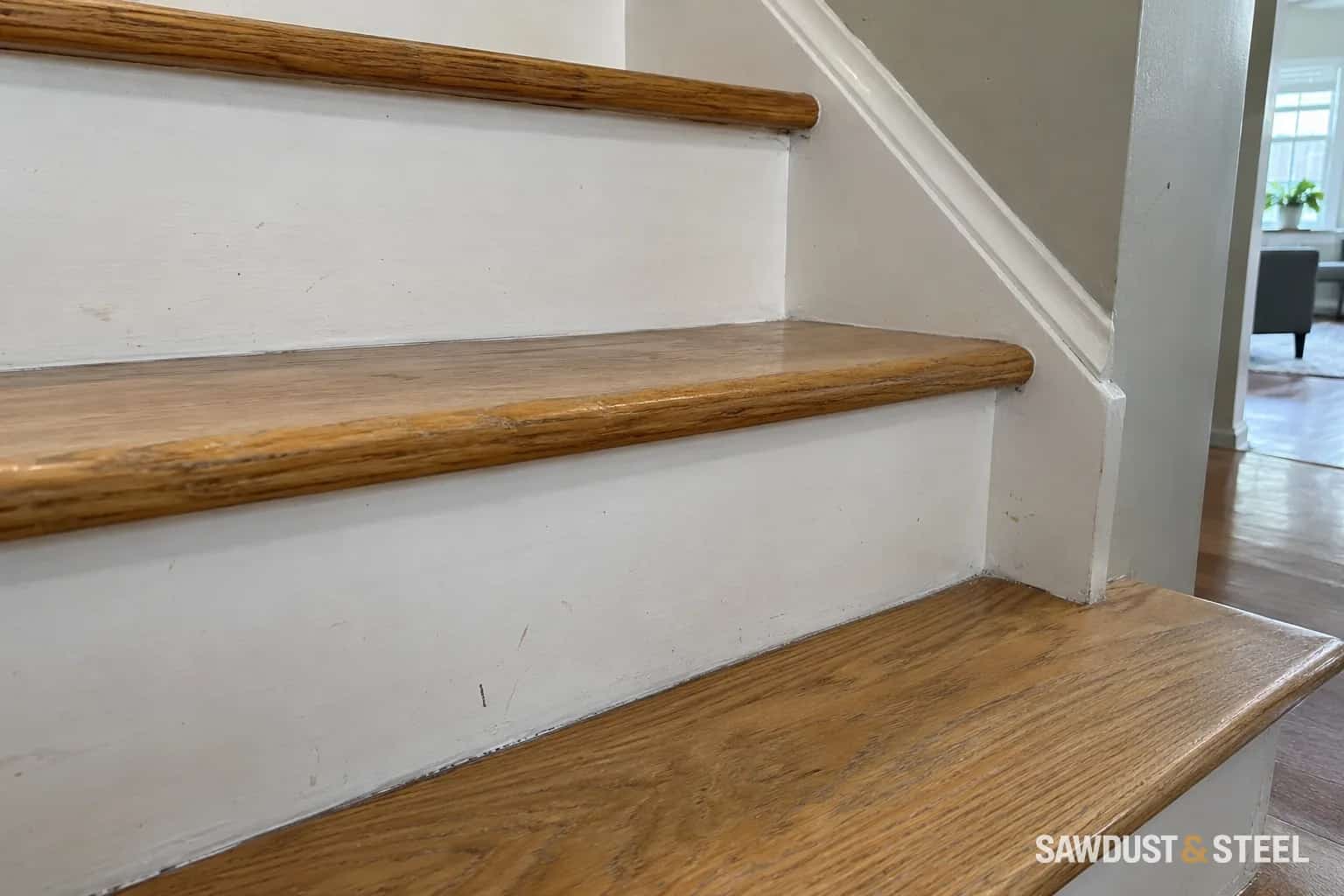
Identify loose nosings, damaged treads and any movement before measuring for carpet. A runner can conceal a joint without repairing it. Check the handrail at the same time. If the floor at the top or bottom is changing, include those completed levels in the plan rather than treating the runner as a separate last-minute accessory.
Match the carpet method to the nosing
CRI 105: residential carpet installation, section 15 addresses stair preparation and different attachment methods. Its details distinguish stretch-in and glue-down work and account for the stair nose. Use the carpet manufacturer's requirements and an experienced installer's assessment for your actual profile. Do not reshape a stair edge simply to imitate a diagram; changes to the stair itself need a separate review.
Every tread and turn
Record changing widths, winders and the intended walking line.
Nosing profile
Check how carpet and cushion will fit around the edge.
Top and bottom
Plan secure termination against the finished landing floors.
Edges and seams
Agree on exposed-edge treatment and any necessary joins.
Approve the layout on the actual staircase
Check how a stripe or repeating motif travels through a turn and across a landing. Centring by the walls can look different from centring on the visible tread when one side has a balustrade. Ask for the intended line to be marked and discuss pattern joins before cutting. Order the material allowance the installer needs rather than only the calculated walking length.
Know what the visible rods do
If decorative rods are included, confirm whether they are decorative or part of a specified fixing system. Ask the installer to explain how the carpet itself is secured, how cushion is handled and how edges resist lifting. There should be no exposed sharp fixing or loose flap on the walking route. Do not try to remedy a shifting runner by adding a few random staples through the pile.
Inspect each step before normal use
Check the completed runner with the installer, including the landing, both ends and any change of direction. Discuss cleaning compatible with the carpet and its attachment. If a ripple develops, arrange a repair rather than waiting for it to become familiar. Room-carpet restretching provides useful background, but stair work has its own access and fitting details.
Resolve tread squeaks and loose rail brackets before the new runner makes access harder.