
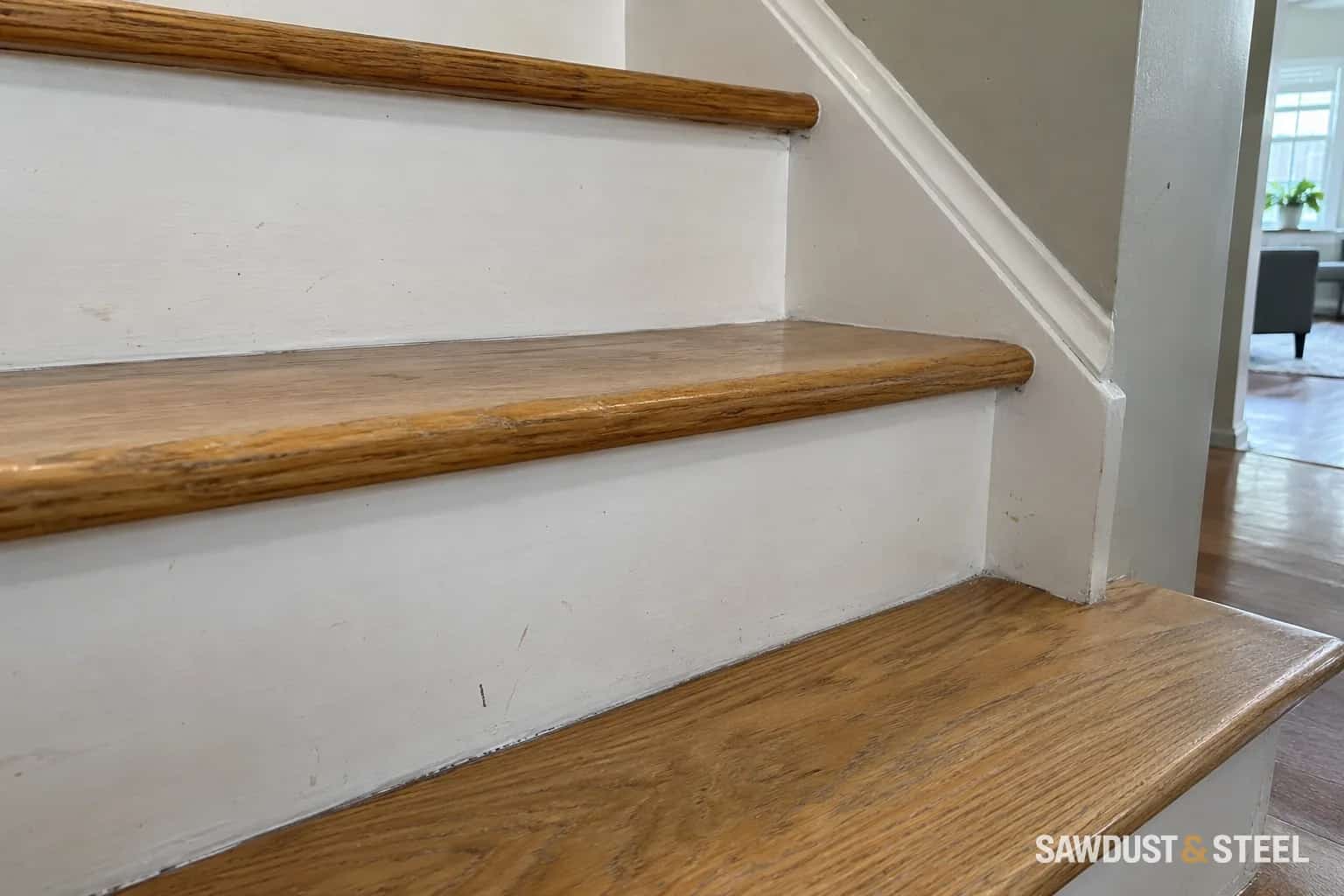
The third step announces every late-night snack. That is annoying, but the useful first step is simply naming the location: third tread from the bottom, near the wall, during an ordinary step. Do not jump on it or lean on a loose rail to reproduce the loudest possible noise.
Identify the tread, riser and nosing
The tread is the walking surface, the riser is the vertical face below the next tread, and the nosing is the front edge. A stair can also have decorative overlays that are separate from its supporting structure. Note whether the noise seems to come from an edge, the middle or a wall junction, without assuming that the nearest visible joint is the source.
Treat visible movement differently from sound alone
StairSupplies: tread construction and attachment notes that loosened fasteners can contribute to squeaking. That is one possibility, not a diagnosis of every noisy stair. Cracked wood, a shifting nosing, a tread that visibly moves or a separating connection should be checked by a competent stair carpenter. Keep people away from an unsafe section and arrange a safe alternative route where possible.
Noise only, stair feels sound
Record the exact location and arrange a targeted repair assessment.
Visible movement or split wood
Restrict use of the affected area and have its support assessed.
Carpet or overlay hides the joint
Plan controlled access instead of guessing where to fasten.
Loose handrail as well
Address the support you rely on before investigating by walking the stair.
Ask how the joint can be reached
Access from an existing unfinished underside can change the repair options. A finished ceiling beneath, a carpet runner above or a decorative tread overlay changes them again. Describe those conditions to the carpenter. Opening a ceiling may involve services and a required fire-resisting assembly; it is not automatically the simpler route just because it hides the screw heads.
Do not turn a noise repair into a damaged tread
Random screws can miss support, split an edge or strike something concealed. Lubricating powders and sprays may mark finishes, create cleaning problems or leave a slippery surface without restoring the joint. Ask for a repair that identifies the moving connection, preserves the stair geometry and explains any visible plugs or finish work.
If the rail moves when you steady yourself, start with the loose handrail bracket. If a runner is coming off anyway, combine access planning with the runner's nosing and fixing detail so the stair is not covered before the noise repair is checked.