
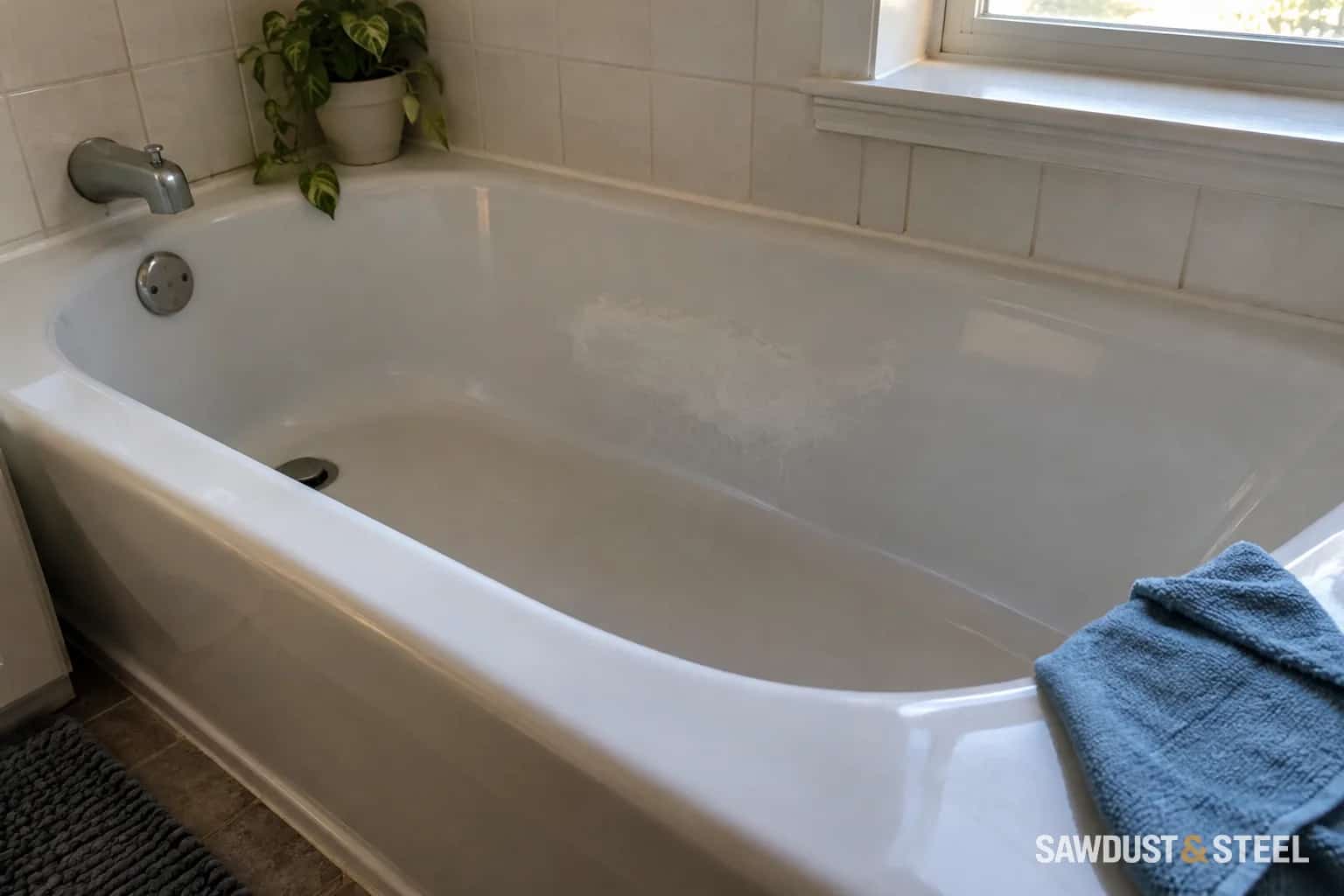
The tub was dirty before cleaning and dull afterward. That feels like an unfair exchange. Before scrubbing harder, save the cleaner bottle and put the pad aside. The next step depends on whether something is sitting on the surface or the surface itself has changed.
Confirm that the surface is acrylic
Find the model number, invoice or installation manual. A white bath can be acrylic, gelcoat, enamelled metal or a refinished surface with a different care system. An acrylic shell that was later refinished must be maintained for the coating now on top. The original bath brochure does not automatically describe today's surface.
Send the supplier the model information and a photograph taken in light across the dull patch. Include the cleaner, pad, dilution and how long the product remained on the bath. A photograph is useful for triage, but it may not reveal whether a fine film is present or the gloss has been physically abraded.
Look before adding another product
Rinse only as the existing product and bath instructions direct, then let the surface dry. Compare the affected area from several angles. Residue may look streaky or change after an approved gentle cleaning; fine scratches can become obvious in side light. A widespread colour change, cracking or an exposed different layer calls for a repair assessment.
Do not perform a sequence of vinegar, bleach, solvent and polish experiments. Mixing chemicals is hazardous, and successive products make the original cause harder to identify. Keep children and pets away from cleaning products and follow the product's ventilation and handling instructions.
| Observation | Next step |
|---|---|
| Streaky film | Ask about a compatible residue-removal test. |
| Fine scratches in side light | Ask whether the exact surface permits polishing. |
| Crack, flexing or leak | Assess the bath and its support before cosmetic repair. |
| Unknown refinished surface | Identify the coating and its care instructions first. |
Use the instructions for the exact finish
MAAX's maintenance guidance separates its surface types and warns against abrasive tools and cleaners that can scratch or dull them. That is a good reason to identify your own model rather than borrowing a recipe from a bath that merely looks similar.
Ask the manufacturer whether a small approved cleaning test is appropriate and where to do it. Use the specified cloth or sponge as well as the chemical; a compatible cleaner on an abrasive pad can still damage a surface. Judge the test when dry. A wet patch often looks glossier, which makes it an unreliable before-and-after comparison.
Polish only when the repair is approved
Some surfaces and shallow defects may have an approved polishing method. Others need professional repair or a different remedy. Obtain the exact product and method before starting. A car polish, power buffer or household cleaning eraser should not be assumed compatible because someone online restored a different white object.
Treat the floor of the bath separately from the glossy walls. Do not apply wax or polish that could make the standing area slippery, or alter a textured surface without the maker's agreement. If the bath has a crack, flexes or leaks, polishing is the wrong repair conversation; movement underfoot needs attention first.
Decide how much appearance change matters
Picture a dull patch on the side wall where a rough pad was used to remove a ring. If the surface is intact and the maker advises leaving it alone, keeping that patch may be preferable to an aggressive repair that changes a larger area. If a specialist can restore it, ask what finish difference may remain and what cleaning changes will protect the result.
For extensive damage, compare a documented local repair with refinishing or replacing the bath. Include the surrounding tile and access work before committing. Replacement is a room decision, not just the price of a new shell.
Make the next cleaning routine boring
Keep one approved cleaner and a suitable soft tool with the bath's care sheet. Remove incompatible products from the immediate cupboard so another household member does not repeat the experiment. A small label inside the cupboard is more useful than a warning delivered once over the extractor fan.
If the recurring complaint is mineral deposits on nearby glass, use the shower-glass cleaning guide separately. Glass, fittings and the bath can share a bathroom without sharing a cleaner.