
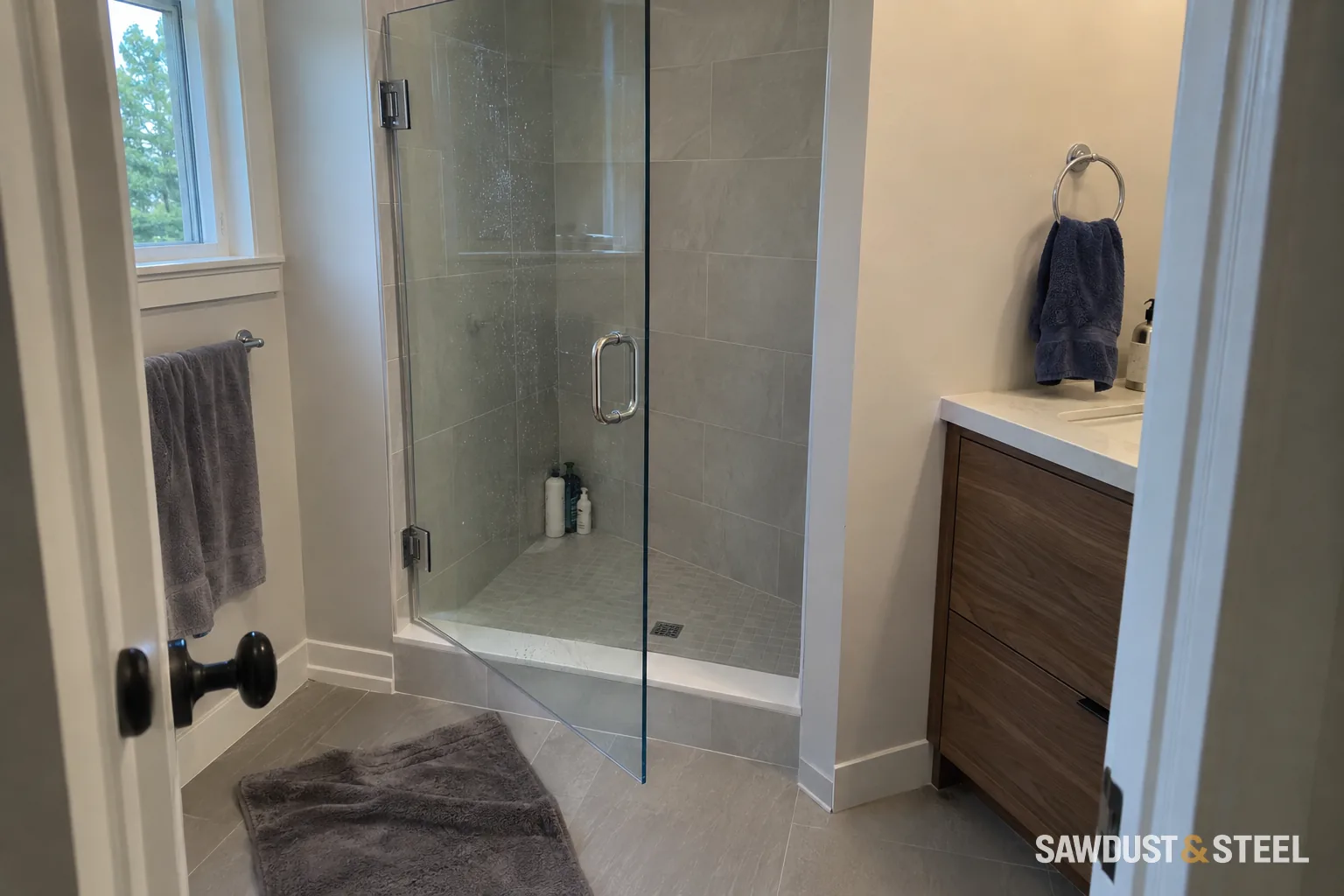
Find the care instructions for the actual glass
Look for the door model or coating name on the paperwork. Do not assume all clear glass has the same treatment. Also identify the shower’s stone, grout, metal finishes and seals before choosing a product, because runoff can damage a neighbouring material even when the glass tolerates it.
Kohler's CleanCoat guidance describes a factory treatment that helps water and dirt release from the glass and expressly rules out abrasive cleaners. It also says the treatment does not prevent fogging during a shower. Mist that clears afterward is therefore a different observation from a persistent white deposit. Easier cleaning does not mean maintenance-free glass.
STERLING's CleanCoat care instructions give a concrete routine: wipe the treated glass regularly with water and a soft cloth or squeegee, dry after use, and occasionally use mild detergent diluted in water. Rinse and wipe afterward rather than leaving cleaner to soak. The same page excludes bristle brushes, abrasive pads and sharp tools; its metal-finish exclusions are broader still. This is the STERLING CleanCoat example, not an acid-descaling recipe for every coated door.
Use the pattern as a clue
Droplet-shaped marks often suggest residue where water dried; a broad smeared film may include soap or body-care products. A scratch or etched patch may remain visible after approved cleaning. These observations help describe the issue but do not prove the chemistry. Send photographs to the manufacturer if a reasonable test does not improve it.
| Observation | Useful next step |
|---|---|
| Temporary fog during a hot shower | Allow it to clear; fog alone does not establish coating failure. |
| Raised or cloudy residue that improves in an approved test patch | Continue the approved cleaning sequence and rinse thoroughly. |
| Persistent haze with no response to approved cleaning | Ask the manufacturer to distinguish deposits, coating damage and etched glass before polishing. |
Never mix cleaners. Follow the approved product’s contact time, rinsing and ventilation instructions instead of leaving it on overnight. Do not improvise acid descaling beside marble; the stone-versus-porcelain care comparison explains why nearby surfaces can restrict the cleaning choice.
After the test patch dries, inspect it in side light and photograph it beside the untreated area. If the approved method does not improve the mark, stop and send the supplier the photos and product name. Stronger acids, abrasive pads, blades and power polishing can turn a deposit into permanent surface damage, especially when the coating is unidentified.
Reduce the work between deep cleans
After use, remove water from the inside glass with an approved squeegee or soft cloth and allow the enclosure to dry. Clean the bottom seal and track gently so residue does not collect there. A light routine is more useful than waiting until the glass is opaque and declaring chemical war on it.
If a water softener is being considered, have the actual water supply and household needs assessed separately; it will not restore etched glass or a worn coating. For water escaping onto the floor, investigate the door sweep rather than assuming the spots are only a cleaning problem.