
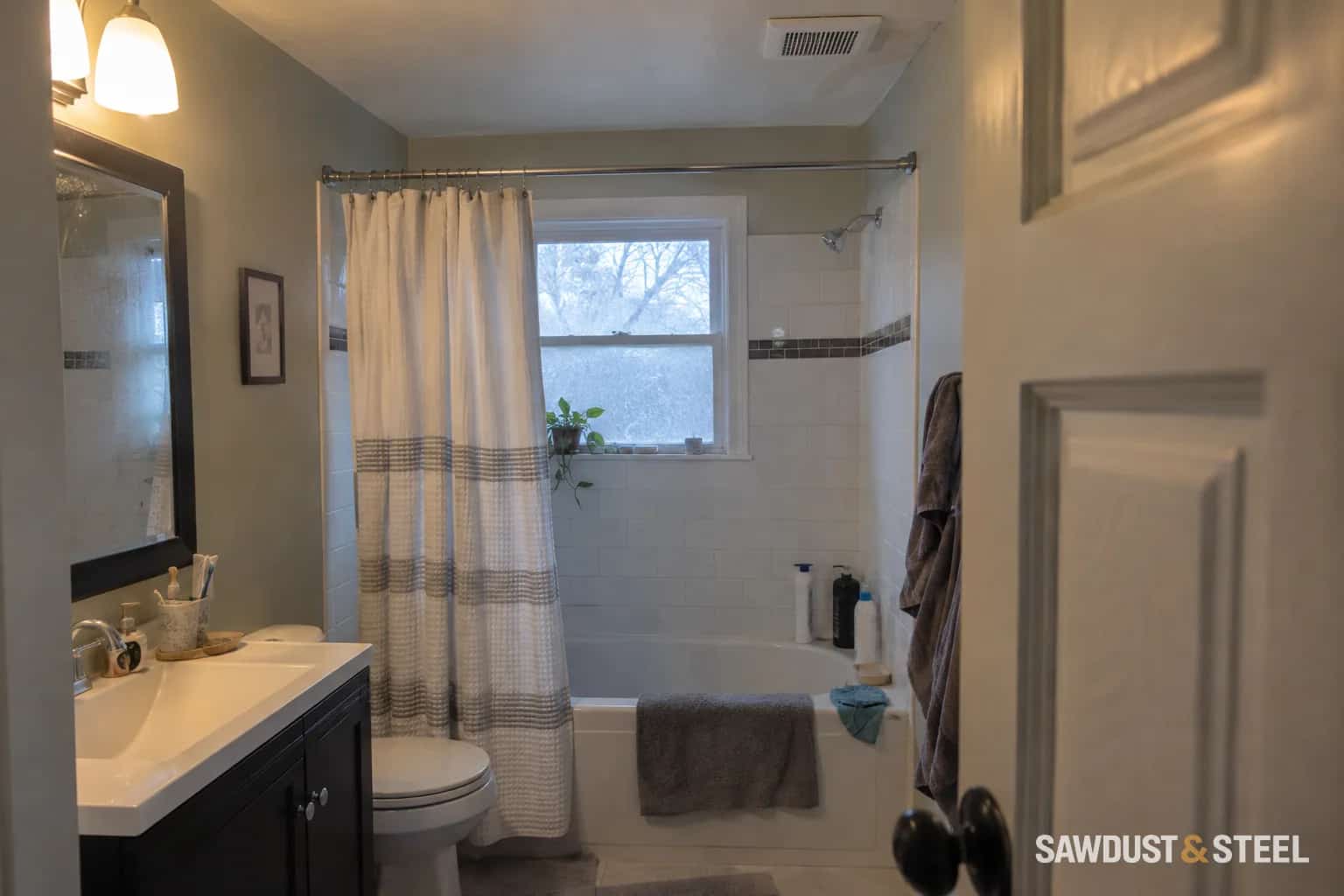
The fan is supposed to remove shower moisture. Finding a cold drop on your shoulder is an unconvincing performance review. Before buying a replacement, work out whether the water is forming inside the exhaust route or entering from outside.
Start with the timing
Keep a short record of the weather, shower use, fan run time, and where the water appears. Photograph the stain and note whether it grows. These clues narrow the investigation; they do not prove a cause on their own.
| What you notice | What to investigate |
|---|---|
| Drips during cold weather after showers | Condensation in a cold housing or duct, plus whether moist air is actually leaving the room. |
| Water during rain, including days without a shower | The outdoor termination, flashing, and nearby roof or wall details. |
| A drip during a thaw | Both melting frost in the exhaust path and outside water entry. |
| A widening ceiling stain beside the fan | Water travelling above the ceiling; the grille may only be its exit point. |
Panasonic Canada's ventilation FAQ identifies both roof-terminal leakage and condensation against cold ductwork as possible causes. A rainy-day drip deserves a different investigation from one that follows every long shower on a clear, freezing evening.
Check the whole exhaust path
Ask the contractor to inspect the duct connection at the fan, its route through unheated space, insulation, supports, and the exterior outlet. Crushed sections, disconnected joints, and a damper that cannot open can undermine an otherwise serviceable fan. The inspection should establish where any condensate collects and why.
NRCan's attic guidance treats air leakage and moisture control as part of the attic assembly. Blowing bathroom air into the attic is not a solution. Neither is covering an unidentified fan housing with insulation without checking its installation instructions.
- Confirm that the duct reaches a suitable outdoor termination.
- Check duct size, route, insulation, and sealing against the fan and duct-system instructions.
- Have delivered airflow assessed; motor noise does not measure extraction.
- Check the exterior damper and outlet from an appropriate safe access point.
- Photograph the corrected route before any ceiling or insulation conceals it.
Longer run time may help, but it is not a roof repair
Panasonic suggests longer operation and duct insulation as measures that can reduce condensation. Use the controls and run-on period appropriate to the installation. If airflow is restricted or the roof terminal leaks, a longer timer setting cannot correct that defect.
If extraction changes noticeably with the bathroom door open, include the room's replacement-air path in the assessment. Our guide to a fan that struggles with the door closed covers that separate clue.
Make the next visit useful
Share the timing record and ask for the cause, proposed repair, and a way to confirm it under comparable conditions. A new fan may be appropriate if the existing unit has failed, but the quote should also address any defective ducting or termination. Otherwise, the new grille inherits the old drip.