
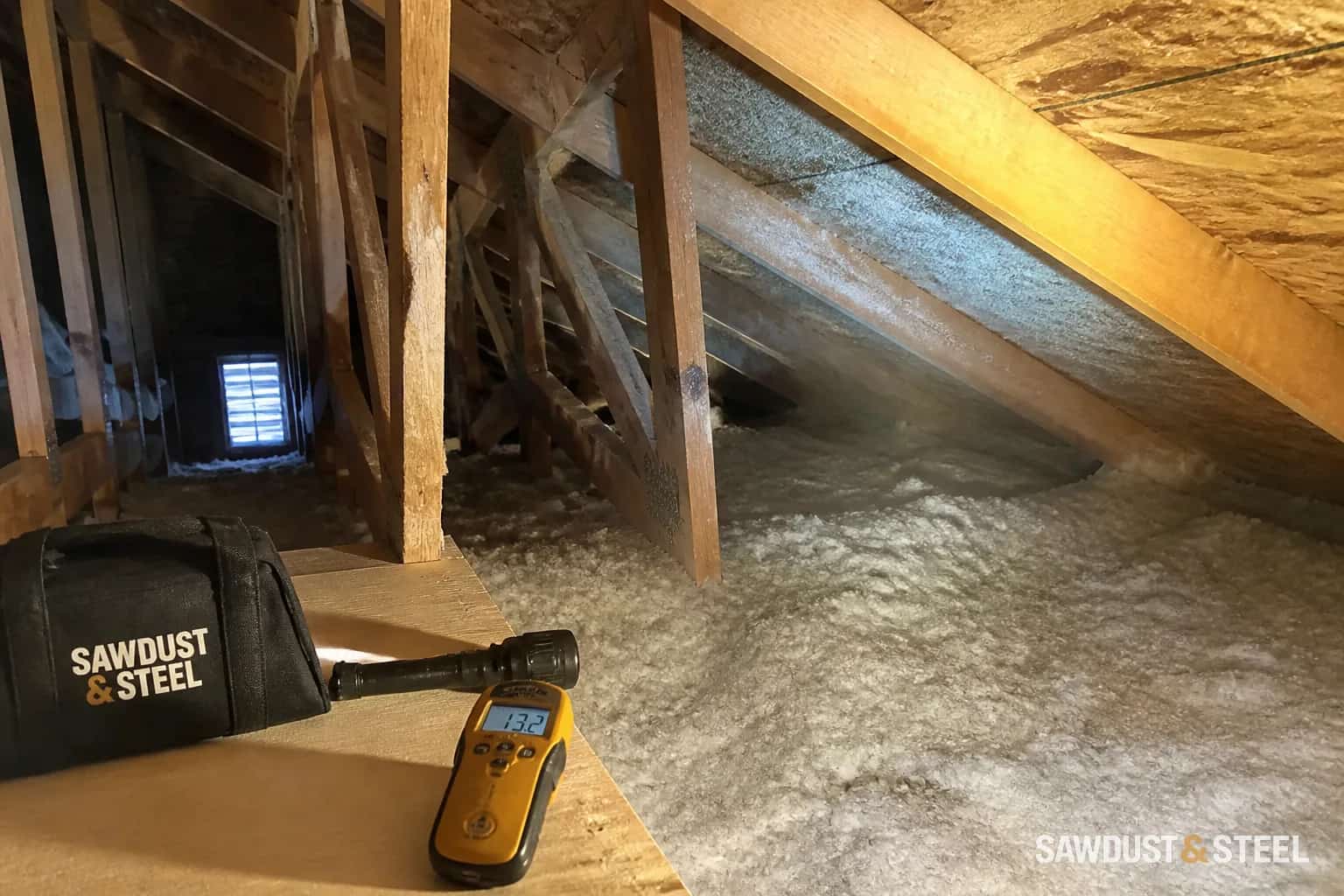
The ceiling starts dripping on a day when it hasn't rained. Before you blame the shingles, check what the weather did yesterday. A cold snap followed by a thaw can release water from frost inside the attic; rain and flashing leaks leave other clues. The timing and a few photos can save a lot of wrong turns.
What does the timing suggest?
| What happened | First suspicion | Next check |
|---|---|---|
| Water after rain | Roof or flashing entry | Look safely for a path near valleys, walls, chimneys, vents, and damaged roofing |
| Frost after a cold snap | Indoor air leakage | Check ceiling penetrations, attic hatch, wall tops, and exhaust ducts |
| Drips during a thaw | Melting attic frost or exterior entry | Compare the wet area with earlier frost photos and roof penetrations |
| One recurring wet spot | A local defect or local air path | Inspect both sides of that location instead of treating the whole attic |
Natural Resources Canada recommends checking an attic during or just after a cold snap because frost makes air-leakage paths easier to see. Its roof and attic guidance also says leaks, stains, mould, rot, blocked ventilation, and damaged framing should be addressed before insulation work proceeds.
Where is the moisture?
- Near a chimney, plumbing stack, skylight, roof-to-wall joint, or valley: inspect exterior roofing and flashing first.
- Around a bathroom fan duct, attic hatch, wiring hole, or open wall top: investigate indoor air leakage and duct termination.
- Across many nails or a broad face of cold sheathing: widespread condensation is more plausible than one tiny roof puncture.
- At the eaves with ice outside: air leakage, insulation, ventilation, roof drainage, and ice-dam details may all be involved.
On a thaw-day call, the hallway stain sat below a roof vent, which made the vent the obvious suspect. Inside, we found frost across several bays and a bathroom duct joint that had pulled apart. We photographed the frost before it melted, repaired the exhaust route, and kept the roof detail on the inspection list. Water can follow framing before it drops, so lining a ceiling stain up with the nearest thing on the roof is a starting point, not a verdict.
What should you avoid doing?
- Do not walk on loose insulation or ceiling drywall. Use a safe platform and appropriate access, or stay out.
- Do not add insulation over wet material, frost, or mould. That hides evidence without fixing the moisture path.
- Do not assume more roof vents will solve air leakage. Ventilation and air sealing do different jobs.
- Do not disconnect a bathroom exhaust and leave it in the attic. It should discharge outdoors through a suitable sealed route; see the Ontario bathroom-fan guide.
What can you do today?
Write down the last rain, thaw, and cold snap. From a safe location, photograph the same area, the nearby roof features, and any frost pattern. If the wet area centres on the glazing or shaft, use the winter skylight-drip guide to sort the moisture location. Check whether bathroom or kitchen exhausts terminate outdoors and whether indoor humidity is unusually high. Then send the short weather log with the photos when booking an inspection. It helps the inspector decide what to check while the evidence is still visible.