
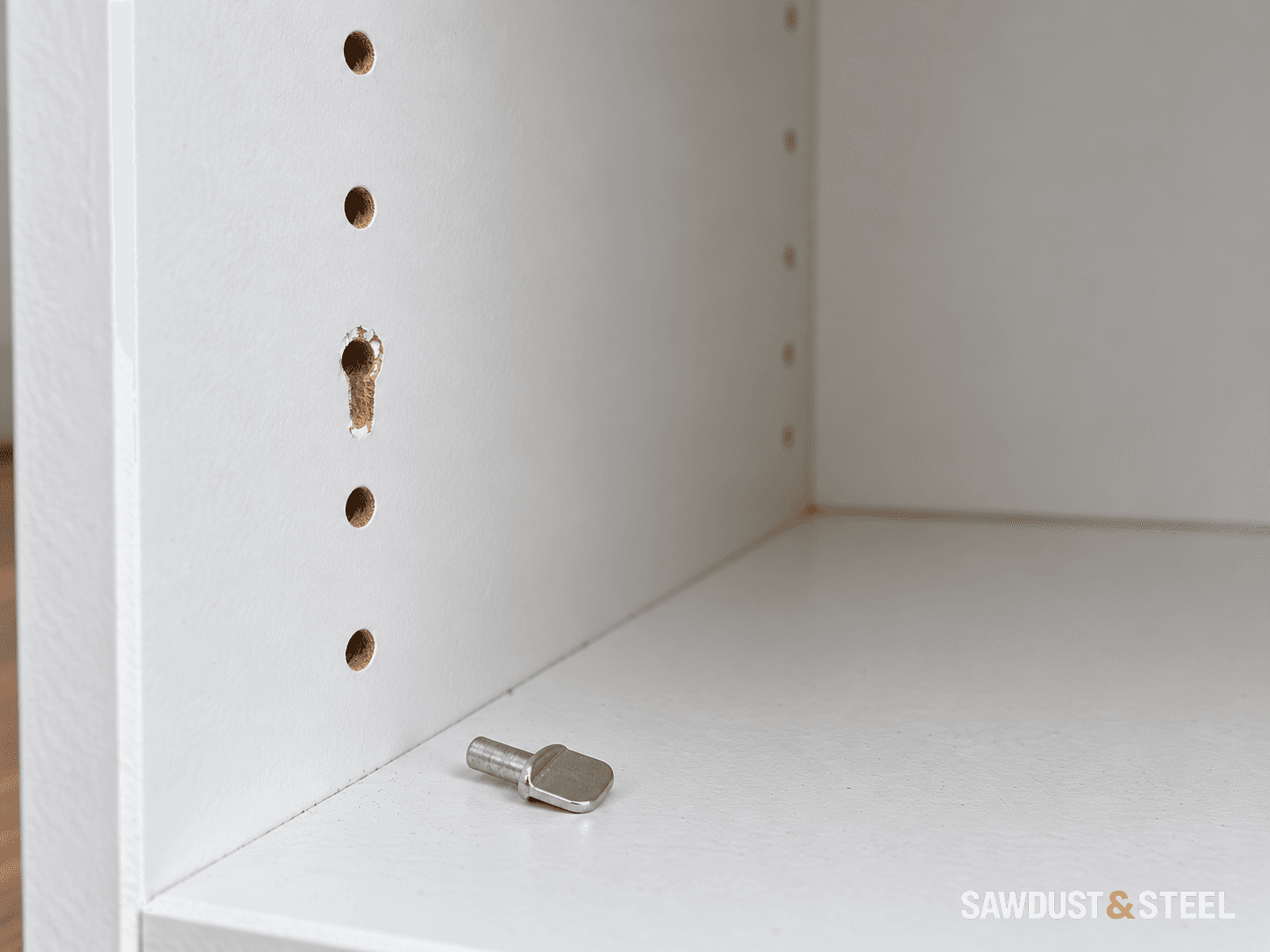
One corner of the shelf drops while you are putting away a plate. The little metal pin is on the cabinet floor, looking entirely innocent. Before pushing it back into the same hole, take everything off the shelf and remove the shelf itself. The crockery has already supplied enough diagnostic information.
Check the pin before enlarging the hole
Compare the loose pin with an original, undamaged support from the same cabinet. Check the shaft diameter, insertion depth and shape of the part that carries the shelf. A smaller replacement pin can feel acceptable until the shelf shifts sideways. Similar-looking metric and imperial hardware should not be treated as interchangeable.
Look at every support position, including the underside of the shelf. A pin that is bent, only partly inserted or missing its retaining feature may be the immediate problem. A shelf cut too narrow can slide off otherwise sound supports. Photograph the cabinet label and intact hardware before ordering replacements.
Decide whether the surrounding panel is sound
A slightly elongated hole in firm wood is different from a crater in swollen particleboard. Inspect for splits, loose chips, water damage and a line of failed neighbouring holes. Check the cabinet side's thickness and what is on its other face. A repair that breaks through into the next cabinet is an unnecessary extra feature.
Do not keep probing or loading the hole to test its limit. If the material comes away easily, deal with the damaged panel and any moisture source first. Cosmetic filler can make the opening disappear without providing a dependable bearing surface for a loaded shelf.
What is sound after the shelf is removed?
Correct hole, wrong or damaged pin
Restore the cabinet's specified matching support hardware.
Enlarged hole, firm surrounding panel
Assess a compatible sleeve or properly positioned alternative support.
Crumbled, split or swollen panel
Repair or replace the panel before asking it to carry the shelf again.
A sleeve needs its own correctly sized hole
WOOD's shelf-pin repair guidance describes enlarging a damaged hole for a matching metal sleeve. The sleeve gives the pin a new fitted opening; the cabinet material still has to support the outside of that sleeve. A sleeve loose in a crater has not solved the problem.
Read the actual sleeve dimensions before drilling. For example, Lee Valley's 5 mm support system uses a 5 mm pin root but a sleeve with a 5.5 mm outside diameter. The listed fitting holes also differ for hardwood and softwood. The pin's advertised size is therefore not automatically the drill size, and those instructions are not a specification for damaged particleboard.
Confirm the repair's suitability with the cabinet or hardware supplier. Keep the hole centred and perpendicular, control its depth, and practise the specified fit on comparable scrap where possible. If the old opening no longer locates a drill reliably, use a suitable guide or have a cabinetmaker make the repair. Freehand wobbling only creates a larger version of the first problem.
Changing the support changes the shelf fit
A sound unused row may provide a different shelf height, provided every support is at the corresponding level and the hardware suits the cabinet. Do not move just the failed corner. Check the resulting clearance for the items and the door hinges before settling on the new position.
Metal shelf standards with matching clips are another repair approach described by WOOD. They need secure attachment to sound material, with fasteners clear of the failed holes. Surface-mounted standards also occupy space: the shelf may need resizing. A cabinetmaker can compare this with replacing a side panel or adding a properly designed fixed support.
Return the load only after checking the whole shelf
Reinstall the empty shelf and confirm full bearing at every support, the intended retainers and a fit that cannot casually slide off one side. Then follow the cabinet's load guidance. Repairing a hole does not establish a new load rating. If the original failure involved a sagging shelf or an overloaded span, review the shelf's material, span and support arrangement as well.
Keep the cabinet's wall attachment and overall stability in view, especially in a tall unit. Stop if a support moves again or the panel starts to break away. The useful finished result is a shelf with a dependable support path, not merely four pins that remain in place while it is empty.