
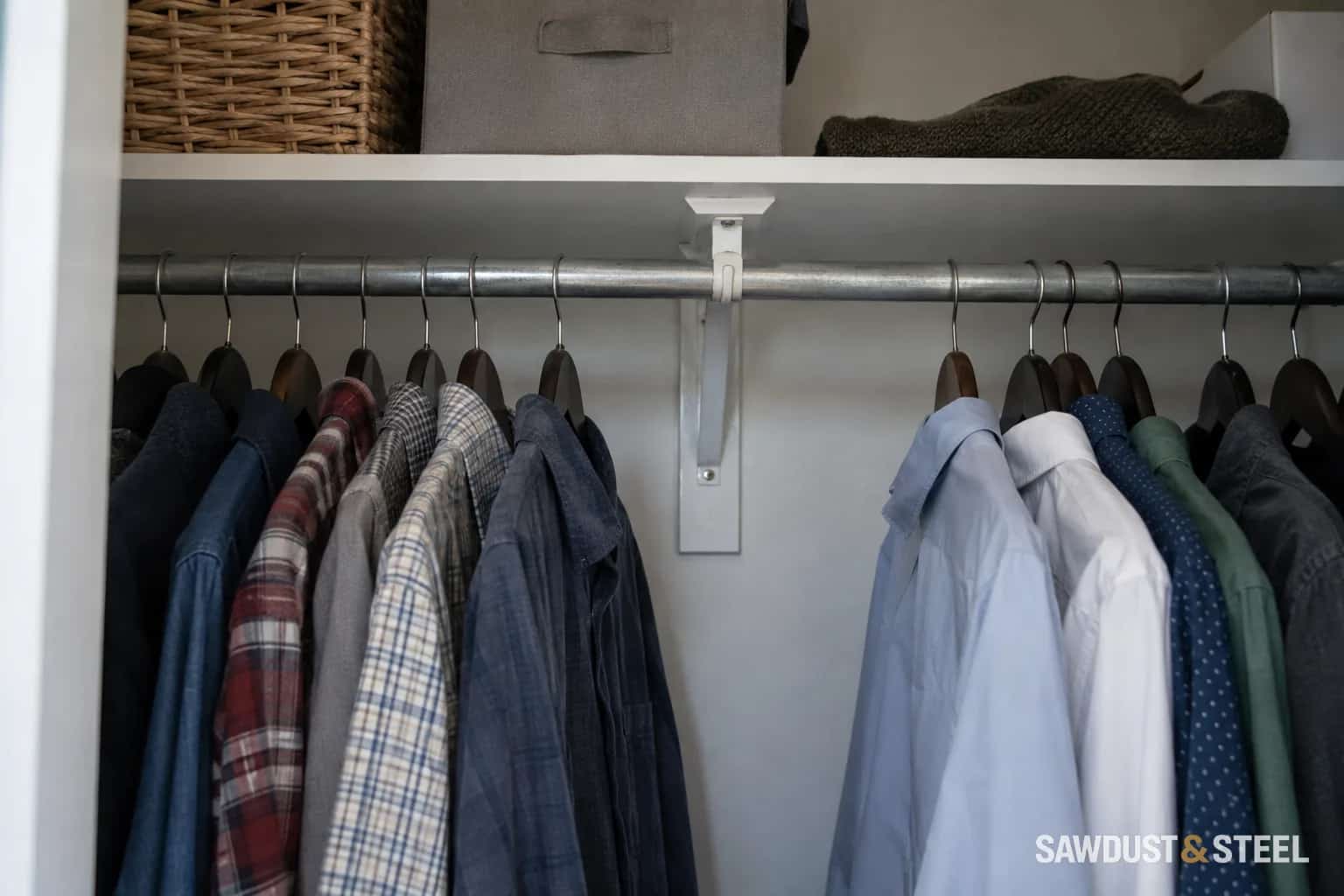
Cedar lining is often sold with a reassuring idea: install the boards, enjoy the smell and stop worrying about the winter clothes. The boards may be an appealing finish, but that last promise asks too much of them. Decide whether you like the material and then plan textile storage separately.
A cedar smell does not establish a protected closet
University of California's clothes-moth guidance describes limited effects from cedar's volatile oils and notes that these diminish as wood ages. A tightly constructed container also matters. Those conditions do not turn an ordinary walk-in or sliding-door closet into a reliable protective enclosure.
There is no useful homeowner test in which a stronger smell proves that every garment is safe. Adding cedar blocks, leaving a few boards exposed or sanding old lining to renew its aroma does not establish protection throughout a large cupboard. Do not put off investigating new holes or larvae because the room still smells of cedar.
Decide what you want the lining to do
| Your priority | A better decision question |
|---|---|
| A wood-lined closet | Do the appearance, aroma, cost and maintenance suit the room? |
| Seasonal wool storage | Can clean, dry garments be stored in suitable closed containers and inspected? |
| Valuable textiles or heirlooms | What enclosure and contact materials suit their conservation needs? |
| An existing damp cupboard | What is causing the moisture, and how will it be corrected before lining? |
Price the finished job rather than the board package alone. Lining thickness changes the space around shelf supports, rods and door clearances. Plan the fixing method, corners and access to existing hardware. Retain access to electrical equipment and other services; do not bury them behind a decorative layer.
A cupboard already carrying a musty smell needs investigation before new lining conceals its surfaces. Cedar aroma can make inspection less straightforward without curing the underlying moisture. Keep storage away from known wet surfaces and resolve the cause rather than enclosing it.
Daily clothes and a family heirloom need different treatment
The Canadian Conservation Institute's textile-care guidance cautions that wood can release substances harmful to textiles and discusses suitable barriers and storage materials. Its conservation context is especially relevant to valuable, fragile or historic pieces. It is not a reason to declare every wooden household closet unsuitable for daily clothing.
For an heirloom quilt or rarely worn wool garment, choose the container and contact materials deliberately rather than laying it directly against aromatic boards. Seek textile-conservation advice for items whose loss would be difficult to replace. For ordinary seasonal clothes, follow the garment's cleaning and drying instructions before storage and choose an enclosure appropriate to the fabric and conditions.
The UC guidance emphasizes inspection and housekeeping because larvae, rather than the flying adult moths, damage susceptible materials. This article is a material and storage decision, not an infestation-treatment schedule. If damage is active, identify the cause and get suitable local advice before moving affected items through the rest of the home.
Keep the closet easy to open, see into and clean
Deep inaccessible shelves and overflowing bins make any lining less useful. Leave enough access to remove stored items and inspect corners. The closet shelf-depth guide helps prevent the back row becoming permanent storage you never actually check.
Repair damaged doors before improving the interior. A cracked mirrored panel needs its own safe replacement assessment; it should not keep you from reaching the cupboard for months. When the opening is sound, fit the storage to what you own and how often you use it. Cedar is a reasonable finish choice when you like it. The useful protection comes from the storage routine and appropriate enclosure, not the scent alone.