
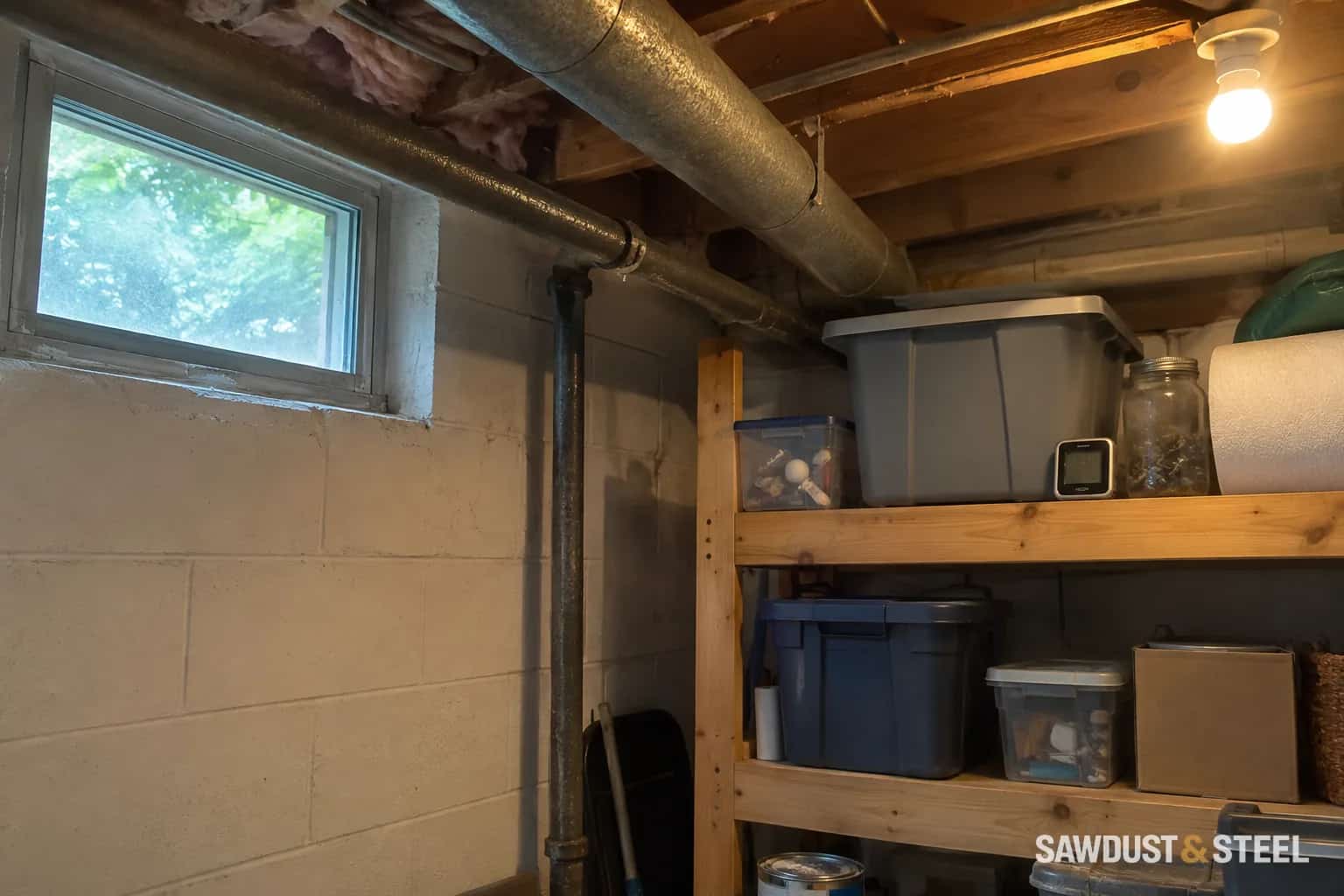
The holiday decorations are easy to forget for eleven months. That makes their corner a poor early-warning system for a damp basement. Arrange storage so a quick look shows the floor and wall instead of a solid block of cardboard.
Choose a place you can inspect
Keep the lower wall visible enough to spot staining or water, and leave a usable route to plumbing cleanouts, shutoffs and equipment. No single shelf offset suits every room: the practical test is whether you can inspect and clean behind the storage without dismantling it.
Health Canada: addressing moisture and mould indoors recommends plastic bins instead of cardboard for basement storage and advises against cardboard directly on the floor. Use containers for clean, dry items; closing a damp towel inside a bin simply makes it harder to notice.
Replaceable dry supplies
Lidded bins on suitable shelves keep items organized and visible.
Photographs and important papers
Choose a drier, more stable location elsewhere in the home.
Water-sensitive furniture or textiles
Keep them out of a location with unresolved moisture.
Check the shelving, not just the bin lids
Choose shelves rated for the actual loads and follow their assembly and stability instructions. A shelf of dense books or tile offcuts is much heavier than one of winter coats. Distribute loads deliberately, and do not drill into a foundation or hidden wall services without establishing a suitable anchoring detail.
Label the end of each bin you can actually see. Keep heavy items within a comfortable lifting range. If you have to unload half the basement to inspect one stain, the storage arrangement needs another pass.
Use the first damp box as a prompt to investigate
Record where it sat and whether the room recently had a leak, humid spell or water entry. Have the moisture source addressed before restocking that area. If there is visible mould or damaged porous material, use appropriate assessment and disposal guidance rather than brushing it off into the room.
A dehumidifier can help control room moisture when properly selected and maintained, but it cannot repair water entering at a carpet edge. Likewise, better bins do not make a chronically wet basement ready for finishing.
Make a short recurring inspection easy
Check after heavy rain and during routine seasonal sorting. Look at the visible floor, wall and container bottoms, not just the contents. Keep any window covering from creating another hidden wet corner; condensation behind curtains can go unnoticed for the same reason.