
The cleaning cupboard usually gets the space left over after everything else is designed. Then the vacuum handle catches the shelf, the mop falls out and the spare paper towels sit in front of the one bottle you need.
A better cupboard starts with the actual tools on the floor. You are designing a place to put them away and take them out, not just proving that their measurements add up to less than the cabinet volume.
Lay out the equipment first
Group the vacuum, mop, broom, bucket, dustpan and attachments. Measure each in its ordinary stored arrangement. Include a vacuum's hose bend, charger or docking bracket, and the widest part of the floor head. Check whether a telescoping handle really gets shortened after every use; if nobody does that now, do not make it essential to the new layout.
Elfa's measuring and planning guidance is a useful starting point for matching a storage layout to the room and its contents. Here, the long uninterrupted bay is often more valuable than another shelf. Keep the items used together close without making one obstruct the other.
| Item | Extra space to check |
|---|---|
| Upright or stick vacuum | Head width, handle tilt, docking release and removal path. |
| Canister vacuum | Hose storage without a tight forced bend and room to lift the body. |
| Mop and broom | Full handle length and a holder that releases without lifting into a shelf. |
| Bucket | Handle raised for carrying and access without moving chemicals. |
| Small attachments | A visible tray or holder that does not bury them behind the vacuum. |
Give the largest item a simple exit
Put the vacuum in the proposed position and act out taking it out. Does its head clear the door opening? Can you release a wall-mounted unit without hitting a shelf above it? Does the door open far enough for the handle to swing?
For example, a cupboard can be deep enough for a vacuum laid diagonally but still require the bucket to come out first. That arrangement may suit rarely used equipment. It is frustrating for the vacuum used every day. Give the daily tool the direct route and let less-used items occupy the awkward corner.
At one narrow hall cupboard, we shortened a shelf rather than shifting all the shelves higher. The uninterrupted slot let the mop and broom stand normally while folded cloths retained a useful shelf beside them. A small change in shelf shape beat a complete cupboard rebuild.
Separate damp equipment from dry supplies
Dry a mop and other wet tools as their instructions require before enclosing them with paper goods or stored textiles. Provide a removable, cleanable tray where drips may occur, but do not treat the tray as permission to store a wet tool indefinitely in a closed cupboard.
Keep damp cloths out of a sealed pile. Set a household routine for laundering and drying them, and reserve a place for clean dry cloths. Wipe up leaks promptly and address swollen shelves or persistent odours instead of covering them with a new liner.
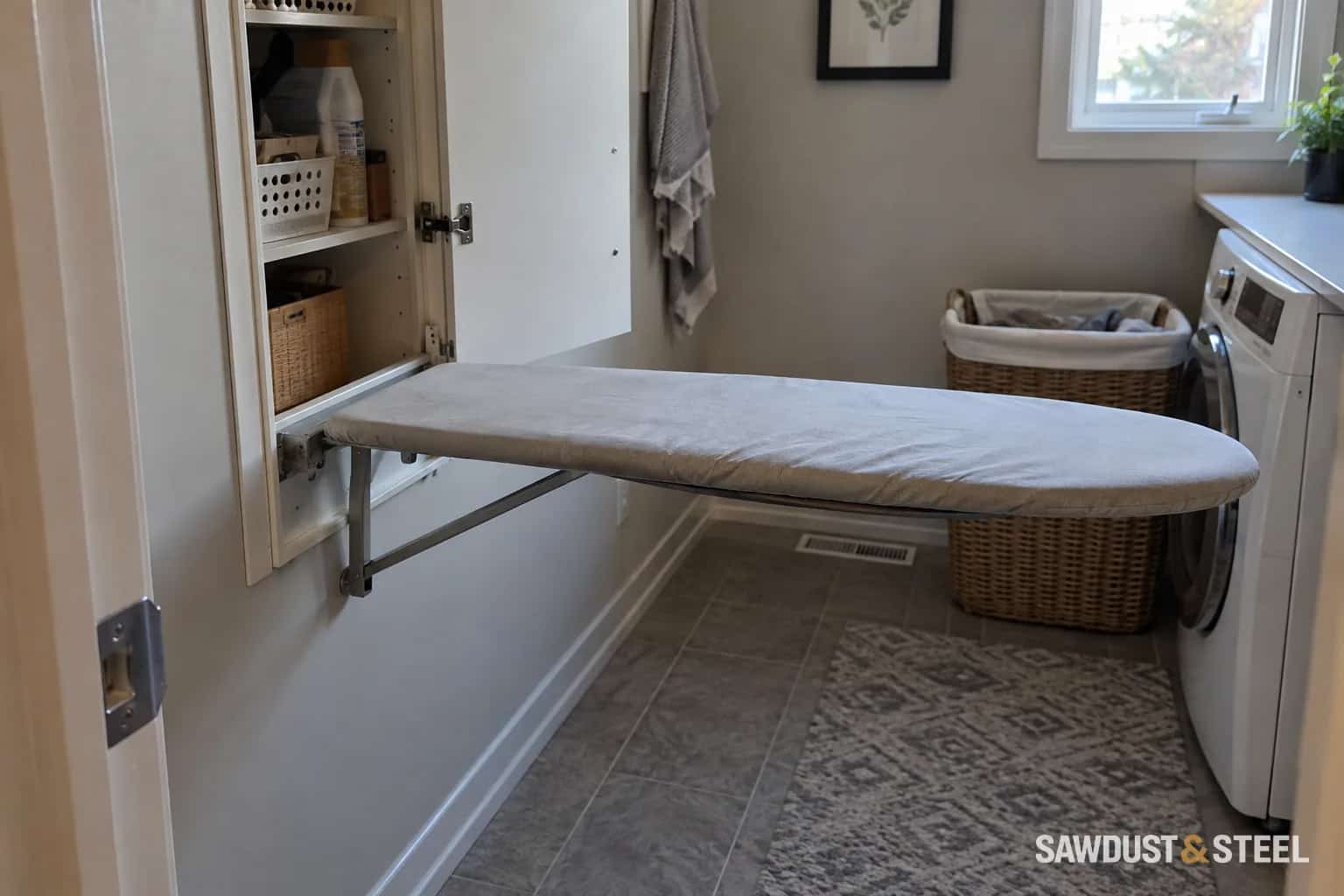
If the storage shares a laundry room, coordinate it with the ironing-board operating area and counter over the machines. The cupboard door should not block the space needed to use those surfaces.
Keep chemicals identifiable and secure
Health Canada's household chemical guidance advises keeping products tightly closed in their original labelled containers and out of sight and reach of children and pets. Its healthy-home tips also recommend locked chemical storage. Follow each label's storage and separation instructions; decorative decanting bottles are a poor trade for losing the product identity and directions.
Plan a secure compartment that fits the real containers upright. Do not assume a high open shelf is enough for every household. Keep chemical products separate from food, medicines and personal-care supplies, and do not store incompatible products together contrary to their labels.
If you choose a pullout caddy, use its published internal dimensions and load instructions. Check the tallest bottle with its cap on and the full extension needed to lift it out. Buy the organizer after the inventory, not before it.
Treat charging as a separate requirement
A cordless vacuum dock may be a holder, a charger or both. Follow the appliance's instructions for location, ventilation and supply. Keep cords out of hinges and away from damp equipment. If a receptacle is needed, have the electrical work planned properly; do not conceal an improvised extension lead through the cabinet wall.
Leave the layout adjustable where practical. A replacement vacuum may have a different head, and a new mop may not share the old holder. The useful test is still wonderfully ordinary: open the door, take out what you need and put it away without a small avalanche.