
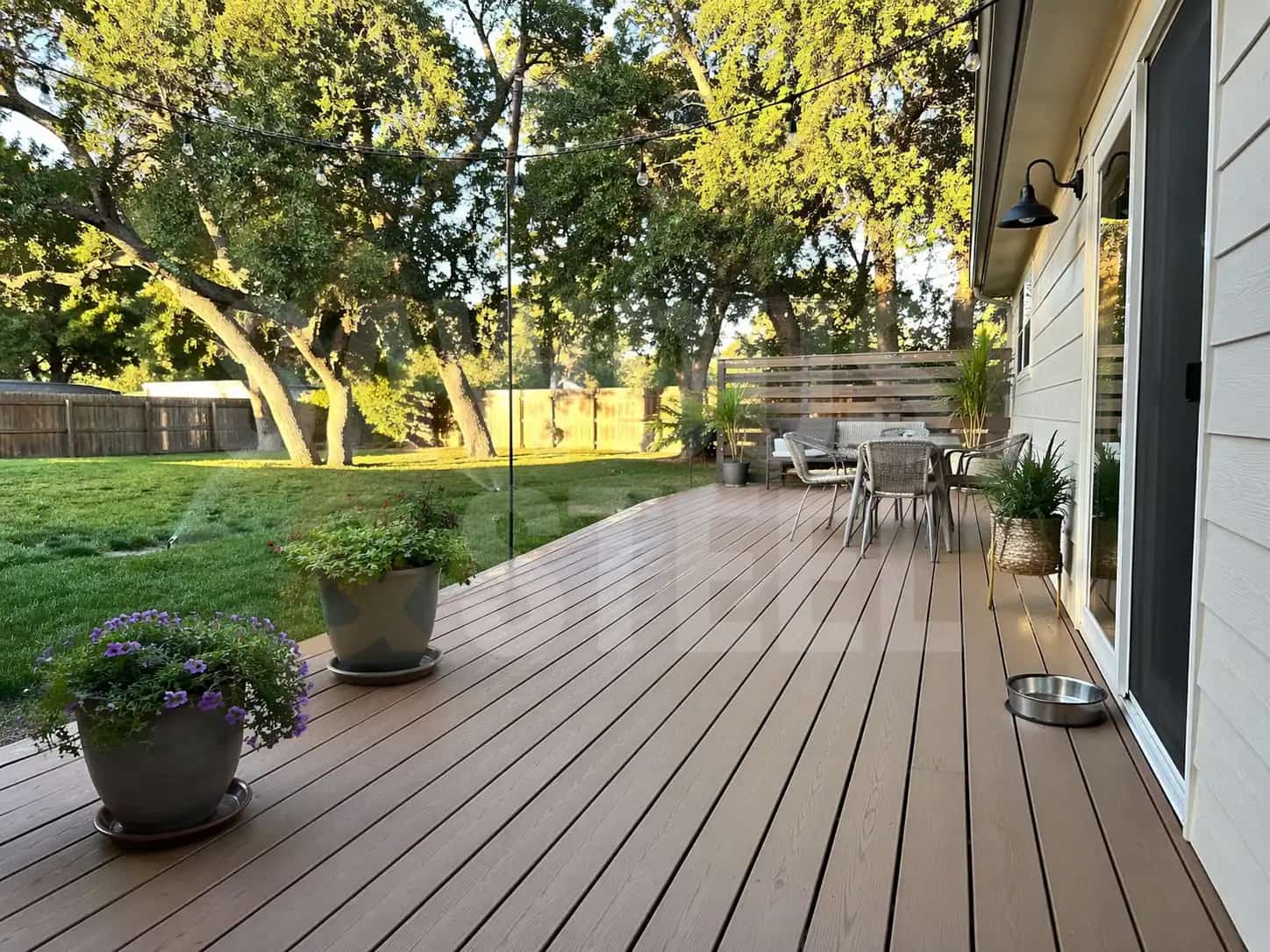
A chair drags, a planter shifts, and a pale line appears across the deck. Before reaching for sandpaper, work out whether you are looking at transferred material, a surface scuff or a cut through the board's outer layer. They can look surprisingly similar in a photograph.
Start with the identity of the board
Find an invoice, spare offcut or product label. Record the brand, range, colour and approximate installation date. "Composite" covers products with different surfaces and care instructions. Even two generations from the same manufacturer may need different treatment.
Trex separates care instructions by decking generation. Its guidance for early products should not be borrowed for a newer capped board simply because the logo matches. Send the maker a whole-board photograph and a close view in ordinary daylight, alongside whatever product information you have.
Clean first, gently
Remove loose grit and clean a small area with the product's approved method. Rinse as directed and inspect after drying. Rubber from a furniture foot or dirt pushed across a grain pattern may be sitting on the surface rather than cut into it. Scrubbing harder before identifying the material can enlarge the problem.
| What remains | What to investigate |
|---|---|
| A mark that lifts during approved cleaning | Transferred material; improve the furniture contact point. |
| A shallow scuff with no obvious torn edge | Manufacturer advice for that exact surface and generation. |
| A cut, torn cap or exposed inner material | Whether the board requires replacement. |
| A dent or distorted patch near heat | Heat damage and its source, rather than a scratch repair. |
Do not test a sharp edge with bare fingers. Keep people away from any loose, sharp or damaged area until it is assessed. An aesthetic mark and a damaged walking surface deserve different levels of urgency.
Why sanding and heat are poor default advice
Trex's FAQ says not to sand its decking: sanding changes the appearance and can damage the protective surface. A wood-deck repair technique is not transferable merely because the composite has a convincing grain pattern.
Heat-gun videos are especially hard to generalize. A warmer-looking patch on camera says nothing about cap integrity, colour stability or the consequences for that product's warranty. Do not experiment on the installed deck. If the manufacturer offers a specific repair method, get the instructions for the exact range and follow its limits; otherwise discuss replacement.
Paint, stain, filler and touch-up pens also need product approval. A colour match today may weather differently or leave a slippery patch. Cleaning products proposed for a different problem are not scratch repair products: for example, static shocks on composite decking have a separate diagnosis and care route.
Prevent the next scrape without trapping moisture
- Clean grit from furniture feet and replace damaged glides with ones compatible with the decking.
- Lift heavy planters or use a suitable moving method instead of dragging them.
- Check mat and pad compatibility; some materials can stain or retain moisture.
- Keep the exact product identification with the house records for future repairs.
If a board must come out, ask the installer how its fastening system allows replacement and whether matching stock remains available. Hidden clips, adjacent boards and end details can affect the work. A spare board from the original order is useful, but weathering can still make its colour differ. Compare that likely result with the existing mark before choosing an invasive cosmetic repair.