
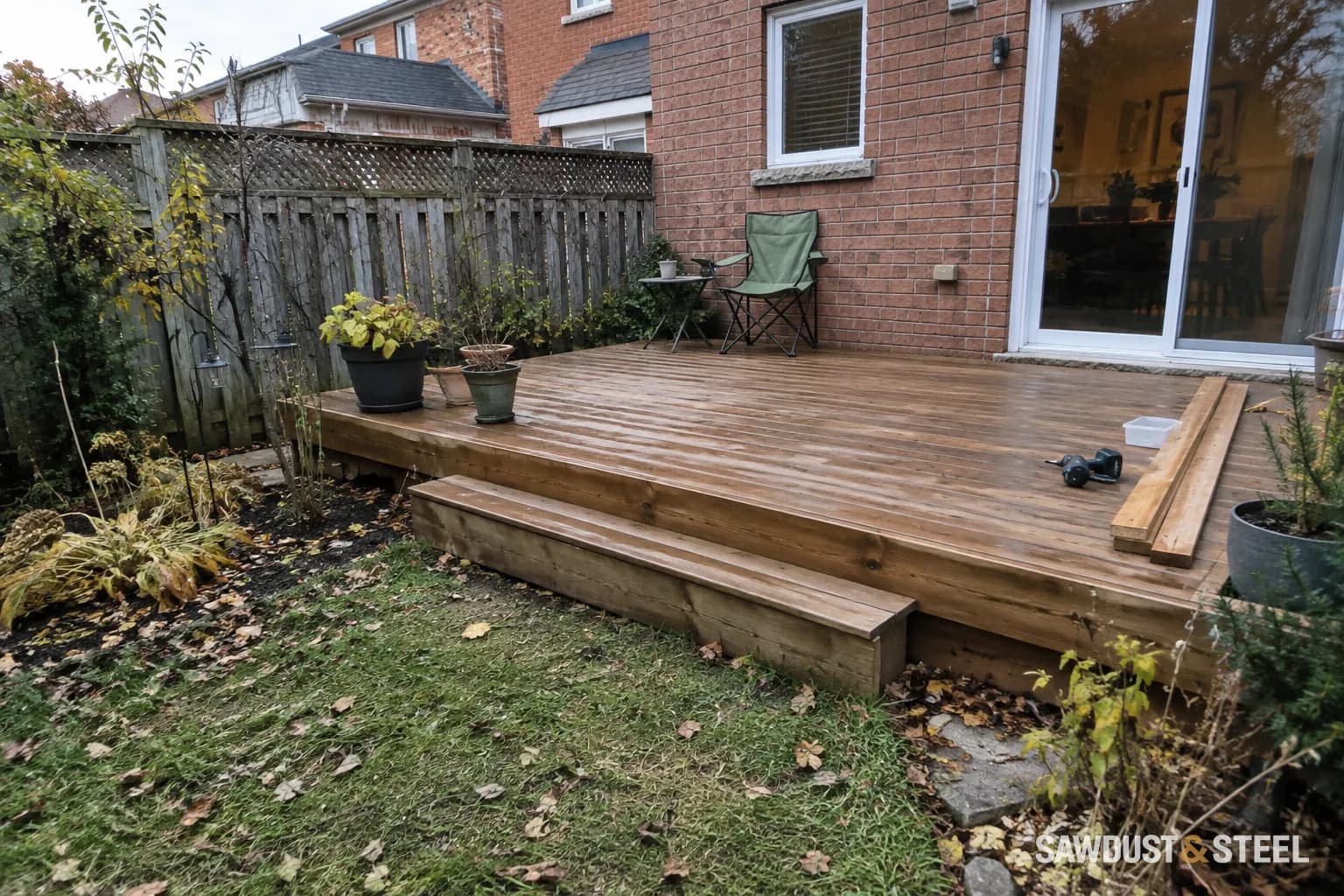
We once laid three board samples outside an Oakville kitchen door and left the owner to live with them for a few days. The cedar won on appearance; the composite won when she thought about another weekend spent refinishing. Neither answer was wrong. Think about your ordinary afternoon: bare feet, full sun, food spills and how much maintenance you actually want to do. Then price the shortlisted boards on the same complete deck design.
Which decking material fits your priorities?
| Decision | Cedar | Composite or PVC | Pressure-treated |
|---|---|---|---|
| Best fit | Natural appearance and finish choice | Less refinishing and consistent colour | Lower initial surface-material cost |
| Routine care | Cleaning plus finish inspection | Cleaning with approved products | Cleaning, drying, and finish inspection |
| Installation variable | Grade, moisture, gaps, and corrosion-resistant fasteners | Exact line, temperature, layout, gaps, clips, and support | Treatment type, moisture, end cuts, and compatible fasteners |
| Check before buying | Full-size board after wetting and sun exposure | Heat, traction, sheen, warranty, and local availability | Board straightness, grade, treatment label, and drying plan |
What do you gain and give up with cedar?
Western red cedar gives you a real wood surface that can be finished or allowed to weather naturally. It also asks you to pay attention to grade, moisture, sun, drainage, and the finish manufacturer's recoat signals. A universal stain it every two years rule is too tidy for different exposures and products. Inspect the surface and follow the selected finish instructions; our new-deck staining guide explains why moisture matters more than the calendar.
The Western Red Cedar Lumber Association's fastener guidance recommends corrosion-resistant fasteners and warns against products that can corrode or stain cedar. Fastener grade is not an aesthetic upgrade. It must suit the wood, connector, exposure, and approved detail.
Cedar can be finished to retain colour or allowed to weather. The care plan should be chosen before installation.
What changes when you choose composite or PVC?
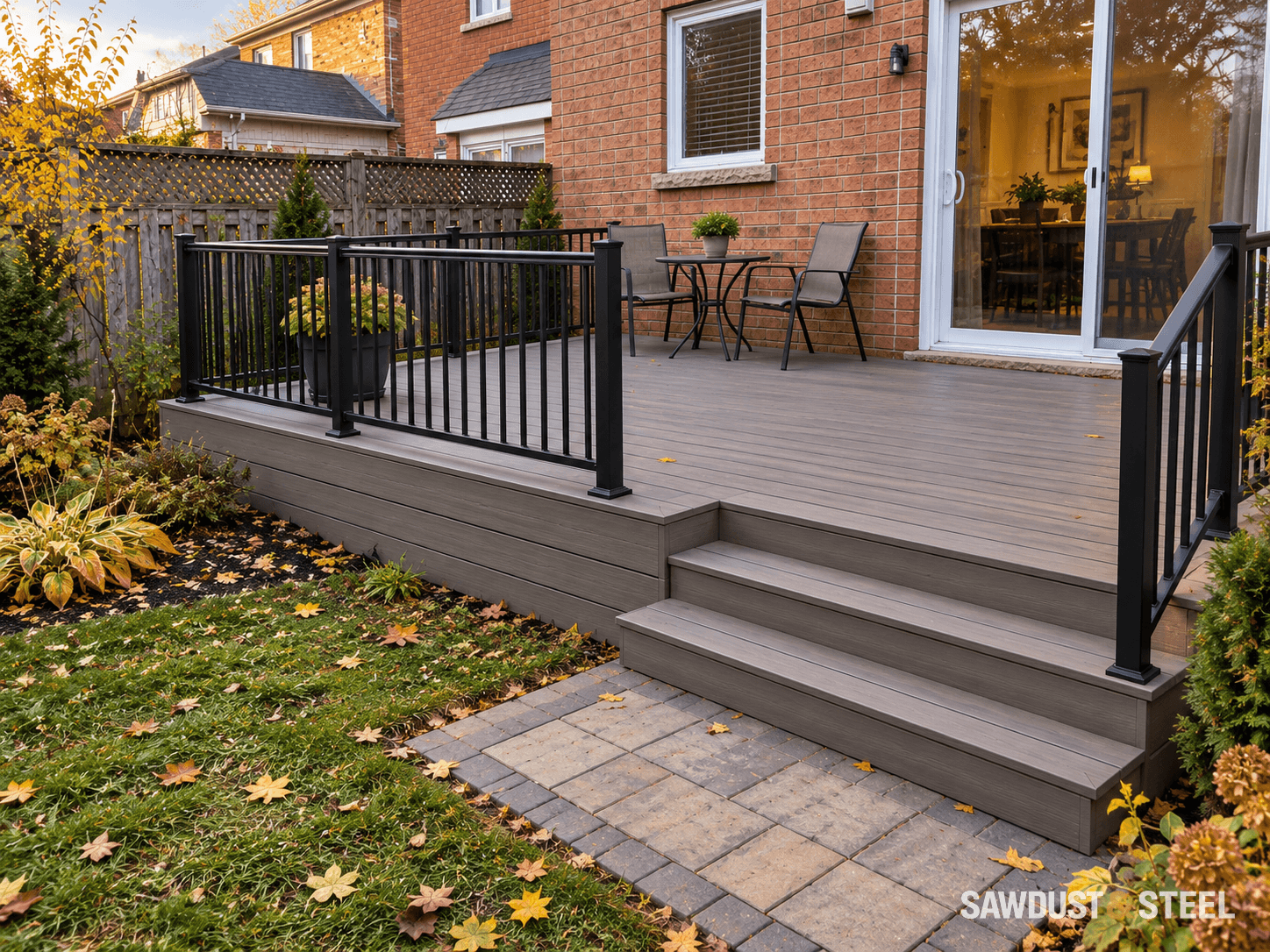
Composite and PVC are families of products, not one interchangeable board. The exact collection controls maximum joist spacing, diagonal-layout support, end and side gaps, stair-tread framing, approved fasteners, overhangs, ventilation, and warranty coverage. TimberTech's current installation guides and Trex's joist-spacing guidance both send the installer back to the selected product and layout. Check these details before the frame is built.
Colour and exposure matter too. Every outdoor surface can become hot in direct sun, and a small indoor sample will not tell you how a dark board feels on a south-facing deck. Put full-size samples outside, wet them, walk on them with the footwear your household uses, and check them again in afternoon sun. Less refinishing does not mean no care: Trex and TimberTech publish different Trex care instructions and TimberTech cleaning limits for their products.
When does pressure-treated decking make sense?
Pressure-treated decking is useful when the initial surface-material budget matters and a natural wood appearance is acceptable. The treatment label, use category, lumber grade, moisture at installation, end-cut treatment, fasteners, and finish plan still need to be specified. Wet boards can shrink as they dry, so a fixed gap copied from another project is not a specification.
Wood Preservation Canada says exposed cuts and holes should receive an appropriate registered end-cut preservative and that hardware must be compatible with the preservative and intended exposure. Its deck-board fastening tips also call for exterior fasteners approved for treated wood. Match the hardware to both the treatment and the connector specification.
Does the decking choice change the frame?
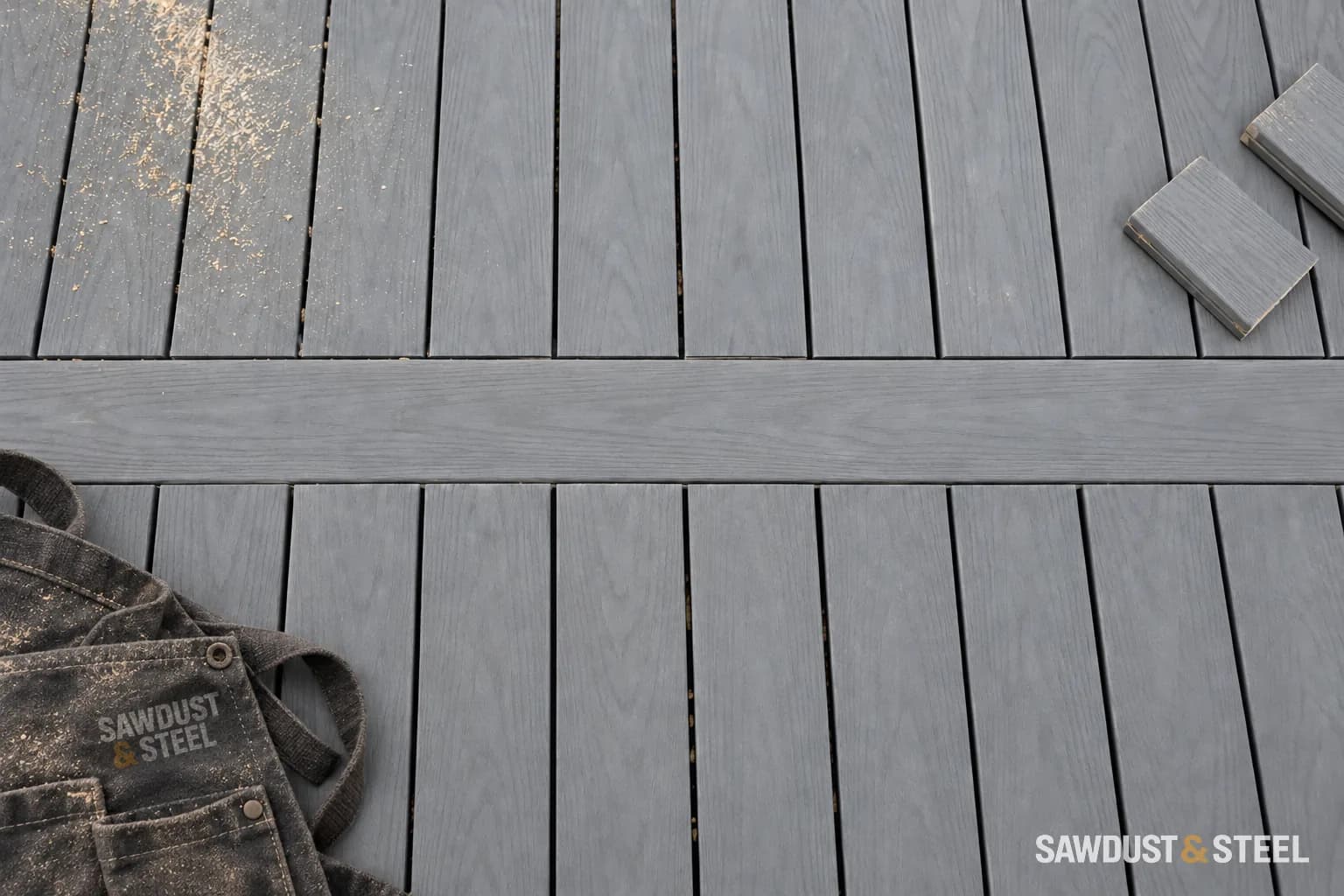
Often, yes. On that Oakville deck, a border looked like a small finish change until we drew the extra support beneath the board ends. We settled it before ordering the frame. Board thickness, direction, picture framing, stair layout, concentrated loads, and hidden-fastener systems can change joist spacing and blocking. The City of Mississauga's current deck drawing requirements require the framing plan to show member size, type, grade, spacing, spans, piers, beams, and posts. The approved drawing and selected board instructions should agree before material is ordered.
What should the decking quote specify?
- Exact manufacturer, collection, profile, colour, board dimensions, and quantity allowance.
- For wood, species, grade, treatment label where applicable, moisture condition, and finish system.
- Joist spacing, blocking, borders, stairs, ventilation, gaps, and overhangs tied to the approved drawing and product instructions.
- Fastener and connector manufacturer, model, material, coating, and visible or hidden layout.
- Treatment of cut ends, exposed framing, ledger water management, and board-end details.
- Cleaning, finish, warranty-registration, and replacement-board information handed over at completion.
Once you've narrowed it to two surfaces, the next question is what changes in the whole quote. Our GTA deck-cost guide shows where boards, framing, stairs and access each affect the total. Take the exact product names with you. A composite allowance is still a fairly large space in which to hide a different deck.