
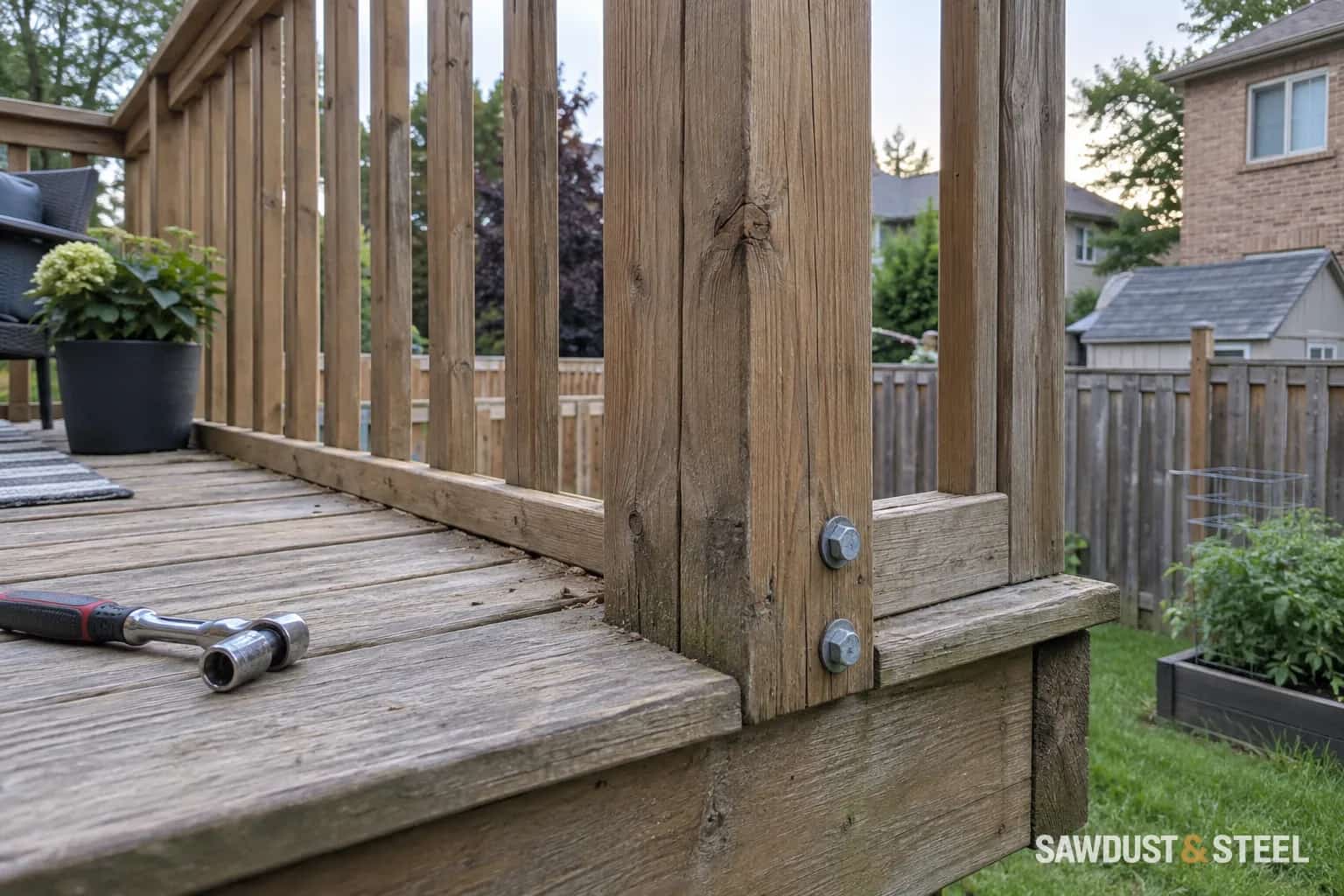
The owner had already bought a packet of longer screws. They were on the patio table beside the tea. From above, his loose railing looked like a small fastening job. Once the connection was visible, the board behind the post was moving too. The screws went back in their packet.
First, keep people away from the loose edge
A guard exists to resist a fall. Do not use a deliberate shove or a gathering of guests as a load test. Keep the affected deck area out of use until someone competent has assessed it. If safe access cannot be separated from the loose edge, keep off the deck.
A photograph can show where a post sits, but it cannot establish the condition of concealed wood or the capacity of the connection. A little movement at the top may involve more than the part you can see.
Follow the movement down into the frame
The inspection should establish whether the movement is in the rail-to-post joint, the post itself, its fasteners, or the framing receiving those fasteners. Rot, splits, crushed fibres, corrosion and missing or unsuitable blocking can all change the repair.
Simpson Strong-Tie's deck connection guide treats guard-post attachment to framing as its own structural detail. It is a US-code design resource, useful for understanding connections; an Ontario repair still needs an appropriate local design and suitable products.
- Expose enough of the assembly to see the connection and supporting wood.
- Identify the actual fasteners and connector, including corrosion compatibility.
- Check the condition and arrangement of the rim, joists and blocking.
- Agree the repair detail and any permit or inspection requirements before covering it.
Tightening is a result of a diagnosis
A loose nut on an otherwise suitable, sound connection is different from a bolt crushing decayed timber. Tightening the second one can make it feel better for a moment while worsening the damaged wood. Ordinary decking screws are not interchangeable with a connector's specified structural fasteners.
A repair may involve opening a border board or part of the fascia to rebuild the backing. That can look like a larger job than the homeowner expected. It is still smaller than repeatedly repairing the visible symptom.
At this deck, the repair included the supporting framing detail. We photographed it before replacing the finish boards. The owner kept those pictures with the receipt, which was a much better souvenir than a packet of optimistic screws.
Check the rest of the guard while it is open
Review nearby posts and rails, particularly where the same detail repeats. This is also the time to check the guard's layout against the Ontario railing guidance. Toronto's deck application guide asks for guard details, reinforcing that the whole arrangement belongs in the plan.
Use the deck safety checklist for the wider inspection and the treated-lumber hardware guide when discussing replacement connections.