
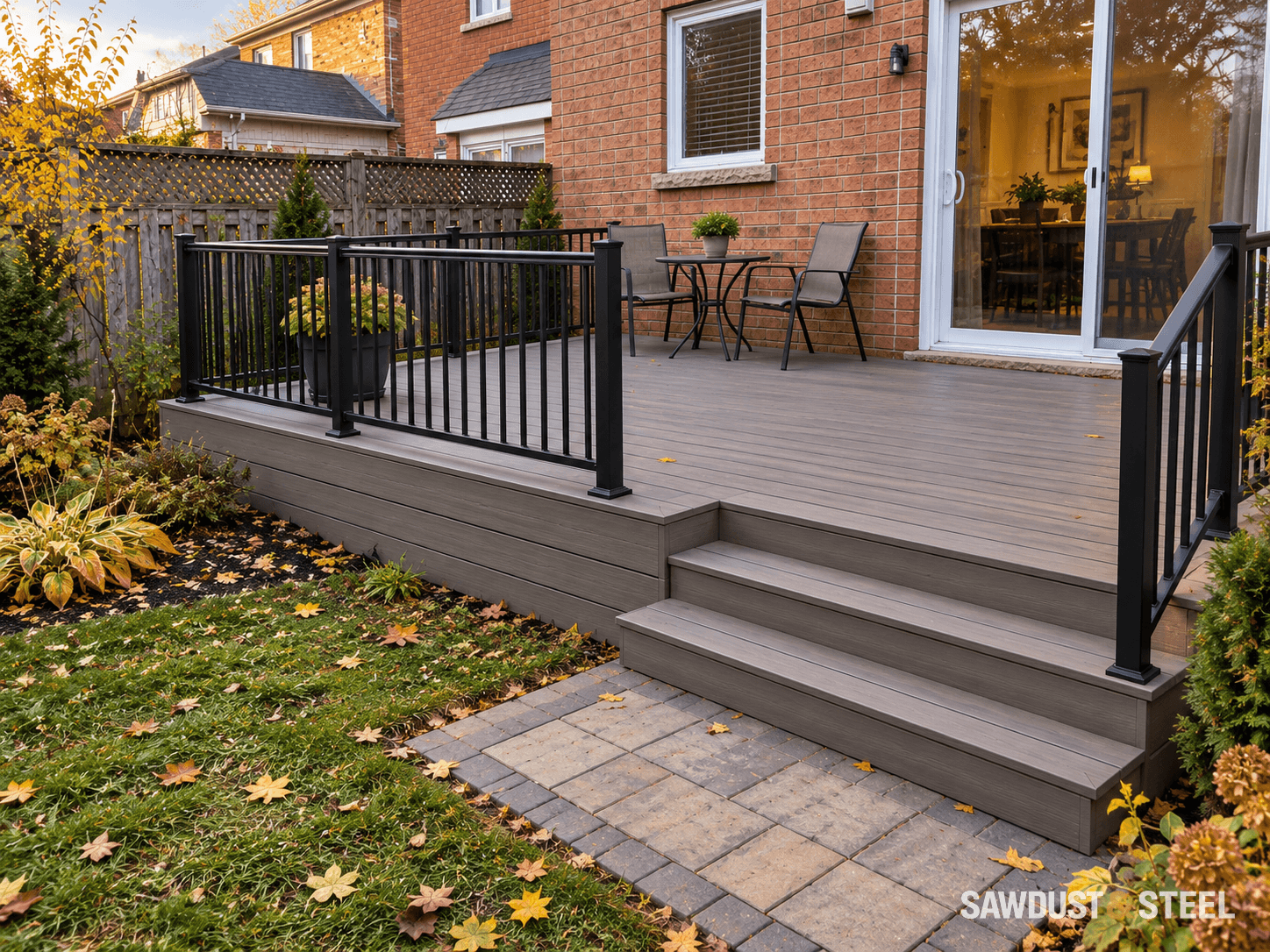
Start from the ground. A deck that has shifted, pulled away from the house or lost support should stay out of use until assessed. For an otherwise stable deck, a careful circuit can help you identify what to show a qualified inspector without climbing under a suspect structure.
Photograph the connections in a useful order
| Location | Photograph | Reason to escalate |
|---|---|---|
| House connection | Wide view and any visible flashing/ledger detail | New gap, movement or moisture damage |
| Beam to post | Beam seat and connector from a safe position | Shifted bearing, split wood or missing connection |
| Post base | Whole base, model stamp and surrounding ground | Soft wood, heavy corrosion or displaced support |
| Stairs and landing | Top attachment and bottom walking surface | Movement, loose treads or changed step height |
| Guard | Posts, infill and their attachment to deck | Loose or broken parts; do not lean on them to test |
A designed standoff is different from lost bearing
Post held above the pier
A suitable metal base transfers the post load while keeping the timber end above the concrete. Keep that drainage space clear of soil and mulch.
Erosion is a separate problem
A tidy-looking post base cannot tell you whether the footing below still has adequate support. Movement, washout and exposed foundations need assessment before backfilling.
Concept sections, not connection designs. The specified base controls standoff, fastening and anchorage; a visible gap alone does not prove a sound support. Example: Simpson Strong-Tie ABA base instructions.
Simpson's ABA post-base instructions show a designed standoff that keeps the post end above the concrete. The post bears on the connector's seat; the air gap below that seat is intentional. A post that has lifted off its seat, slipped sideways or lost sound wood at the bearing surface is a different condition. Read the actual base model and installation details before interpreting the gap.
Do not fill a designed drainage space with wedges, soil or decorative stone. Clear loose leaves without disturbing the connection and look at where water goes after rain. A post wrap should allow inspection and should not trap wet debris around the base. When landscaping changes the ground level, show the proposed finish height against the existing connector before the stone arrives.
Ask for close photographs plus one wide view that identifies the post in the deck. A close-up of a metal bracket with no location is surprisingly easy to lose in a folder of similar brackets. Record the model stamp if readable, what changed and when; leave fasteners and anchors in place for the assessment.
Use the outdoor hardware guide to organize product information. A changing bottom step also deserves the separate stair and landing movement check.
This is a homeowner observation list, to use from stable ground or another safe vantage point. It is not a reason to crawl beneath an unstable deck, lean hard on a guard, or bounce on the boards to see what happens.
Start where the deck meets the house
Look for a widening gap, staining below the connection, displaced flashing, or a section that appears to be pulling away. Photograph changes from the same position so a professional can compare them. On one spring visit, the homeowner's older photo showed the gap beside the siding had grown; the fresh stain on the deck had made it much harder to notice in person. We kept the deck out of use while the connection was assessed. A photograph with a date was more useful than a guess about how long it had looked that way.
Simpson Strong-Tie's connection guide treats the deck as connected parts, including the ledger, posts, beams, joists, and guards. A sound walking surface does not answer every structural question.
Make one careful circuit
- Posts: visible leaning, splitting at connections, or deterioration near the base.
- Hardware: missing fasteners, heavy corrosion, loose brackets, or connections pulling apart.
- Walking surface: broken boards, raised edges, and changes in level.
- Stairs and guards: damaged supports, loose components, and an obstructed landing.
- Water: persistent damp areas and runoff collecting against the house or supports.
Know when the checklist ends
If the deck is visibly shifting, separating from the house, or has a failed support or guard, keep people off it and arrange a qualified assessment. Do not host the party first and book the inspection for Monday.
NADRA's evaluation guide is intended for deck professionals. That distinction matters: concealed decay and inadequate foundations can remain invisible during a tidy-looking walkaround.
Bring useful evidence to the visit
Gather the approximate age, any permit drawings, repair history, and photographs of what changed. Mention a new hot tub, roof, or heavy planter before discussing cosmetic repairs. Include when the movement or noise began, whether it followed winter, and which part of the deck it affects. You don't need to diagnose it or recreate it for a video. Those details help the assessor decide what needs opening up and what records to bring.
You may need a repair rather than a whole new deck. Once the immediate concerns are assessed, the next question is whether the existing frame is worth keeping. That decision is easier before you've fallen in love with a new board colour.