
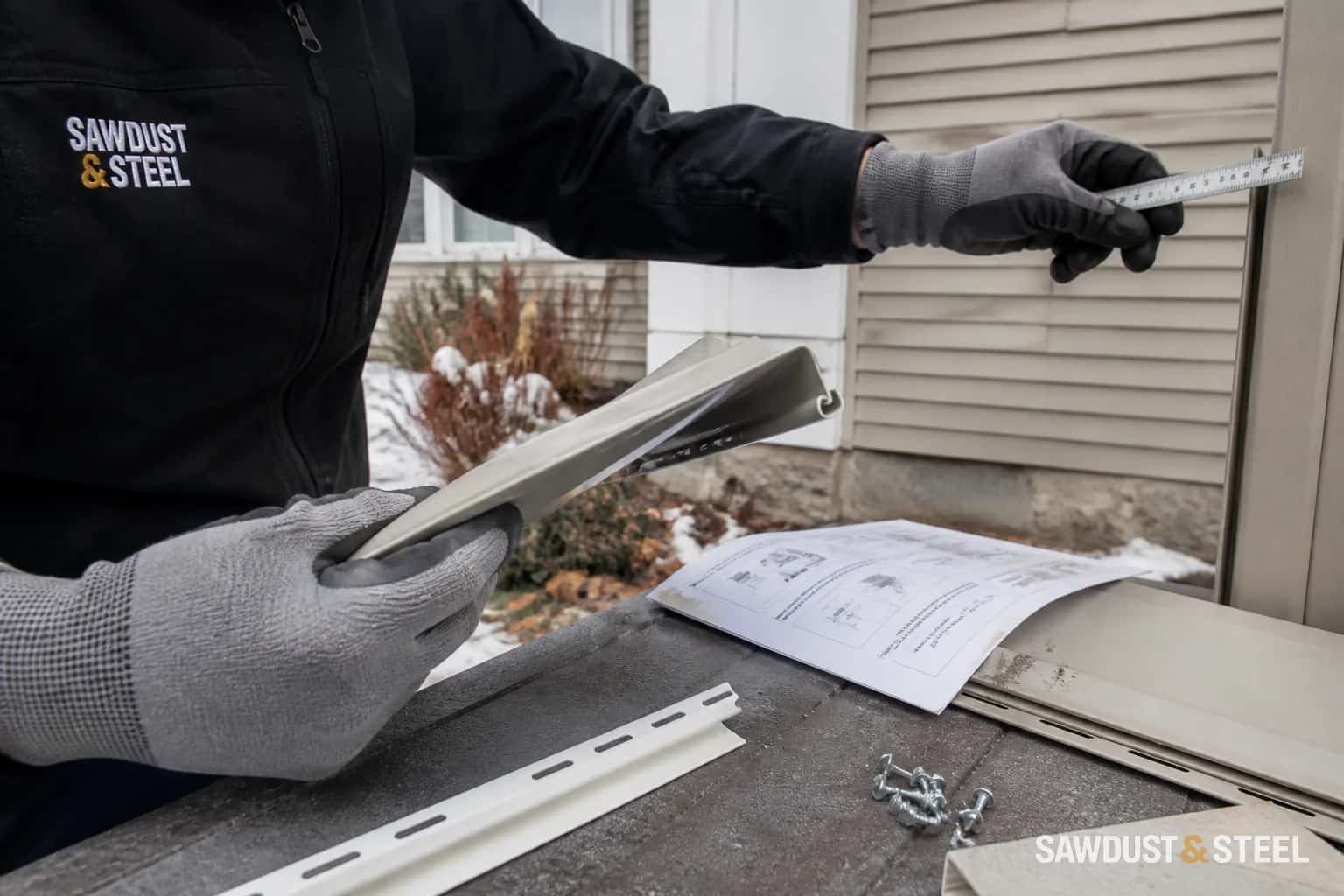
A wide joint can swallow a surprising amount of caulk and still fail. The aim is not to fill every hidden space with sealant. It is to form the joint shape that the selected product needs to accommodate movement.
First establish whether this joint should be sealed
Find the cladding, window or trim installation detail for the location. Some joints are designed for a sealant bead; others drain or allow a component to move. If the gap has appeared because a board shifted or a fastener failed, repair that condition before choosing a larger bead.
Sika Canada: SikaSeal-414 Backer Rod CA describes depth control and prevention of three-sided adhesion. In plain terms, the sealant should not become glued to a third surface at the back when the joint design expects it to stretch between two sides.
Width
Measure the actual opening along the run and compare with the sealant limits.
Depth
Set the backing position to the product's specified bead depth.
Bond faces
Prepare the intended side surfaces while keeping the backing compatible.
Select the sealant and backing together
Bring the materials and location to the supplier: painted wood to masonry is a different question from PVC to metal. Ask about adhesion, primer, weather exposure, movement and painting. Backer rod comes in different types and sizes; the choice should match the sealant instructions.
Do not substitute a strip of packing foam or force a sharp tool into a closed-cell rod. If the joint is too shallow for the specified backing, ask the manufacturer for the accepted bond-breaker detail. More force and more sealant are poor substitutes for a compatible assembly.
Look for the reason the previous bead failed
A bead peeled from one side suggests a different repair question from a tear through the middle. Photograph it before removal and note whether the joint changes seasonally. Unknown coatings and old materials need appropriate assessment before scraping or sanding.
If PVC trim repeatedly separates, review the trim fastening and movement plan. If the opening is in the lower brickwork, confirm it is not a weep. Sealant belongs in a specific detail, not in every line that catches your eye.