
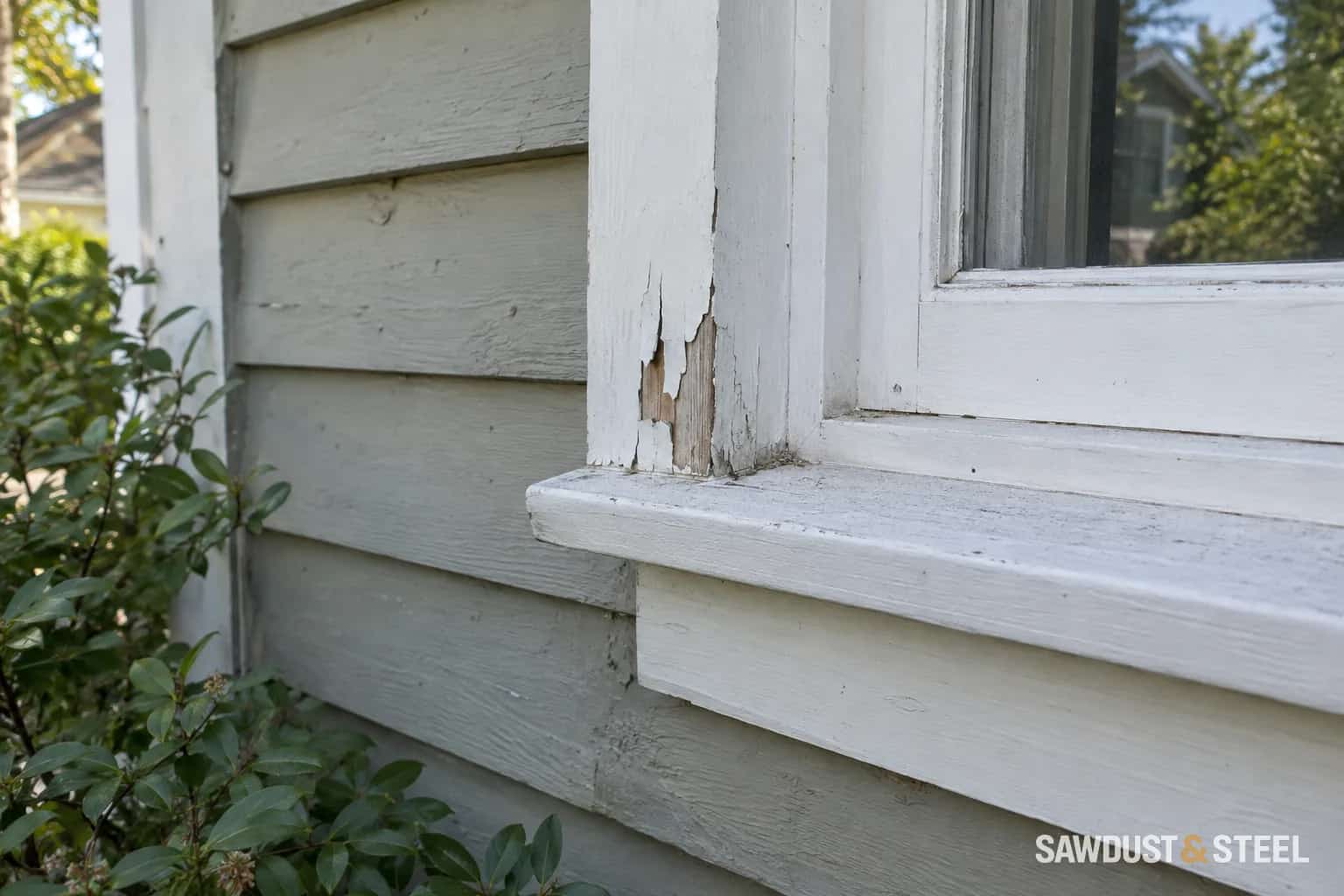
The bottom of a window surround collects the evidence. Flaking paint and softened corners may be easy to see, while the entry point is higher up. Take photographs before scraping or removing anything, including the head of the window and both side joints.
Ask where the water arrives and where it leaves
Record whether the damage worsens after wind-driven rain, appears below one joint or sits where a flat ledge holds water. Look from the ground for a gutter spill or missing-looking flashing detail above. An inspection should follow the water route through the whole opening, not stop at the first rotten piece.
Vinyl Siding Institute installation manual describes a wall water-management system that includes flashed openings and the layer behind the cladding. Decorative trim and a surface bead of sealant do not replace that system.
Trim only
The decorative board is damaged, with sound supporting material behind it.
Frame or sill affected
A window repair specialist assesses the unit and drainage.
Wall behind is wet
The opening detail and concealed wall need a broader investigation.
Do not make the bottom watertight by guesswork
Before adding caulk, identify the window model and its drainage arrangement. Some visible openings or joints are intentional. Smearing the entire perimeter can conceal a symptom while obstructing a water exit. If the installer cannot explain which joints are sealed and which drain, pause that part of the scope.
For older painted trim, discuss coating and hazardous-material assessment before disturbing it. The useful homeowner observations do not require sanding, drilling or pulling the surround apart.
Match the replacement to the repaired detail
New wood or PVC must fit the opening, flashing and finish plan. A rot-resistant board can still conceal a wet wall. Ask for photographs after removal and before the new trim covers the area, plus a record of the sealant and finish used.
Keep the repair accessible until the cause is understood. Where roof runoff contributes, start with water behind the gutter. If the new trim is PVC, review seasonal joint movement before copying the old joints exactly.