
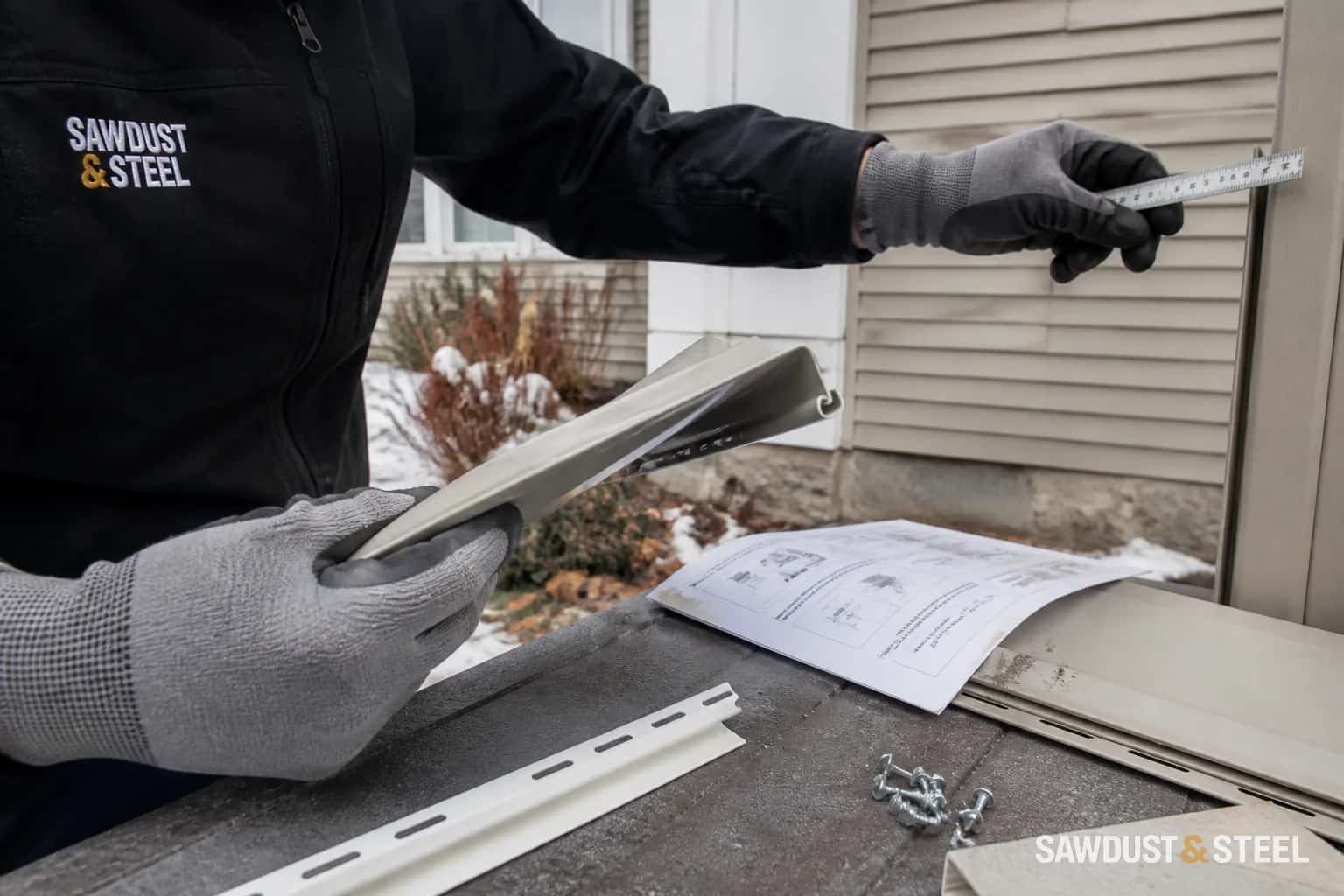
A joint can look tidy in July and conspicuous in February. Before blaming the sealant, photograph it in both conditions. Include a ruler and the full run of trim so the installer can see where the movement has accumulated.
Read the trim as a whole run
Identify the brand, board lengths, joint locations and any recent colour change. Note whether the gap is at a mitre, a straight splice or where PVC meets another material. Those connections do not necessarily use the same detail.
AZEK trim and moulding installation guide treats fastening, expansion and joining as connected parts of installation. Its directions are specific to AZEK products; they are not a universal recipe for every cellular-PVC board.
PVC-to-PVC splice
Was the specified joining system used for this product?
End of a long run
Where is the designed movement allowance?
PVC to another material
What compatible sealant and joint geometry were specified?
More fasteners is not a diagnosis
Ask the installer to check the concealed fastening arrangement and support, rather than simply pinning the gap closed. An improvised screw through the face may look reassuring without correcting the joint layout. A long run also needs a deliberate place for movement; closing every visible gap can transfer the problem elsewhere.
If the trim was painted a dark colour, give that information to the manufacturer. Product and coating compatibility can matter. Do not assume repainting will reverse distortion that has already occurred.
Agree on a repair that survives another season
The repair description should identify which boards or joints change, which adhesive or sealant is used and what finish work follows. Ask how the repair accommodates seasonal movement. A neat photograph on the day is useful, but a photograph of the same joint through the next hot and cold periods is a better check.
Where a sealant joint is part of the approved detail, backer rod and joint depth may matter. If the material at the sill is soft rather than simply separated, follow the moisture investigation for lower window trim first.