
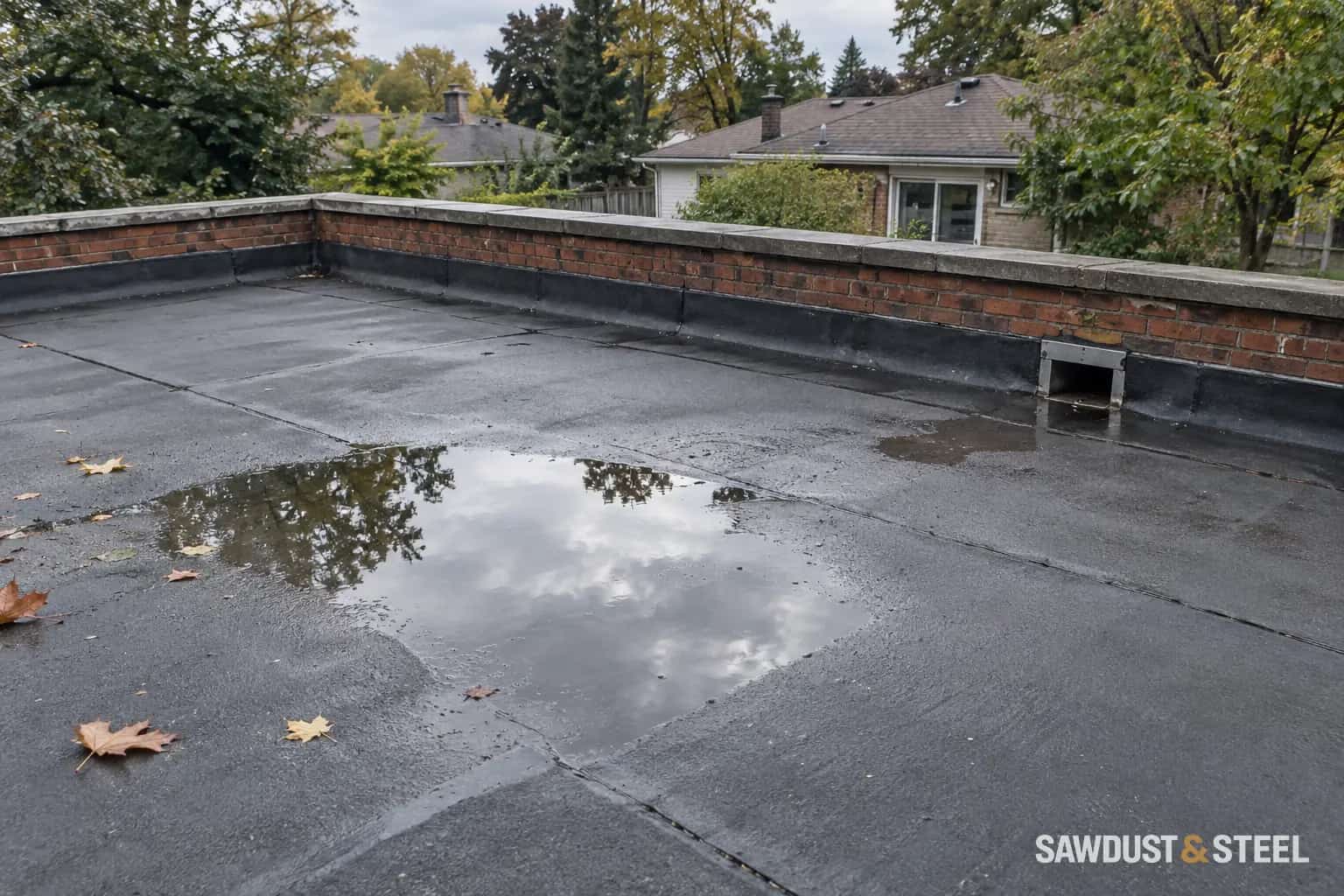
The rain stopped yesterday and the roof outside the upstairs window still has a dark puddle. A small residual patch and a growing pool deserve different responses, but neither can be diagnosed by calling the roof flat and accepting whatever water remains.
Observe without walking onto the roof
Use a safe indoor view or ground-level photographs. Record the time since rain, the location and whether the area is shrinking. Include another photograph after conditions change. Do not step out of a window, lean over a parapet or use a ladder to probe the water. A roof surface is not automatically a safe working platform.
If there is visible sagging, rapidly rising water, new interior leakage or signs of structural distress, keep people away from the affected area and arrange urgent professional assessment. Do not add your own weight to find out how deep the puddle is or drill a drainage hole through the roof.
Follow the intended route to the outlet
Ask the roofer to identify the drains, scuppers or edge outlets and the slope intended to carry water to them. A scupper is an opening through an edge or parapet that lets roof water discharge. The route beyond it matters too: water must still leave through suitable downstream drainage.
IKO's roof-drainage bulletin explains why drainage is preferable to ponding, including added loads and effects on membrane performance. Its commercial guidance is useful context, not a universal residential puddle-depth or time-limit rule. Check the actual roof system and project requirements.
| Observation | Question for the roofer |
|---|---|
| Water near a visible outlet | Is the outlet and downstream route clear and functioning? |
| Pool remains away from an outlet | Does the surface have a low area or interrupted slope? |
| Interior leak | Where is entry occurring and what concealed material is affected? |
| Changing sag or expanding pool | Is structural assessment needed urgently? |
An open drain does not prove a sloped surface
Debris at an outlet is one possible cause. A low area, altered edge detail or change in the supporting roof can also keep water away from the drain. Ask the assessor to distinguish those conditions before recommending only a cleaning visit or only a new membrane.
Give the roofer any history of equipment installation, reroofing or work near the parapet. A new support or patch may have changed the water route even if it has not itself leaked. Include information about repeated puddles in the same place and whether their outline has grown over time.
Compare drainage repair and membrane repair
A split membrane can need repair even after the water route is corrected. Conversely, coating an intact-looking surface does not create a useful slope or unblock an outlet. The written scope should say which problem each proposed item addresses and whether hidden wet materials need assessment.
Ask how the proposed repair ties into the existing roof and what temporary protection is needed. If tapering or rebuilding part of the assembly is proposed, clarify the effect on edge heights, flashings, thresholds and equipment. The low-slope roof material guide explains why the system choice must fit the actual roof rather than the preferred appearance.
Trace interior water separately
A stain below the puddle is important evidence, but do not assume its exact position identifies the entry point. IKO's leak guidance notes that water can emerge away from its origin. Have the roof and affected interior assessed together, including any damaged insulation or deck material.
Use roof quote section on hidden deck repairs if opening the assembly may reveal repairs. Agree how findings are documented, priced and authorized before the contractor removes a large area. A clear hidden-condition process is particularly useful when an apparently small wet patch has existed for years.
Keep maintenance access in the finished plan
Ask who can safely inspect and clear the outlets, how frequently the particular roof should be checked and what visible changes call for service. Trees, surrounding roofs and rooftop equipment can change the maintenance needs. Keep the outlet locations and contractor instructions with the house records.
If discharge reaches gutters or downspouts, include their capacity and condition in the assessment. The clean-gutter overflow guide shows why removing leaves is not the only drainage question. The roof's water route continues after it leaves the membrane.
Check after the next ordinary rain
Compare photographs from the same safe position and note the elapsed time. Follow the roofer's agreed completion checks rather than adopting a random online rule that every roof must be completely dry after a particular number of hours. Report persistent or worsening water with the record attached. A useful repair changes the drainage behaviour and addresses affected materials, not just the colour of the patch.