
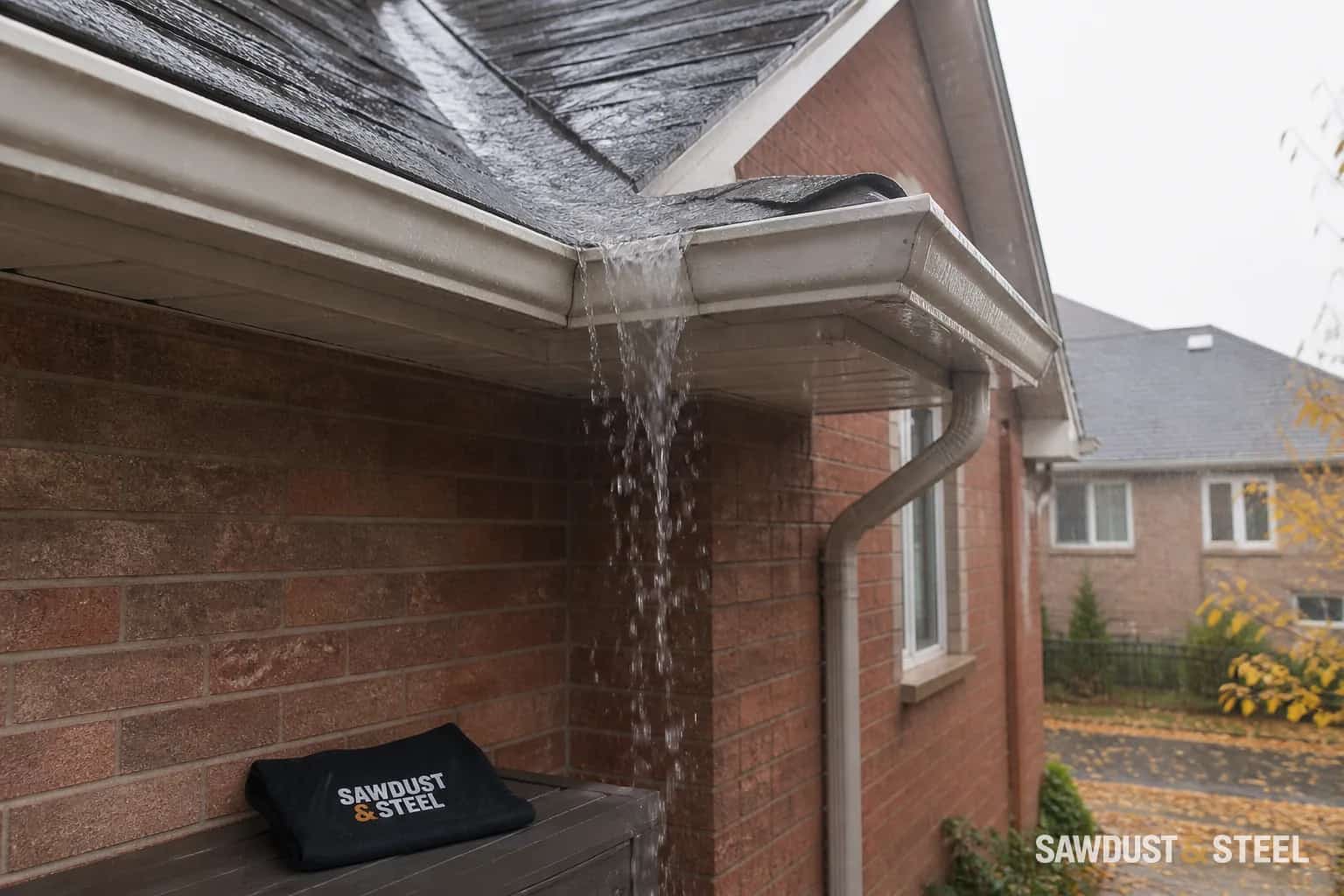
You've cleared the leaves, but the next rain still pours over the edge. Watch where the spill begins. Water overflowing above a downspout suggests a different problem from water shooting past the gutter at a roof valley, and that distinction helps avoid paying for the wrong repair.
Start with where the water spills
| Overflow pattern | Likely first suspect | Useful check |
|---|---|---|
| Right above a downspout | Hidden restriction at the outlet or first elbow | See whether the downspout starts flowing before the gutter spills |
| At a low section between outlets | Sag, loose fasteners, or lost pitch | Look for standing water after the rain stops |
| At one inside corner or roof valley | Concentrated runoff or water overshooting the trough | Record whether the sheet of water jumps the back or front edge |
| Across much of a long run in hard rain | Too little gutter or outlet capacity | Note storm intensity, roof area feeding the run, and how many outlets are working |
The City of Toronto's downspout guidance specifically says to check elbows and outlets for debris and repair low or sagging sections. We had a clean run spilling halfway along a garage, well away from its downspout. After the rain, a shallow pool remained at the same spot. The repair was to correct the loose supports and drainage fall after checking the fascia, then run water again. It did not need another cleaning or an automatic upgrade to a bigger trough.
Four clean-gutter failures to investigate
- Restricted outlet or elbow: a small clump, crushed elbow, bad joint, or blocked underground connection can slow the whole run.
- Lost pitch: a sag holds water, leaving less room for the next cloudburst. Loose hangers and seasonal movement can change a run that used to drain.
- Valley concentration or overshoot: two roof planes can send a fast sheet of water to one short piece of gutter. A larger trough is not automatically the only answer; placement and inlet detail matter too.
- Not enough working capacity: a long run, large roof area, steep roof, or too few effective outlets can overwhelm a clean system in heavy rain.
There is no honest universal gutter-size prescription for every Ontario house. The federal eavestrough and downspout guide says consistently overflowing systems may need larger eavestroughs or downspouts, but the roof layout, outlet count, storm conditions, and discharge route still need to be considered together.
Do not fix the gutter and lose the water
A gutter repair is incomplete if the downspout dumps the captured water beside the foundation. The federal guide recommends directing discharge to a well-drained area away from surrounding foundations where possible. Mississauga's stormwater guidance also flags overflow, foundation-side elbows, poor grading, and blocked drainage paths as connected warning signs. If a path lies between the downspout and that outlet, compare the options for getting drainage past a walkway before laying an extension across the walking route.
What can you do during the next rain?
- Stay on the ground. Record a short video showing where overflow starts and whether each downspout is flowing.
- After the storm, look from a safe location for standing water, separated joints, a visible sag, or washout at the discharge point.
- Note whether it happens in every rain or only short, intense storms. That distinction matters for capacity.
- Send the video with wide photos of the roof planes, gutter run, outlets, and final discharge.