
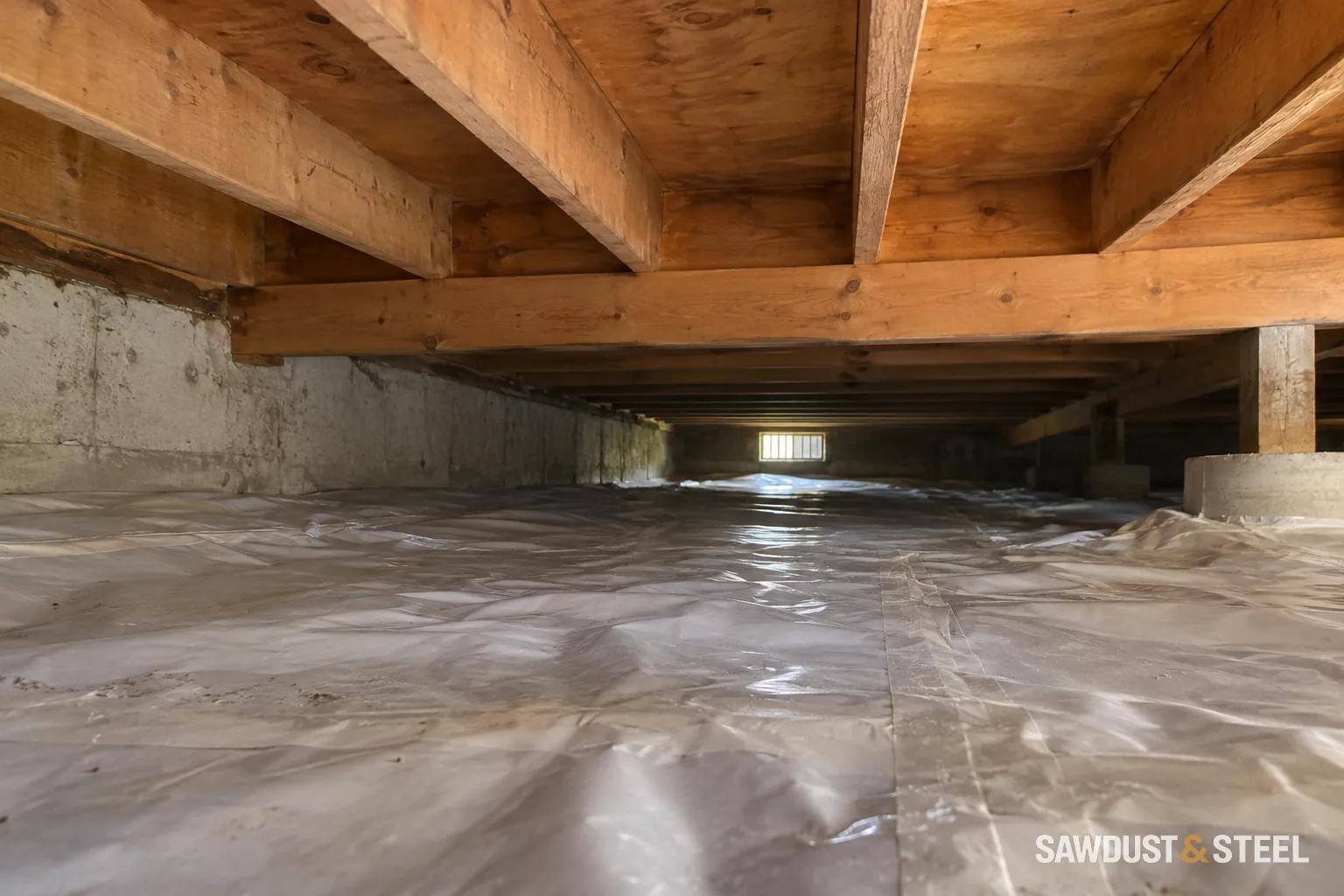
The glasses rattle when someone crosses the dining room, and the quote says 'reinforce floor'. Will that stop the bounce, repair damaged timber, or support the heavy cabinet you want to add? Blocking and sistering do different jobs. Start with the one you actually need.
Name the complaint first
Is the concern vibration, a split member, a new concentrated load, or tile cracking? Weyerhaeuser's floor-performance bulletin distinguishes performance enhancements such as blocking from measures that extend allowable spans. A floor can feel different without gaining the capacity someone assumes.
What does the proposed extra timber do?
| Proposal | What to clarify |
|---|---|
| Blocking | Pieces run between joists. Ask whether the work addresses restraint or floor feel; do not assume it increases the allowable span. |
| Designed sistering | A member is attached alongside the existing joist as reinforcement. Ask what each member and their connection are intended to carry. |
| Adjacent replacement joist | A new member may carry the assigned load independently while the damaged one stays in place. Ask how the new member is supported and connected to the floor. |
One specific example is Weyerhaeuser TB-839, which covers replacement beside damaged TJI, TimberStrand LSL or Microllam LVL joists with loads spread evenly along the top. In that arrangement, the replacement design takes no structural credit for the damaged joist and does not require the two joists to be connected to each other. That is a manufacturer-defined replacement case, not a rule for every sistering repair. It explains why "add another joist" is not a complete scope.
Have the proposal identify which of these jobs it does. For damaged timber, ask whether the old member remains part of the load-carrying design. For a bouncy room, agree what improvement is expected. If removing a wall is also in the plan, joist direction alone does not settle whether that wall carries load.
Ask for a repair that can be checked
A useful proposal identifies the existing members, attachment, bearing, extent of work, and any services in the way. Engineered joists need their own approved details. Do not assume a short extra board, a few screws, or tight blocks reproduce a designed sistering repair. Ask who accepts the completed work and what access they need.
Before the next step
- Describe the symptom and any planned new loads.
- Ask for the exact repair detail and its purpose.
- Coordinate inspection before the ceiling closes.
Ask the contractor to finish this sentence: 'This work is intended to fix...' You should recognize your actual problem in the answer. A heavy aquarium needs its own floor-load review.