
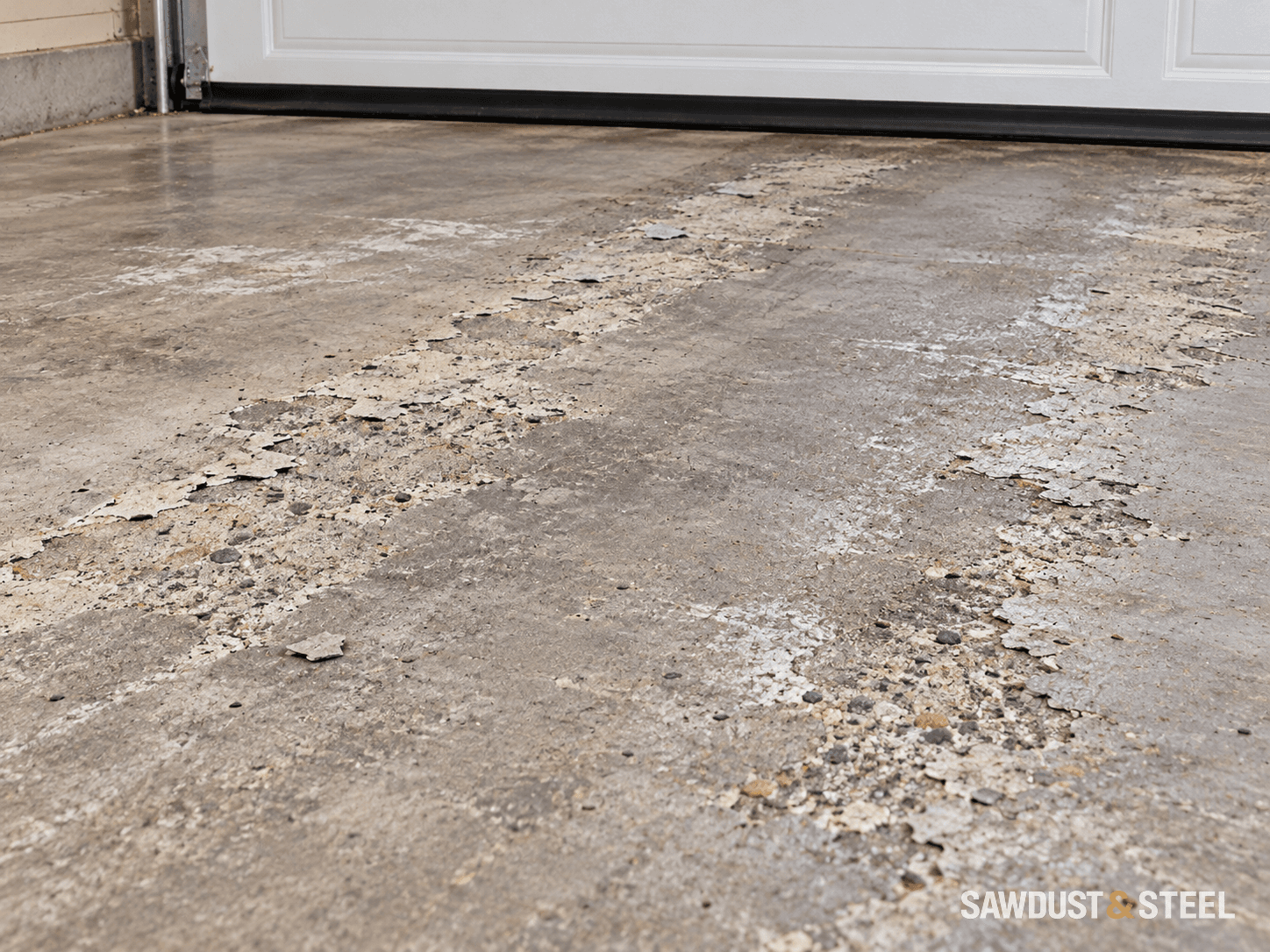
The garage floor sheds little grey flakes each time it is swept. A glossy new coating would certainly make the room look better, assuming it stays attached. Before comparing decorative chips, establish what is coming off and what remains underneath.
Concrete loss and paint failure are different findings
Look at existing loose fragments and the exposed area without grinding or scraping an unknown coating. A coloured film peeling from the slab raises a coating-adhesion question. Mineral flakes and exposed aggregate suggest loss of the concrete surface. Both can occur together, and photographs alone may not establish the mechanism.
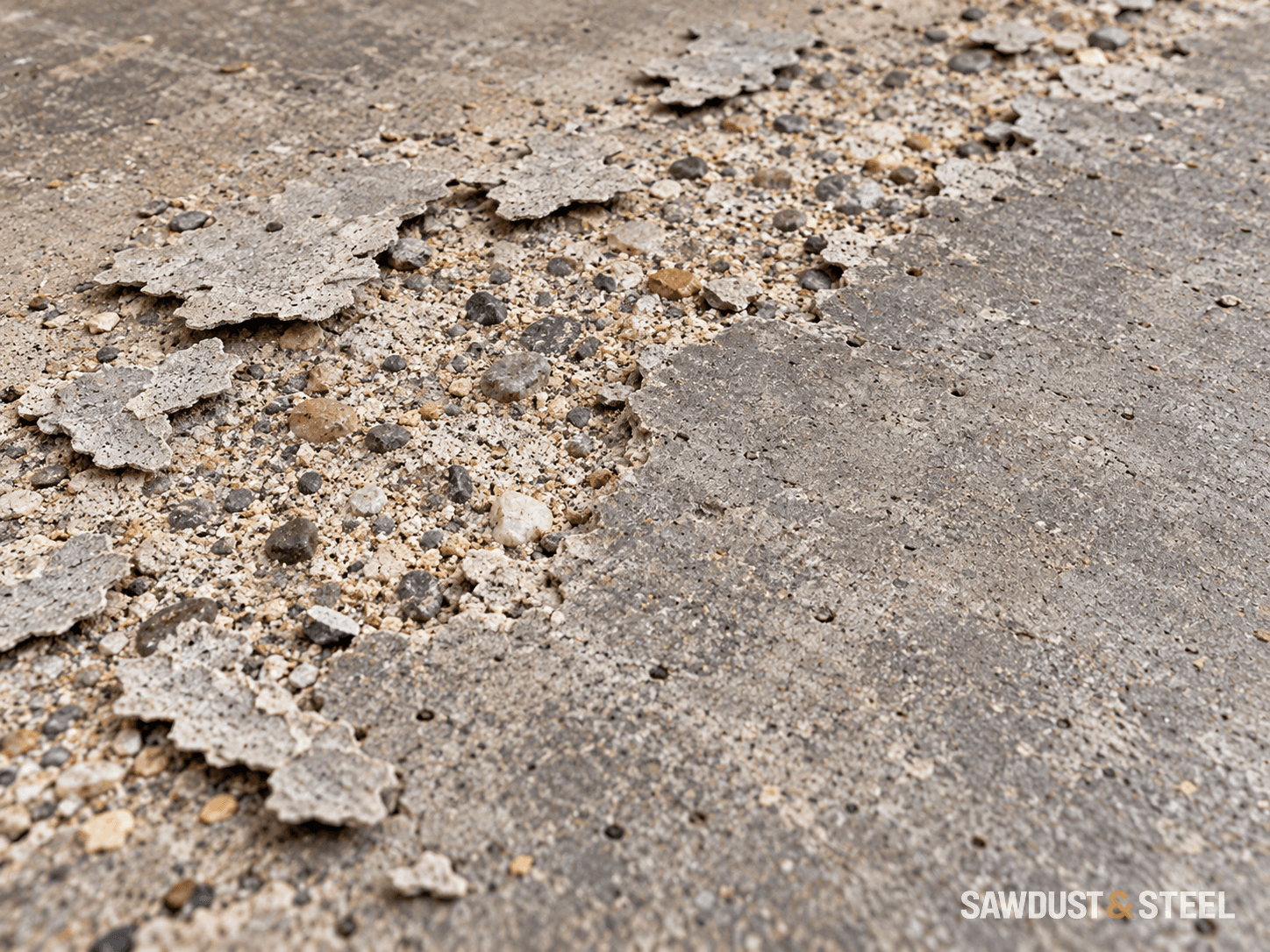
NRMCA's scaling guide describes surface loss associated with freezing and thawing, worsened by conditions such as saturation and deicing exposure. It also distinguishes other peeling associated with finishing problems. An Ontario winter is relevant history, but it is not enough to diagnose every rough patch as salt damage.
Map the damage before it disappears under preparation
Photograph the whole floor and several close views. Mark affected areas on a simple plan: wheel tracks, the door opening, a persistent puddle, old oil spots and any previous patches. Note whether the condition is new, spreading or unchanged over several seasons. Keep crack and height-change observations separate from shallow surface roughness.
| Record | Question for the assessor or installer |
|---|---|
| Flakes, powder or a peeling film | Which material is failing, and how deeply? |
| Snowmelt and salt deposits | Where does water collect and how is it removed? |
| Old coating or sealer | What identification, removal or compatibility checks are needed? |
| Oil or chemical spills | Can contamination be removed sufficiently for the proposed system? |
| Cracks, steps or continuing change | Does the slab need a separate movement or structural assessment? |
The basement slab-crack guide explains why a crack, an intentional joint and a surface defect need different decisions. Do not grind away a displaced edge before it has been assessed. A smoother floor is not evidence that movement has stopped.
Ask where the repair will find sound material
NRMCA notes that minor scaling may be cosmetic, that some light or moderate damage can be repaired, and that extensive progressing loss may make repair impractical. A bonded repair depends on the strength of the base beneath it. Ask the contractor how the extent of unsound material will be established and what finding would change the proposed scope.
Compare the options after that assessment: leaving a stable cosmetic surface, repairing local defects, a compatible resurfacing system, or more substantial slab work where needed. A decorative coating can follow suitable preparation in an accepted system; it should not be described as the thing that holds a weak surface together.
Get the whole preparation system in writing
The Rust-Oleum EpoxyShield instruction sheet treats loose concrete, poorly bonded paint, sealed surfaces and moisture as separate preparation issues. This is one product's procedure, not a universal recipe for every epoxy or polyaspartic system. Use the current Canadian instructions and technical advice for the exact products being quoted.
Ask which cleaner, removal method, repair mortar, primer and finish will be used, and how their compatibility is confirmed. Include required moisture checks, surface profile, curing stages and acceptance criteria. A quick plastic-sheet observation, where a product calls for it, is not a substitute for any other testing required by the selected system or a diagnosis of the moisture source.
Grinding and old-coating removal need a suitable dust-control and material-assessment plan. Keep that work with an equipped contractor when its hazards or method are uncertain. Also agree how preparation water and debris will be handled; the nearest drain is not automatically an approved disposal route.
Include the conditions after the coating goes down
Record the required slab temperature, weather window and return-to-use times for people and vehicles. Include traction when the surface is wet and the expected cleaning routine. A finish sample viewed dry under showroom lights does not answer how the garage will work after a slushy drive home.
Keep the final product and preparation records, and photograph repairs before they are covered. Continue managing snowmelt and contamination as the accepted system requires. If the same areas deteriorate again, those records give the contractor something specific to investigate beyond the colour you chose.