
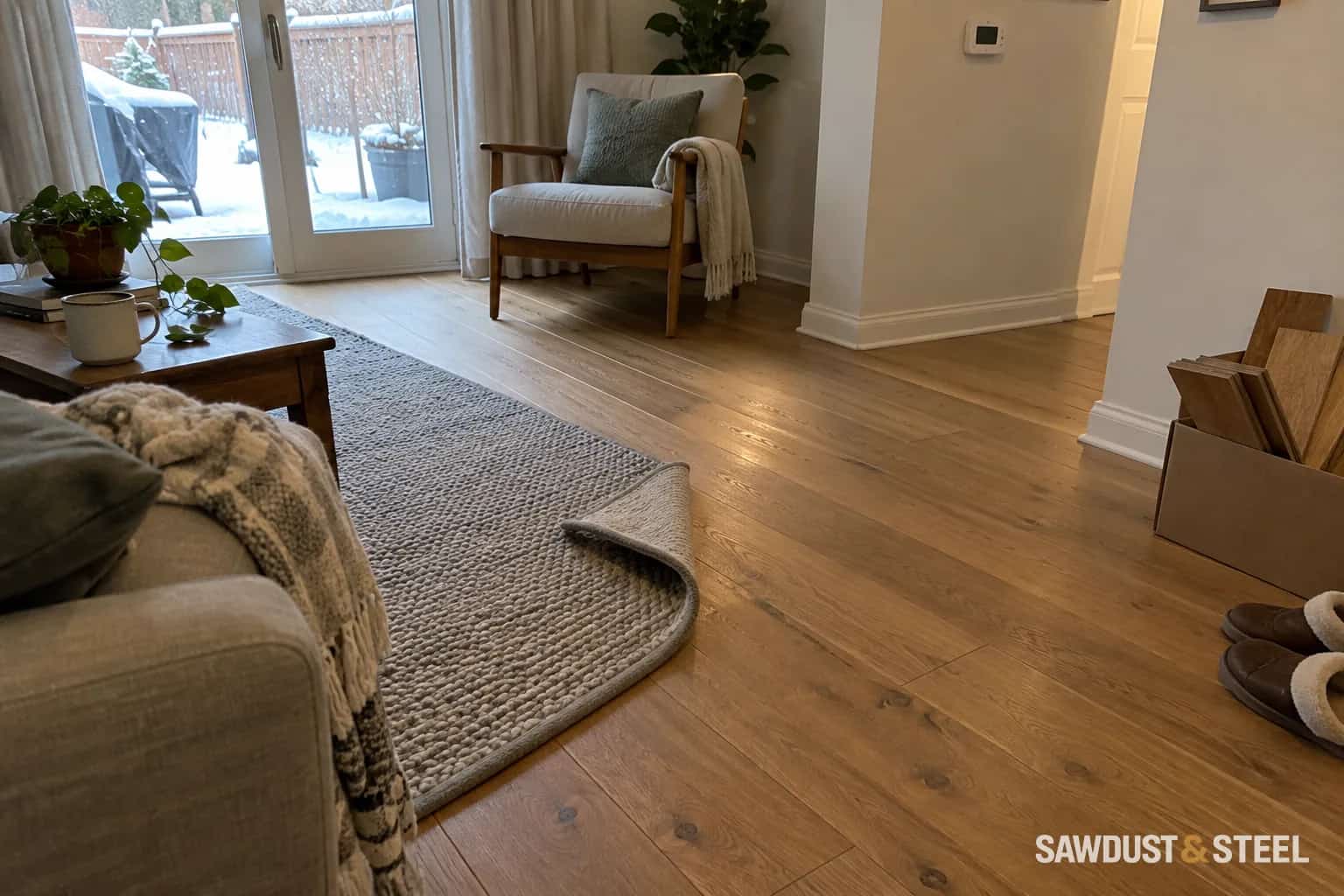
You notice the gaps when the furnace has been working hard and the low sun catches every seam. A coin in a photograph is useful for scale, but it is not an industry tolerance test. Keep the same camera angle and a date so spring comparisons mean something.
Look for a seasonal pattern across the room
NWFA: wood floor problem prevention explains that wood loses moisture and shrinks in dry conditions, and that gaps can come and go seasonally. Several narrow, evenly distributed seams tell a different story from one board moving away from the rest. Look at board ends as well as long edges, and note whether the problem existed before the heating season.
Measure the room before changing the house
Place a hygrometer in the occupied room, away from a supply register or sunny window, and record readings rather than relying on how dry your throat feels. Compare them with the flooring manufacturer's operating range. If readings are persistently outside that range, discuss a controlled HVAC adjustment. Increasing humidity blindly until the gaps disappear can create other moisture problems at cold windows and walls.
Seasonal seams
Several joints open during winter and largely close in humid weather.
Persistent opening
The same gap remains through the year or continues to grow.
Damage or looseness
Split edges, loose boards or abrupt new movement require inspection.
Leave the filler tub closed for now
Filler selected for a stable repair is not automatically suitable for a joint that repeatedly closes. Packing every winter seam can produce a patchwork of cracked filler later. Ask whether the proposed work addresses movement, a damaged tongue, an installation issue or simply appearance. Those are different repairs even when the photo looks similar.
Know what to take to an inspection
Bring the product name, installation date, photos from different seasons and room-condition notes. Mention recent plumbing leaks, extended heating shutdowns or a newly installed dehumidifier. A good assessment compares the affected area with the rest of the floor instead of diagnosing the entire room from its widest seam.
Do not confuse a gap with a raised edge. Cupping needs a moisture investigation before refinishing. If the joints are sound and your real concern is a worn finish, recoating may be the smaller job.