
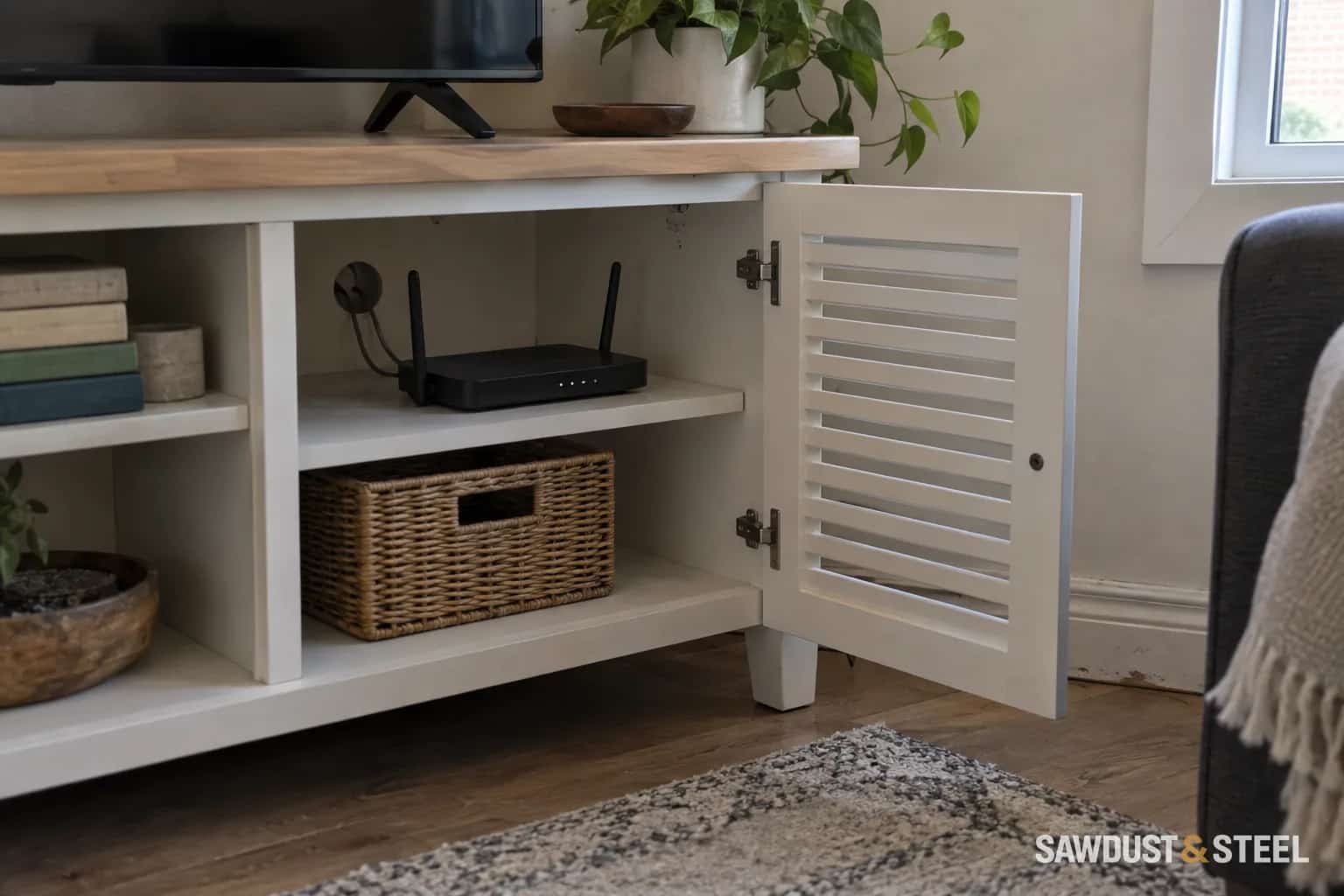
At a built-in job in Toronto, the router had been balanced on a stack of cookbooks for years. Everyone wanted it hidden. Everyone also worked from home. We agreed that the cabinet should not improve the living room at the expense of every video call.
Hide the clutter before hiding the signal
A router needs a useful position for the rooms it serves. Google Fiber's placement guidance recommends keeping the router in the open rather than inside a cabinet or drawer. Cabinet material, nearby objects and the surrounding building can all affect the result.
Test before the doors are made. Compare ordinary use from the places that matter: the upstairs desk, the kitchen table, the room at the back. A strong connection beside the cabinet tells you little about the far bedroom. If an internet installer is already involved, have them advise on the equipment arrangement.
The box needs cooling and a way out
- Check each device's ventilation and orientation instructions, including its power supply.
- Leave the vents unobstructed and avoid stacking warm devices unless their instructions permit it.
- Provide reachable power and cable connections without tight bends or strained plugs.
- Keep enough access to replace equipment that will almost certainly change before the cabinetry does.
There is no universal number of ventilation holes that makes a cupboard suitable. A slatted door may help air movement, but it is not a performance guarantee. If a device becomes unusually hot, behaves erratically or is outside its permitted operating conditions, resolve the placement rather than accepting the problem as the price of tidiness.
Give the cables a modest, useful plan
A removable back or accessible service area can make cable changes easier. Size pass-throughs for the actual connectors, protect their edges and leave an understandable route. Avoid filling the void with coils that hide every plug. Keep electrical receptacles accessible; the outlet-access guide explains the cabinetry side of that job.
Some homes benefit from separating the provider's equipment from the device broadcasting Wi-Fi, using an appropriate wired connection and access point. That is a network-design decision to test with the installer, not something a decorative grille can promise.
We gave it an open shelf
In Toronto, we kept the router on a small open shelf and hid the excess cable in an accessible compartment below. It was still visible if you went looking for it. From the sofa, the books did most of the talking. The upstairs calls carried on without the cabinet becoming a suspect.
For a desk wall, compare the built-in and freestanding options. If lighting shares the cabinet, plan its driver access separately. Useful storage should make servicing ordinary equipment easier, not more theatrical.