
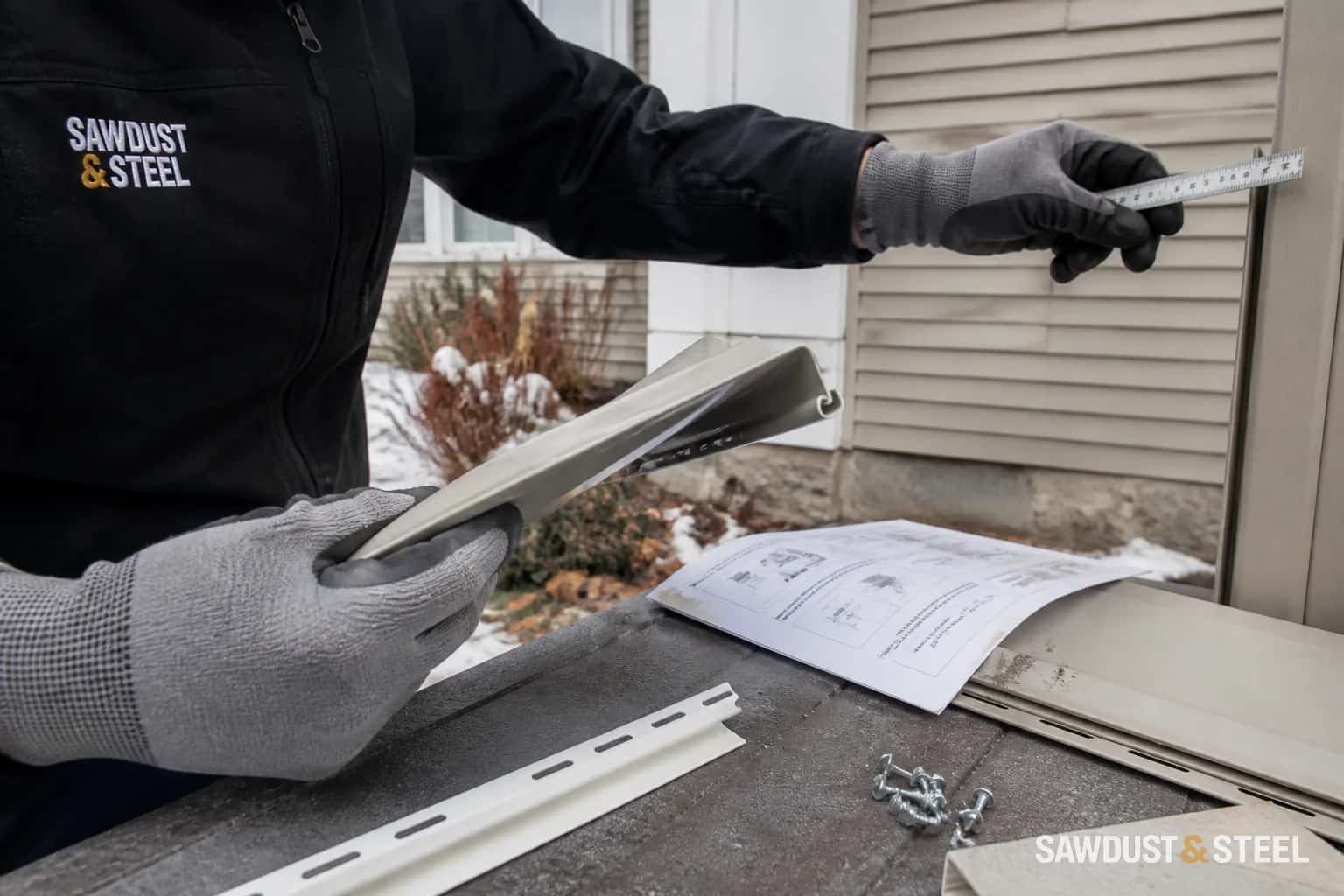
The damaged siding needs work, and the installer has an opening in February. Take it or wait? Winter work can be practical, but the answer depends on more than the panels. A dry wall, safe access, and suitable conditions for the membranes, sealants, paint, and touch-ups all have to fit the plan.
What changes for each siding material?
| Material or layer | Cold-weather concern | What to verify |
|---|---|---|
| Vinyl siding | Brittle handling and thermal movement | Current fastening, clearance, cutting, and storage instructions |
| Fibre cement | Handling, wet substrate, coatings, and sealants | Product instructions plus finish and joint requirements |
| Weather barrier and flashing | Ice, moisture, adhesion, and incomplete laps | A dry, continuous water-shedding installation |
| Caulk, paint, and touch-up | Minimum surface and air conditions | The exact product label and technical data sheet |
Vinyl expands and contracts, so it is fastened to move rather than clamped flat. CertainTeed's installation guidance and Kaycan's Canadian guide show why clearances and fastening practice change with conditions. Use the current instructions for the exact profile; a number remembered from another brand is not a specification.
Fibre-cement work has a different set of checks. Panel storage, cutting, fastening, clearances, flashing, joint treatment, touch-up, paint, and sealant must follow the selected product documents. James Hardie's technical library is the source for its current systems. Check the limits for installation and finishing separately. On a cold side-wall job, the boards were ready but the planned touch-up coating was outside its application conditions. We changed the work sequence and held the affected finishing step for suitable weather, with the remaining work written down. A sunny lunch hour is not a reliable curing plan when the wall will be cold again by supper.
When should the installer postpone?
- The wall, sheathing, or membrane is wet, icy, soft, or damaged.
- Panels crack during normal handling or cannot be cut cleanly with the specified method.
- Wind, snow, or ice makes access and material control unsafe.
- Required flashing, membrane, sealant, paint, or touch-up cannot be applied within its product limits.
- The crew cannot close the wall into a complete water-shedding condition before the weather changes.
What belongs in a winter siding quote?
Ask for the product and profile, wall preparation, weather-barrier and flashing scope, storage method, cold-weather limits, access and snow management, allowed weather delays, and any finishing work deferred until warmer conditions. Also ask what happens when the old siding reveals wet sheathing. That question matters more than whether the calendar says February.
If the work follows storm damage, inspect and document the wall before ordering replacement material. The wind-damaged siding guide separates the urgent protection, repair, replacement, and insurance decisions.