
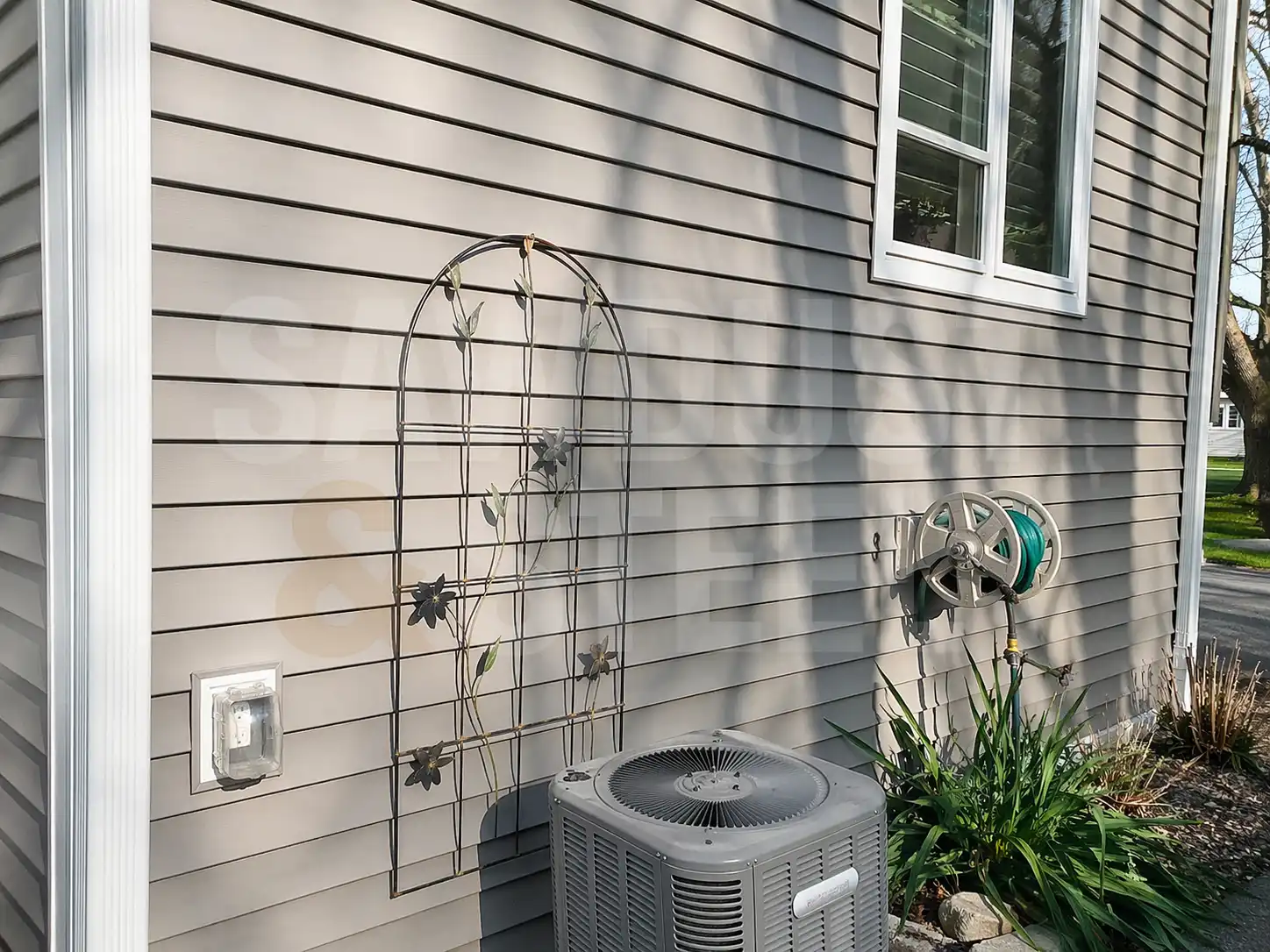
Both samples look good against the brick. One makes you wince at the installed price; the other has you wondering how it will look around the windows. That's the useful part of this decision. Fibre cement and vinyl differ in weight, detailing, upkeep, and cost, and the whole wall matters more than the loose sample. On a side-wall replacement, the owner brought two samples to the driveway. The decision paused when removal exposed soft sheathing below an old window corner. We photographed it, traced the water entry, and agreed on the repair before ordering the finish. Either sample would have hidden the same problem.
The useful material difference
Hardie products are fibre cement boards and panels. They are heavier, cut differently, and depend on product-specific fastening, flashing, joint, clearance, and finishing details. James Hardie's Canadian installation resources direct installers to the current instructions for the exact product.
Vinyl siding is a lightweight interlocking cladding designed to move with temperature. The Polymeric Exterior Products Association's Canadian code guide highlights certification, fastener location, spacing, and attachment requirements. Fastening must allow the movement required by the product instructions.
| Decision | Fibre cement | Vinyl |
|---|---|---|
| Look | Thicker painted-board character | Broad colour and profile range |
| Installation | Heavier, dust-controlled cutting and detailed clearances | Lighter, movement-sensitive fastening and trim |
| Upkeep | Inspect finish, joints, clearances, and damage | Wash and inspect panels, locks, trim, and impact damage |
| Budget | Usually higher labour and material scope | Usually lower installed scope |
Compare the wall, not just the plank
- Water-resistive barrier and drainage path behind the cladding.
- Head, sill, roof-wall, deck, meter, vent, and penetration flashing.
- Soffit, fascia, window and door trim, corners, and starter details.
- Existing sheathing repairs and exterior insulation opportunities.
- Product, finish, and labour warranties, including maintenance duties.
Ask both bidders to price the same complete elevation and repair assumptions. Ask where the new face of the wall lands relative to window trim, hose bibs, meter equipment, and the roof edge. A thicker assembly can turn a simple plank swap into several small extension and flashing jobs. Then compare appearance, exposure, upkeep, and the complete installed scope. Only one wall damaged? Read the wind-damaged siding guide before expanding the replacement. If the available start date is in January, the winter siding guide explains what to settle before accepting it. If the project touches eaves or the roof edge, read the attic ventilation guide while everything is accessible.