
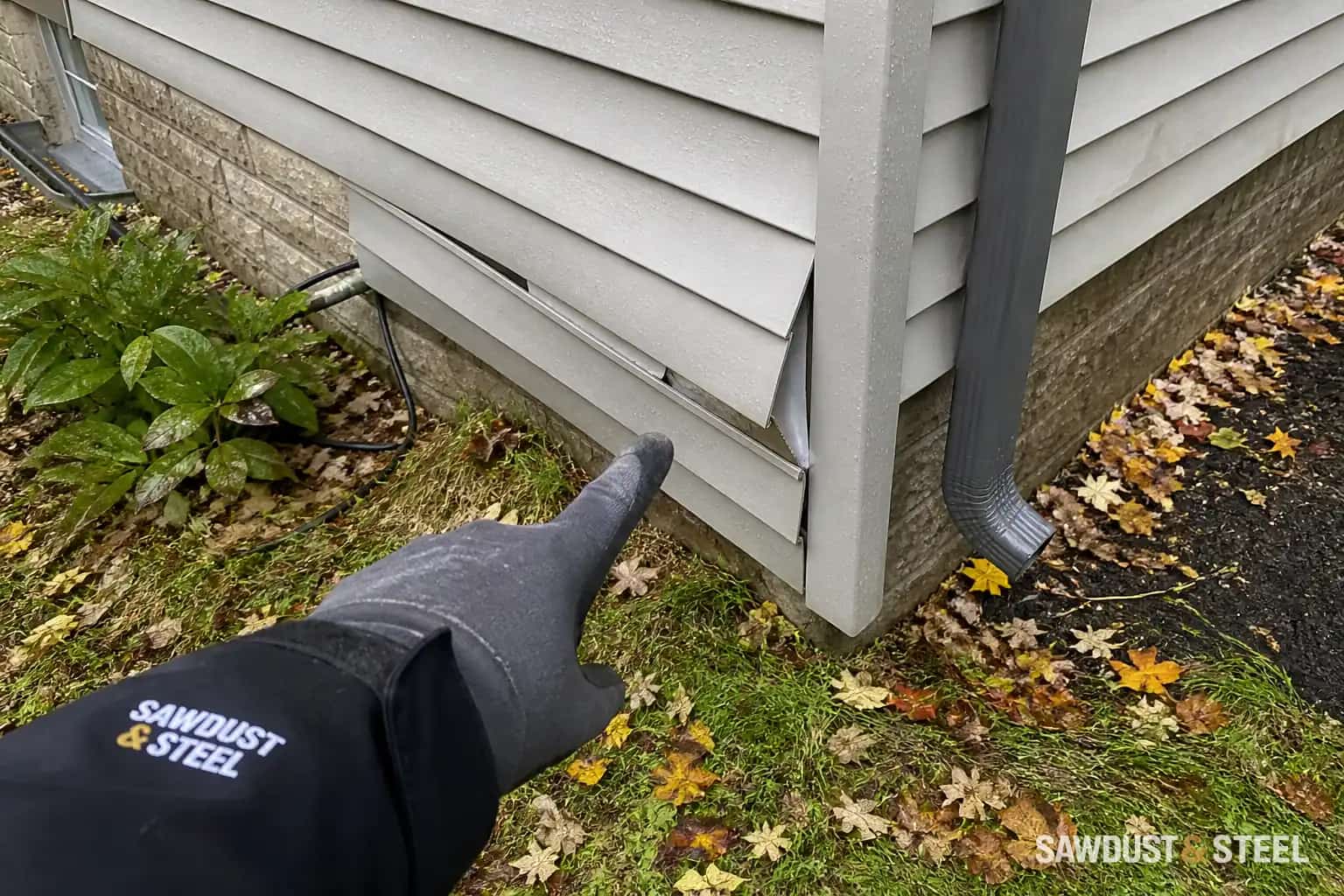
A length of siding is flapping beside the upstairs window. The first job is to keep everyone clear below it and check for water inside. The next question is whether this is one loose panel or a damaged section of wall. We look behind the finish before ordering replacements: the weather barrier, flashing, sheathing, and neighbouring panels decide how small the repair can sensibly stay.
What needs attention first?
| What you see | Likely priority | Useful next step |
|---|---|---|
| Loose panel still attached | Falling-material risk | Keep clear below it and arrange a safe inspection |
| Missing panel or open corner | Water and wind exposure | Document it and arrange safe temporary protection |
| Crack, dent, or small hole | Local repair decision | Check the weather barrier and nearby fastening |
| Bulging, soft wall, or indoor dampness | Possible concealed damage | Inspect the wall assembly before ordering a colour match |
Do not climb a wet ladder or pull on a panel that is still resisting the wind. If utilities are damaged, keep well back and call the utility or emergency service.
Can one section be repaired?
A local repair is more realistic when the substrate and water-resistive layer are dry and intact, flashing still works, adjacent panels are flexible enough to unlock and resecure, and a compatible profile can be sourced. The exact installation must follow the current product instructions. CertainTeed's vinyl-siding guidance is a useful example of why fastening, movement, overlap, and clearances matter as a system.
Replacement becomes more reasonable when damage crosses several walls, panels have become brittle, the profile is obsolete, the weather barrier or sheathing is damaged, or a patch would require disturbing almost as much material as the larger repair. On one corner repair, the replacement was the right colour name but a slightly different profile. It would not lock properly into the old course. We stopped the finish work, kept the opening protected, and took a sample to the supplier before agreeing on a wider, defined repair area. Bring the profile into the matching conversation early; colour is only half the problem.
When should you call insurance?
If the damage may exceed the deductible, affects more than siding, or came from a named storm event, contact the insurer promptly and follow the policy's instructions. The Insurance Bureau of Canada recommends documenting damage, taking reasonable steps to prevent further loss, and keeping receipts. Do not promise yourself coverage, authorize major demolition, or discard damaged material before the insurer explains what it needs.
- Photograph every affected wall from the ground, then take closer safe views.
- Record the date, weather, interior water signs, and any temporary protection.
- Ask whether an adjuster must inspect before permanent work begins.
- Keep estimates, emergency invoices, and damaged samples when safe and requested.
What should the repair quote explain?
The quote should identify the siding profile and colour strategy, the area being removed, what happens if wet sheathing or torn weather barrier is found, which flashing and trim are included, and how disposal and cleanup work. If cold weather is approaching, also ask which product temperature limits affect handling, fastening, sealant, and paint. Our winter siding guide covers that decision separately.