
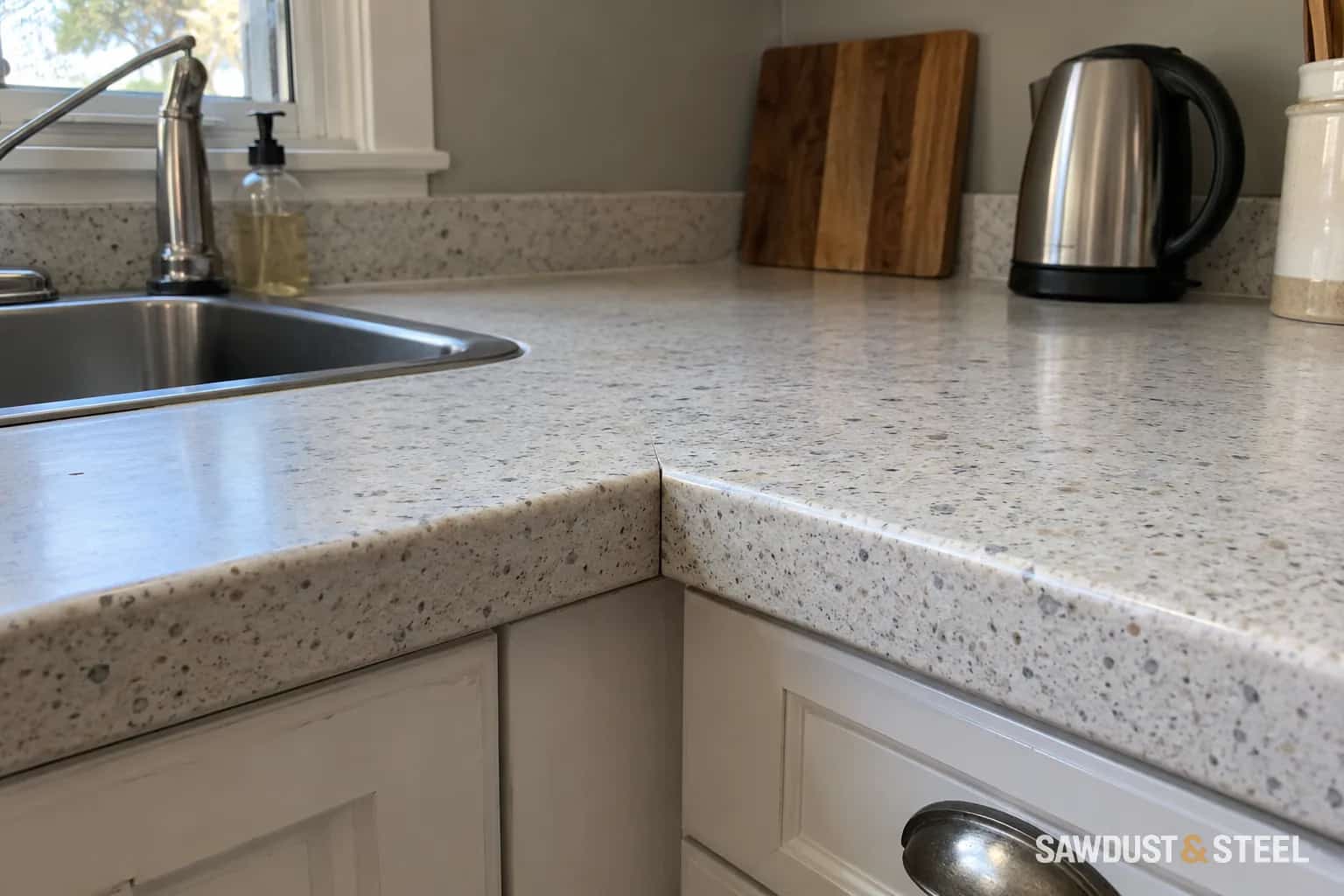
The dishcloth catches on a joint that used to feel flat. A little ridge has become a small hill, often beside the sink or where water sits after washing. The surface finish is only one layer of the countertop; the material supporting it may be the part changing shape.
Find the water before choosing a filler
Dry the area and keep the seam out of the washing routine while you inspect. Look for standing water, a leaking faucet base, a failed sink-rim seal or a dish rack that drains towards the joint. Check the underside where accessible for staining or swelling, without prying the laminate up.
Formica: Laminate care and maintenance warns that flooding laminate near seams can let water reach and swell the substrate. That supports the moisture diagnosis, but the cause still needs to be found in your kitchen. A dry surface today does not rule out repeated wetting over the past month.
Flat, firm joint
An installer may be able to restore the appropriate seal.
Raised or soft substrate
Assess damaged material and support before cosmetic work.
Continuing leak
Repair the water source before either option.
The laminate is too thin for an improvised levelling job
Do not sand a raised seam flat or clamp it hard in the hope of squeezing the core back into shape. You can remove the decorative surface, crack an edge or disturb the joint without restoring its strength. A thick bead over the ridge can also conceal continued water entry rather than solve it.
Have the installer distinguish a loose joint, an uneven support and swollen substrate. A displaced but sound joint is a different repair from material that has expanded and deteriorated. Ask whether a localized repair will remain visible and whether the surrounding surface can still be cleaned normally.
If replacement is needed, check what must be disconnected
A replacement section may require sink or appliance removal and can expose backsplash edges that do not match the new top. Matching an old laminate pattern is not guaranteed, even when the name is known. Compare a local section replacement with replacing the connected run, including the practical interruption to sink use.
If the damage reaches the sink opening, have the new sink cutout and mounting method approved together. A new top with the old leak still active will not stay new for long.
Make the wet area easier to keep dry
Redirect the dish rack, wipe water promptly and maintain the sink and wall junctions using products compatible with the countertop system. If dampness is appearing inside the base cabinet too, follow the under-sink tracing sequence. The aim is to remove the water route, not add a permanent towel to the kitchen design.