
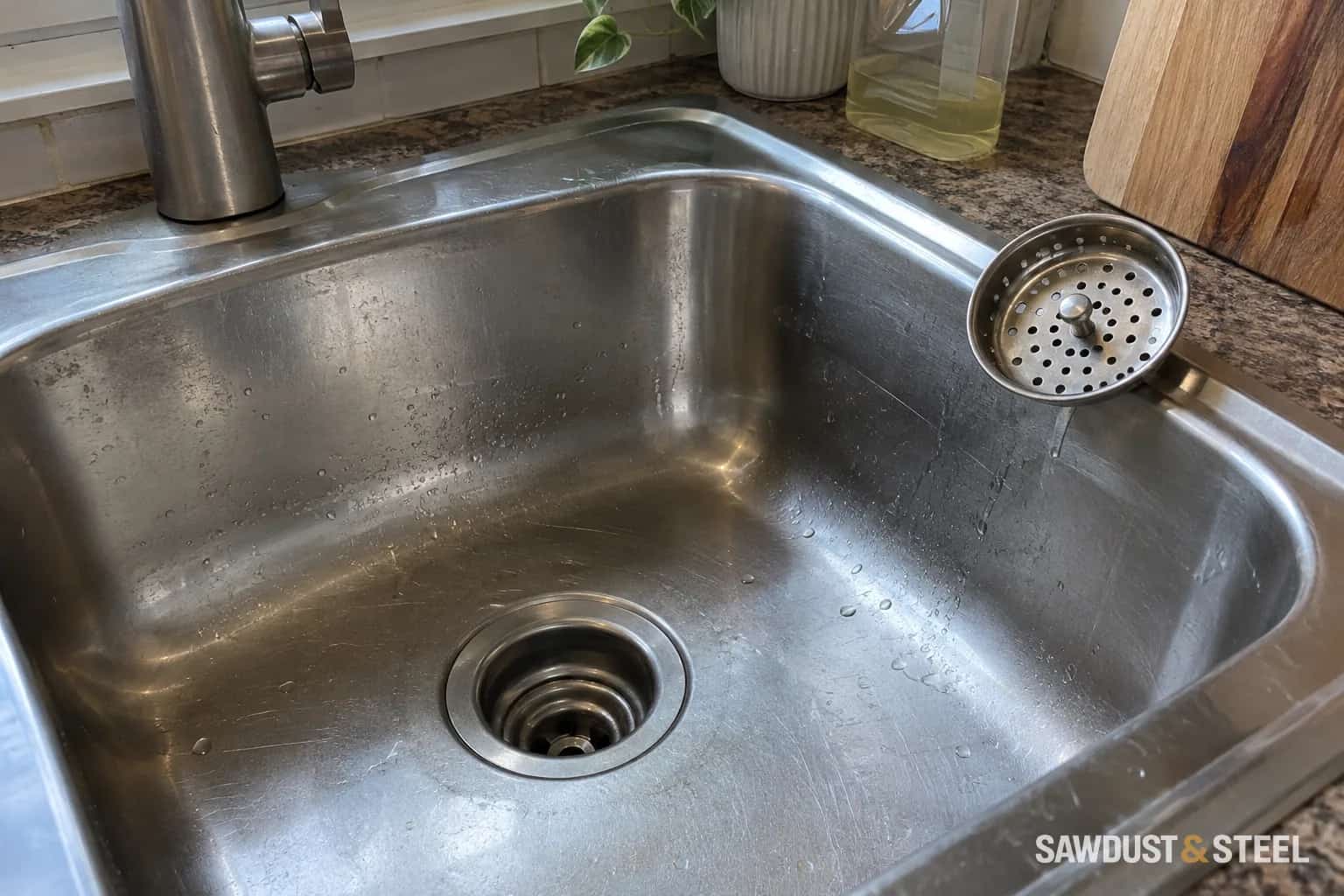
The spare sponge is wet even though nobody put it away wet. Empty the cabinet before blaming the trap: water can travel down a hose or pipe and drip from a low point some distance from its source. A tray catches the result but does not identify it.
First decide whether observation is appropriate
If water is flowing, the cabinet is flooding, or electrical equipment is wet or nearby, stop using the sink and keep clear of the electrical hazard. Use a safely reachable water shutoff only if you know it and it operates normally; do not force a seized valve. Arrange plumbing help. If water has reached a ceiling below or damaged finishes, document that too.
For a small contained trace with no electrical hazard, remove stored items, dry accessible surfaces and use a light to inspect from outside the cabinet. Avoid reaching into sharp fittings or disturbing connections. Photograph the first place moisture reappears rather than tightening every nut in sight.
The timing narrows the search
Moen: Leaking under the sink base distinguishes continuous under-sink leaks involving shutoffs and supply lines from faucet-related paths. Moen: Water around the faucet base also explains that water from a handle can collect at the base and look like a different leak. Those observations help locate the source; they do not identify every sink or drain fault.
Without using the sink
A supply-side leak is one possibility; arrange prompt assessment.
When the faucet runs
Watch the faucet, hose and supply connections without disturbing them.
When water drains
A drain joint or strainer path needs checking.
After splashing the rim
Inspect the rim and deck seals; do not deliberately flood-test a leak.
Do not create a bigger leak to prove a small one
If the area remains dry and a plumber has not advised otherwise, brief normal use can reveal timing; stop immediately when water appears. Do not fill and dump a basin into a known leaking drain or soak the countertop to test its seal. A dry paper towel placed beneath a suspected area can show a small drip without handling the fitting.
Condensation is another possibility when cold surfaces are uniformly damp, but a joint-specific drip should not be dismissed as sweating. Compare the pattern and conditions, and have an uncertain recurring problem inspected. Avoid covering wet surfaces with a new cabinet liner or insulation before the cause is understood.
Dry and inspect the cabinet, not just the plumbing
After the leak is repaired, dry the area and assess swollen panels, loose fixings and damaged finishes. Keep the cabinet observable during normal use until it stays dry. A wobbling faucet may have a compromised mounting surface, and laminate swelling may remain after the water source is fixed. Address those consequences before putting everything back.