
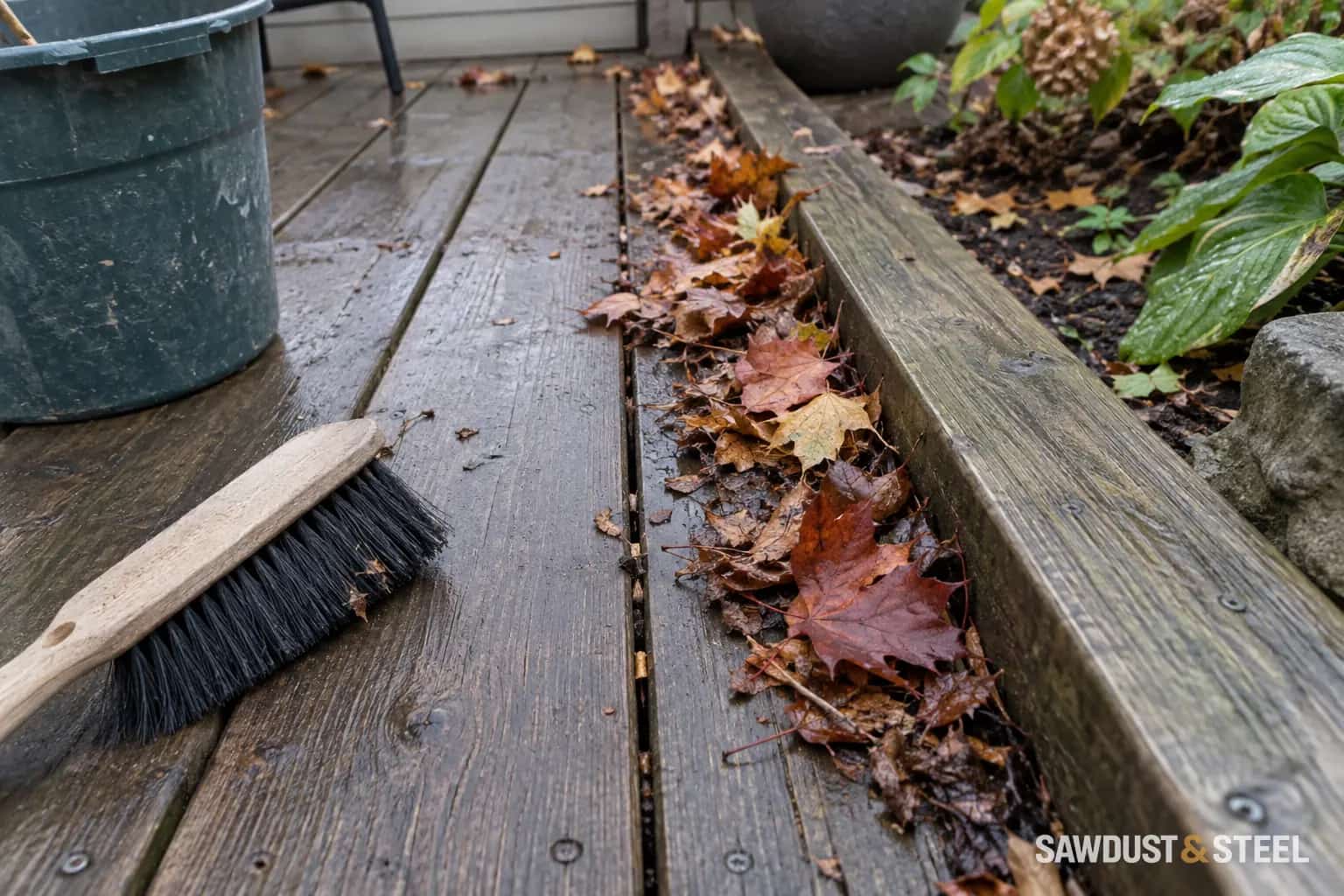
There is a stage in October when sweeping a deck feels like arguing with a tree. You finish, turn around, and another leaf arrives. We understand the temptation to declare the season a draw. The packed bits between boards are still worth dealing with.
Surface-clean is not always clear
A broom can leave the top looking good while narrow gaps remain full. Wet leaves break down into softer debris, collect more dirt and keep the surrounding area damp. Look near the house, beside planters and at picture-frame borders, where material tends to stop.
Wood Preservation Canada's building tips emphasize deck ventilation and keeping joists and beams clear of leaves and debris. For composite products, follow the maker's own maintenance instructions; Trex's care guide separates current and early-generation decking because cleaning advice can differ.
A gentle clean beats an ambitious gouge
- Start with loose leaves and surface dirt using a broom or soft brush.
- Loosen accessible packed debris with a non-damaging tool suited to the board surface, working carefully around fasteners.
- Collect the debris rather than driving it into the next inaccessible space.
- Use water and cleaning products only as permitted for the actual decking and finish.
A screwdriver is very good at becoming a scratch. A pressure washer can turn a modest cleaning job into damaged fibres or finish. If you cannot clear a gap without force, stop and work out what is in it. It may contain a clip or another detail that belongs there.
Is there a ceiling under the deck?
If the deck has an under-deck drainage system, do not poke blindly through the boards. A membrane or trough may sit immediately below. Its cleaning route should come from the installed system's instructions, with removable access where needed.
This mattered at a Burlington deck where leaves were collecting above a finished seating area. The owner had a long metal scraper ready. We used the planned access instead, cleared the collection point, and left the water-catching layer intact. No new ceiling stain was an excellent outcome.
Our under-deck drainage guide explains why that service route should be designed before the ceiling is fitted.
A stain can remain after the leaves go
Leaf marks do not automatically mean rot or mould. Once the debris is gone, identify the material and use its approved cleaning guidance. Test a permitted cleaner in a discreet place. Do not mix products, and do not assume a tip for newer composite applies to an older board.
Read pressure-washing older composite before reaching for the machine. If the gaps themselves appear to have changed, compare the timber drying guide.
You do not need a spotless deck through every windy afternoon. A quick repeat check at the collection spots after the main leaf fall is a much more manageable ambition.