
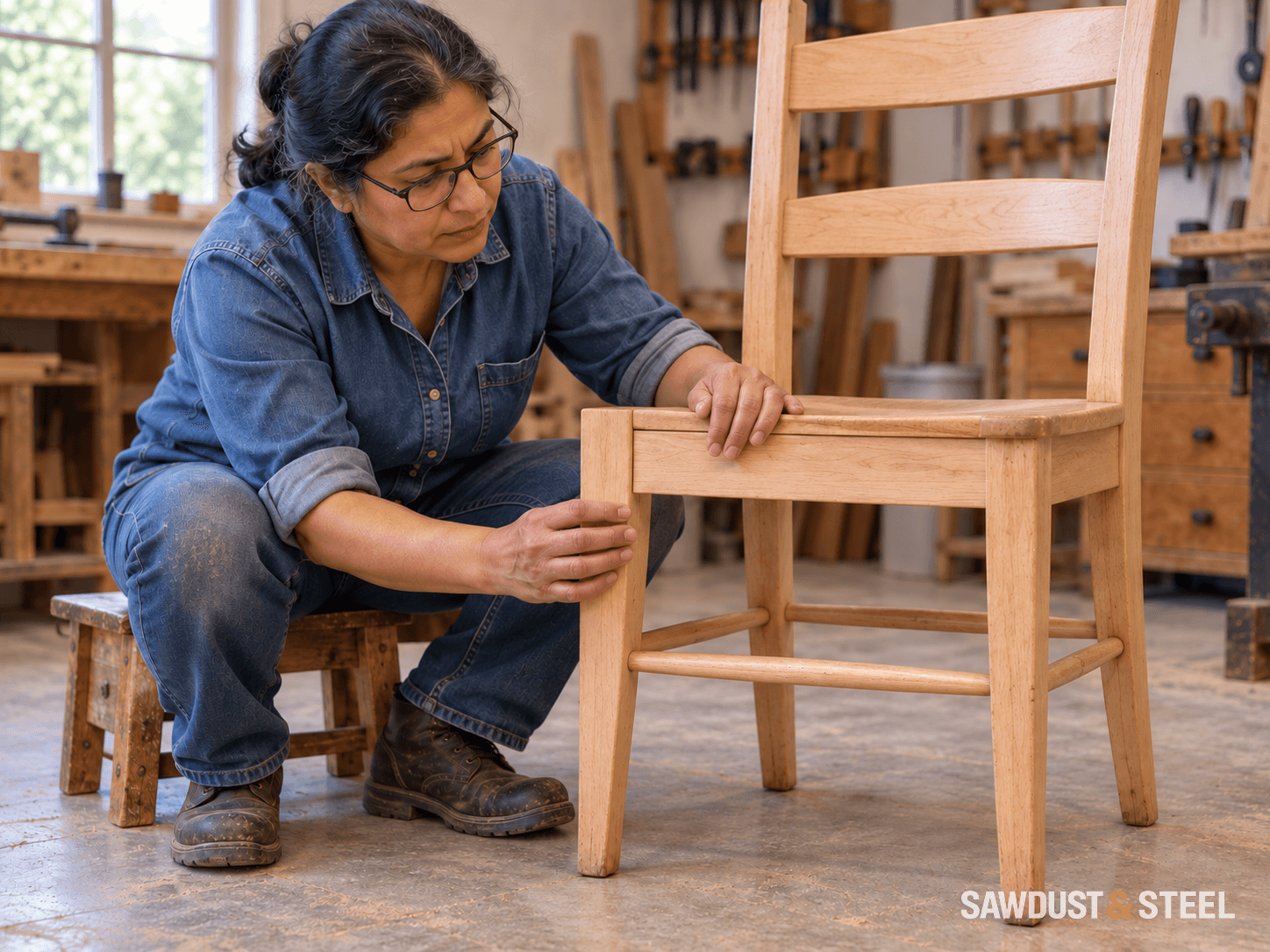
The chair moves a little when you reach for the salt. It has probably done that for a while. This does not make it a chair with character; it makes it a chair to set aside until someone finds what is moving.
A wooden chair is a connected structure. A loose rung, rail or leg can let other joints work harder than intended. Start with an unloaded inspection, not another person sitting down while you watch from underneath. Keep the chair out of use until the repair has been assessed and completed.
Find the movement without adding a person's weight
On a firm, level surface, check whether the chair rocks as a whole or whether a joint opens. Uneven feet and an uneven floor can cause rocking without loose joinery. Look closely where the seat rails, stretchers and back meet the legs. A dark line at a joint is worth inspecting, but a line alone is not proof of failure.
Use light hand pressure only to locate visible movement. Do not twist the chair hard to see how bad it can get. Mark the suspect connection with a removable tag and take photographs of the whole chair and the joint. Check for previous screws, metal brackets, glue runs, cracks and pieces that no longer meet cleanly.
Separate loose joinery from broken wood
| Finding | What the repair must address |
|---|---|
| Sound parts moving at a fitted joint | The fit, old adhesive and suitable bonding method |
| A split leg or broken tenon | Damaged load-carrying material, often including a remade part |
| Loose bolts in a knock-down chair | The original hardware, threads and specified assembly |
| Several loose connections or repeated repairs | The complete frame and whether restoration is worthwhile |
A screw-fastened flat-pack chair may need its correct hardware restored rather than glue added to a joint intended to come apart. Identify the model and assembly instructions where possible. A spinning bolt, missing insert or crushed hole does not become a normal tightening job because the chair still stands.
For a conventional glued wooden joint, the repairer needs sound mating surfaces and an appropriate fit. A thick ridge of old glue can keep the parts apart. A broken tenon or enlarged socket can require joinery work before adhesive has anything useful to bond. Do not fill the visible seam with household caulk or cosmetic wood filler and treat the disappearance of the gap as proof of strength.
Sometimes a specialist glue is appropriate
Disassembly is not an absolute requirement for every loose joint. Veritas Chair Doctor is a low-viscosity product designed for certain loose furniture joints, including situations where taking the assembly apart is undesirable. Its instructions explain how it penetrates and swells wood cells. That specific mechanism is different from squeezing ordinary cabinet glue onto a closed seam.
The manufacturer's instructions also discuss access to unsealed end grain and preparation of previously glued joints. They specify twelve hours before full strength for that product. A joint locking quickly is therefore not permission to put the chair straight back at the table. Use the chosen repair system's full instructions and have cracked or badly worn parts assessed separately.
Do not dismantle a sound half to reach one loose rung
When disassembly is needed, label the parts and their orientation before separating anything. A chair can contain subtly different left and right rails that look interchangeable until the frame leans. Old joints may use dowels, tenons, wedges or concealed fasteners. Pulling harder is not a dependable way to discover which one is present.
An experienced furniture repairer can decide what should separate, what should remain intact and whether a damaged part can be remade. For a valuable or antique chair, consult a restorer before removing original finish or making new holes. A conspicuous screw through the leg can make the next proper repair more difficult while giving surprisingly little information about the present strength.
Reassemble the whole chair, then respect the cure
Dry-fit any disassembled parts and arrange the clamping sequence before applying adhesive. Check the frame's alignment and that the feet meet the intended plane without forcing the chair into a twist. The dry-fit guide covers the rehearsal; the chair's construction determines the actual repair and clamp arrangement.
Keep it clearly out of service throughout the specified cure. Afterward, the repairer should confirm that the affected joints are firm, the frame is aligned and the remaining parts are sound. Persistent movement, a new crack or uncertainty about the construction means it stays out of use. Repair can be worthwhile, especially for a well-made chair, but a household member should not be the test weight for an uncertain joint.