
A bottle says waterproof, so it seems reasonable to glue the loose outdoor joint and call it finished. The missing detail is what the word promises. Water resistance is one property of an adhesive. It does not tell you whether the timber fits, whether the joint drains or whether the repair can carry a person.
Read the limitation as carefully as the label
Titebond III's product information describes a Type I water-resistance test, while also excluding continuous submersion and structural or load-bearing applications. That combination is not contradictory: passing a defined water-resistance test is different from approval for every wet job.
Different products have different chemistry and limits. Do not use one brand's application instructions as a rule for all exterior adhesives. Check the exact technical sheet for the wood or other materials, exposure, application conditions, clamping and cure requirements.
First decide what the joint does
| Proposed repair | Question to resolve |
|---|---|
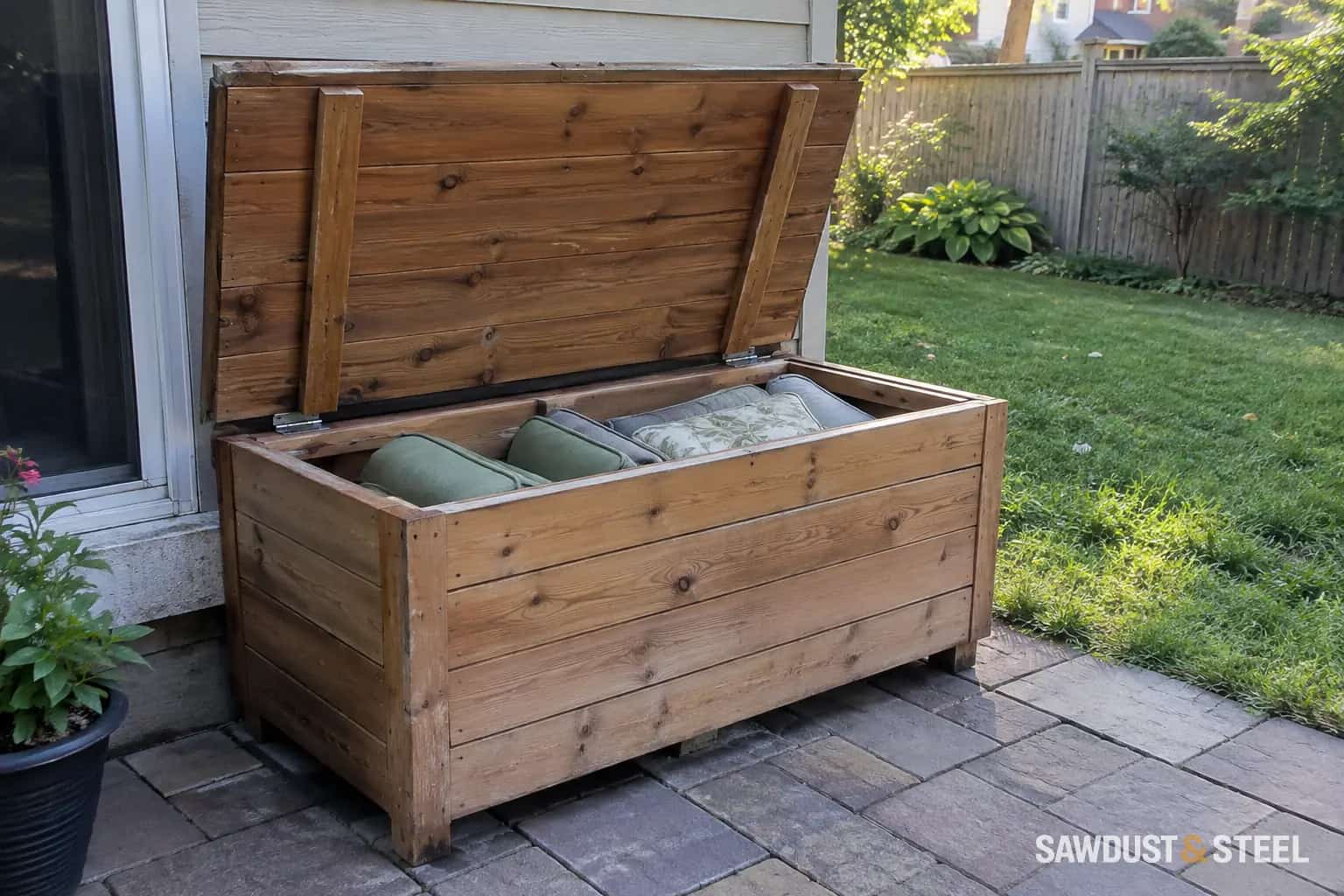
| Loose decorative trim on an outdoor storage box | Are the materials sound, the joint close-fitting and the adhesive suitable for the exposure? |
| Open joint in furniture supporting a person | What approved repair restores the original load-bearing construction? |
| Deck rail, pergola support or stair connection | What structural connection design is required? Ordinary wood glue is not the answer. |
| Wood permanently sitting in water | Is the adhesive and complete construction approved for continuous immersion? |
A small glued trim strip and a chair leg may look equally simple on the workbench. Their consequences are different. For suspended seating, the pergola hanging-chair support check explains why the whole connection chain matters.
Make the wood fit before applying adhesive
Dry-fit the parts. A close, sound joint gives the adhesive the conditions it was designed for; a wide split filled with glue is not equivalent. Remove the cause of movement where possible. Rotten wood, a broken fixing or a member twisted out of alignment needs its own repair decision.
Old finish and contamination can interfere with bonding. Preparation should follow the adhesive instructions and the existing coating's safe removal requirements. Oily species, treated timber and unfamiliar materials deserve a test or advice from the adhesive maker. Do not assume the word wood covers every timber treatment and surface condition.
- Read the product's permitted materials and exclusions.
- Check the required condition of the wood and the application environment.
- Arrange clamps and protection before opening the bottle.
- Follow the stated assembly and cure times; a dry-looking squeeze-out is not a load test.
- Keep drainage routes and access for existing fixings clear.
Design for the rain after the glue has cured
An outdoor joint can retain water even when its adhesive survives. Horizontal ledges, tightly trapped end grain and unventilated contact areas may stay wet long after the rest of the project dries. Use the original product detail or a suitable carpentry design that allows water to shed and the wood to dry.
For example, reattaching a decorative strip on a storage box may be reasonable when the timber is sound and the adhesive is approved. Sealing every opening around the lid to protect that glue can create a new moisture problem inside. Work out where rain goes before closing a gap simply because a clamp can pull it shut.
Know when replacement is the shorter job
If a piece has lost material, repeatedly opens or cannot be clamped into a sound fit, remaking it may be more reliable than adding another adhesive layer. Preserve required mechanical fasteners and use the correct replacements where specified. A glue line should not hide a failing connection from the next person who inspects it.
Keep the product name and repair details with the project records. If the joint carries weight or its intended construction is uncertain, have the repair assessed instead of choosing a stronger-sounding bottle. A clear material and joint specification is more useful than the biggest waterproof claim on the shelf.