
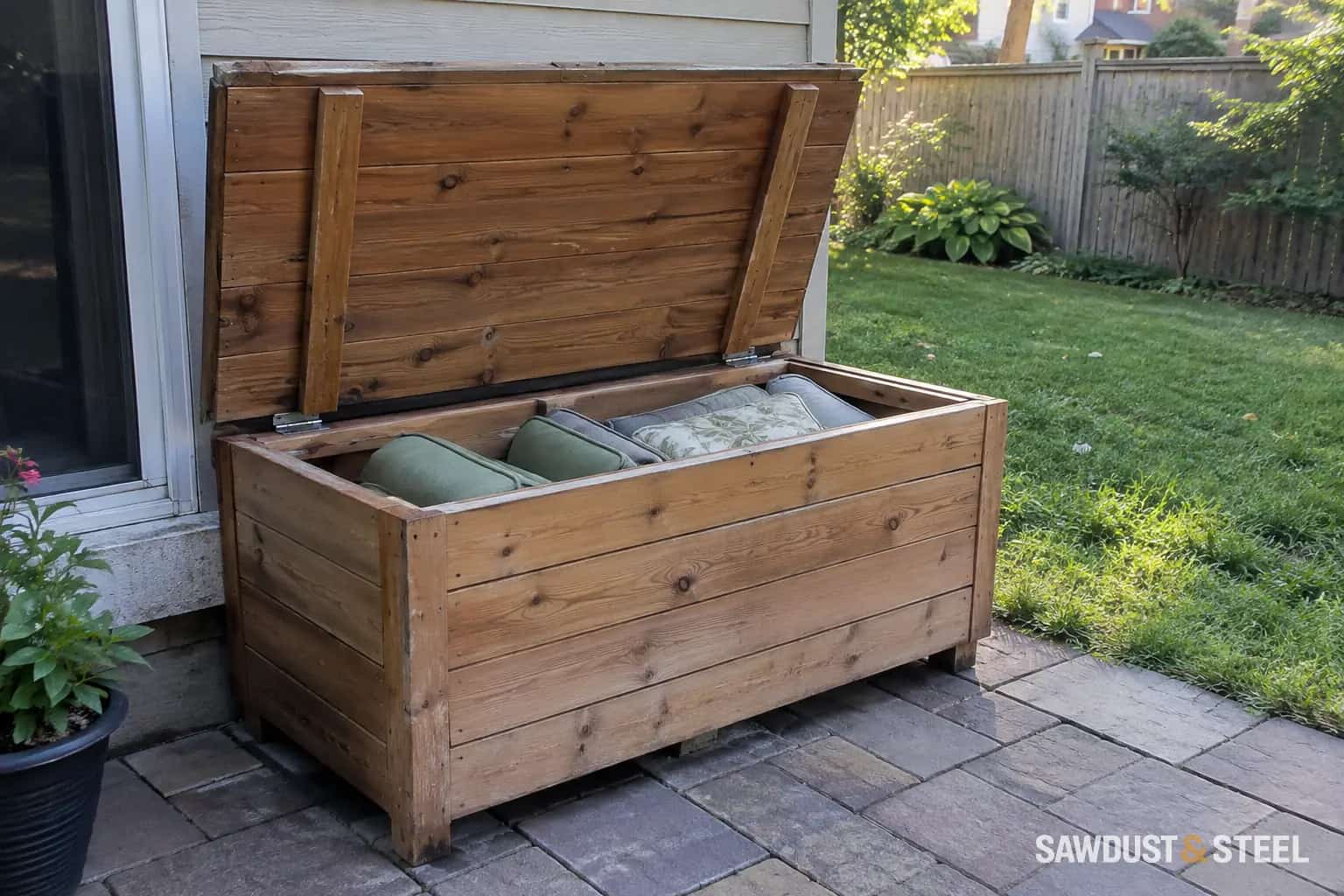
Start with an empty, dry box
A cushion can feel dry on top and still carry moisture in its filling. Remove everything and inspect the lid overlap, hinges, base and intended drainage openings. Wipe the interior dry and note existing damage. Put moisture-sensitive belongings somewhere reliably dry while diagnosing the box. A garden storage box is not automatically equivalent to indoor storage.
After rain
Inspect lid overlap, seams and surface drainage.
After cool dry nights
Consider condensation and stored moisture.
After contents go back
Check whether textiles were dry throughout.
Match the wet pattern to the weather
Water trails appearing after wind-driven rain point toward a lid or seam problem. Droplets across a cool lid after a dry night can fit condensation; wet contents and humid air provide the moisture. These clues are useful, but more than one cause can exist. Check the box on a level surface, since distortion can alter lid contact and runoff paths.
For a box stored beside a planter, check Does a Wooden Planter Need a Liner? if drainage water is repeatedly wetting the storage area.
Ventilate without defeating the design
Clear the manufacturer's vents and drainage openings rather than adding random holes. A hole that admits air may also admit rain or pests. Ask the maker about compatible replacement seals or lid adjustments. Fully dry cushions before packing them and avoid compressing them tightly against walls. For long damp seasons, move textiles indoors if the box cannot keep them reliably dry. Desiccant is a finishing measure, not a repair for a leak.
Keter describes storage boxes as weather-resistant rather than submersible, and advises against putting damp cushions into a closed box. Keter: foundation, storage and care questions.
Before you finish
- Diagnose with the box empty and dry.
- Keep designed vents and drains clear.
- Do not drill before checking the model guidance.