
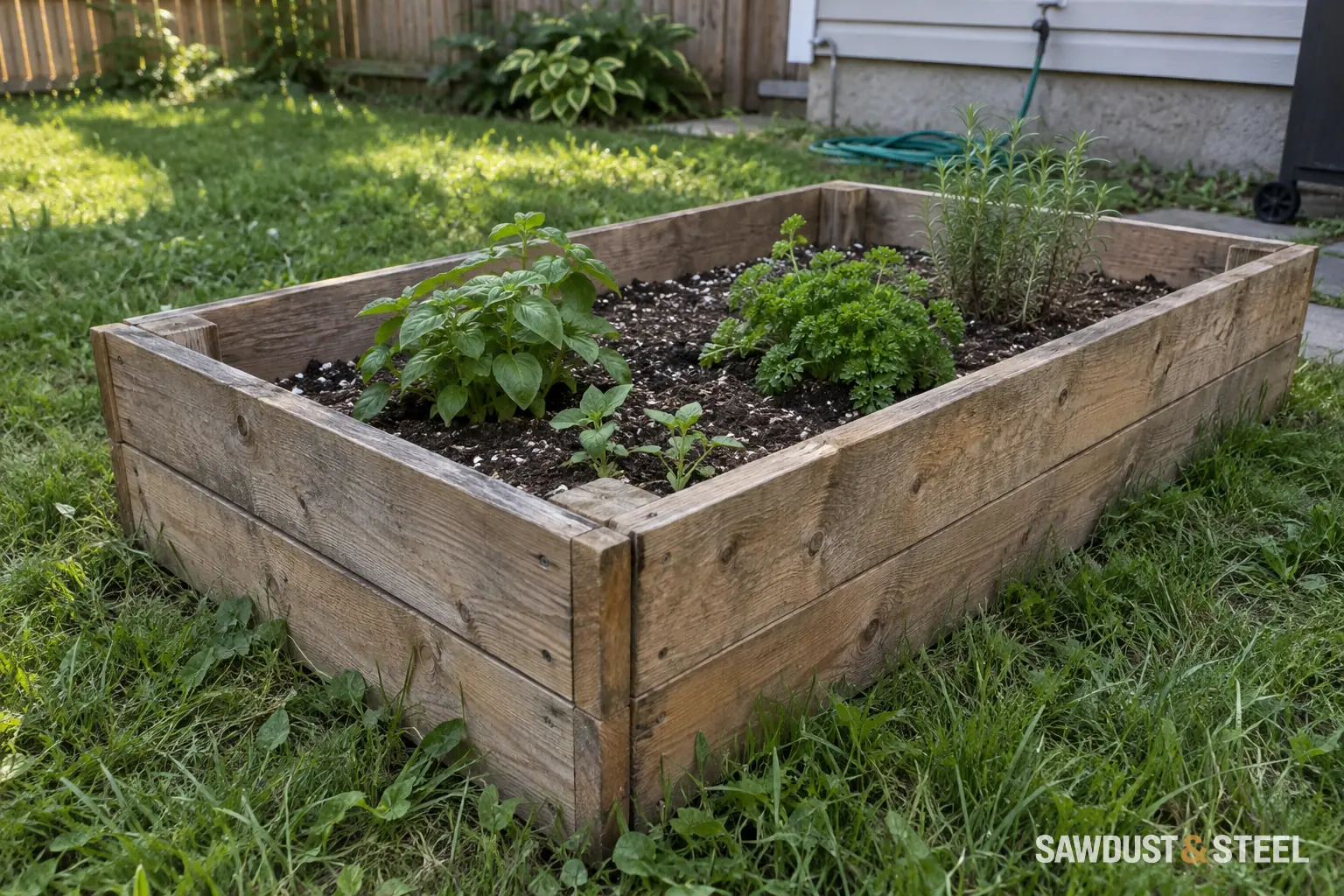
Decide what the liner is supposed to do
An open-bottom garden bed, an elevated wooden box and a decorative sleeve around a removable pot are different arrangements. A fabric that retains soil is not a waterproof barrier. A waterproof sheet can protect a sidewall but needs a planned outlet. Start with the planter maker's design and the plants' needs rather than buying a roll of plastic because the inside looks unfinished.
Growing medium
Water must leave the root zone as intended.
Liner outlet
Maintain the designed opening rather than a sealed pocket.
Wooden base
Keep the next outlet unobstructed.
Support surface
Let discharge escape without soaking the supporting wood.
Give water a continuous route out
Trace water from the growing medium through the liner, through the box and clear of its support surface. Openings that do not line up can leave water trapped between layers. Keep outlets accessible and avoid pressing them flat against paving or a deck. A removable inner pot with its own drainage can simplify a decorative box, provided the outer box does not collect the runoff.
For herbs and vegetables, choose suitable garden-bed wood before deciding on a liner.
| Arrangement | Layer order | Avoid |
|---|---|---|
| Open-bottom bed | Soil inside sidewalls → existing ground below | Turning the bottom into a waterproof bowl |
| Elevated wooden box | Soil → appropriate retaining layer/liner → aligned base outlets → clear space below | Fabric mistaken for waterproofing; outlet blocked against decking |
| Decorative outer box with a pot | Growing pot → pot drain → outer-box drainage → safe discharge | Water left standing in the outer sleeve |
Permeable fabric can keep soil from washing through a gap, but it does not keep the timber dry. A waterproof liner needs deliberately formed, maintained outlets; a few random punctures may drain into the timber joint instead. The maker’s liner guidance is useful for that distinction. Before filling, pour a little water at several positions and watch where it emerges. A planter above a wood deck with cupped boards also needs a support detail that does not trap runoff in the board hollows.
Make seasonal inspection possible
During the season, check for roots, sediment and leaves blocking the outlets. Never rely on a liner to justify unsuitable lumber for edible planting. If the planter sits on a deck, its saturated weight and the surface drainage are separate questions; a working drain does not demonstrate that the deck can carry the load.
Planter maker Trelush warns that waterproof liners need drainage aligned with the planter base; a liner is optional in some designs. Trelush: lining a wooden planter.
Before you finish
- Identify whether the liner retains soil or blocks water.
- Inspect the empty box before filling it.
- Keep the drainage route accessible.