
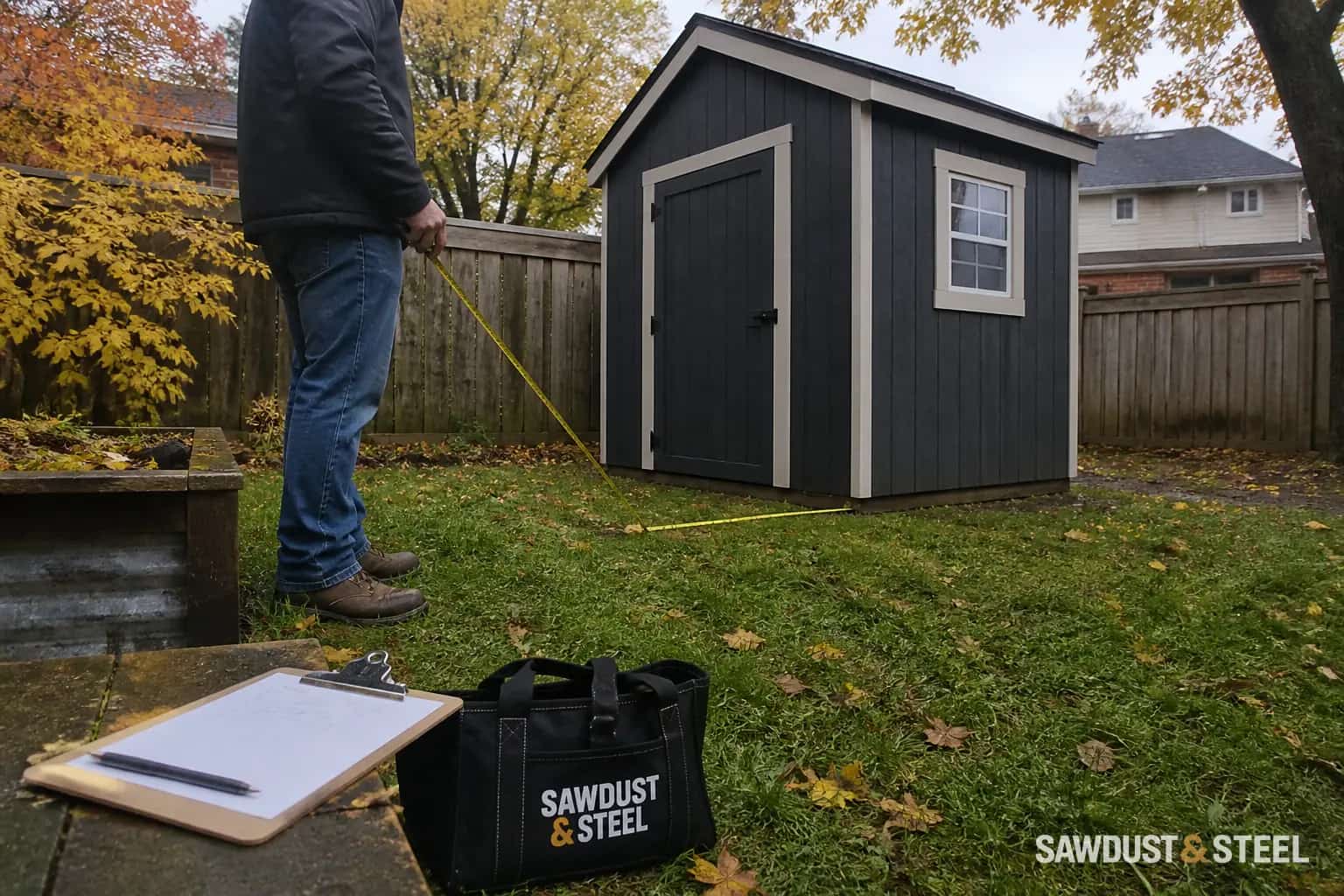
Read the gaps around the closed door
Mark where the door rubs without forcing it. A narrowing gap at one top corner suggests a different problem from a uniformly swollen bottom edge. Check hinges for loose screws and look for a latch that has changed height. Photograph both the closed door and the full shed, including its base. A crooked opening may be easier to see in a straight-on photo than while standing in the doorway.
Hinge shifts
Repair its fixing in sound material.
Opening changes shape
Investigate the base and shed alignment.
Wood swells locally
Find the wetting source before trimming.
Check the shed before adjusting the slab
Look for a sunken corner, pavers that have tipped or a floor that now slopes differently. Compare the two opening diagonals where accessible. Have a shifted base repaired with the shed safely supported; do not jack a loaded shed using an improvised stack of blocks. For resin or metal doors, trimming is generally not an appropriate assumption. Get the model's adjustment instructions first.
If rubbing arrives with a soft threshold area, investigate The Shed Floor Feels Soft Near the Door before adjusting the door.
Recheck after the wet spell
If the opening remains square and only a wooden leaf is swollen, investigate roof runoff, exposed end grain and a ramp holding water against it. Let the cause and drying behaviour guide any subsequent carpentry. Taking a large shaving off a wet door may leave an oversized gap in summer. Restore the finish on any permitted cut, and test the latch and weather protection afterward.
Keter notes that an uneven foundation can put panels and doors out of alignment; this is a model-specific support issue, not simply a latch adjustment. Keter: foundation, storage and care questions.
Before you finish
- Identify the door material before considering a cut.
- Check the whole opening for square.
- Keep a shifted shed safely supported during repairs.