
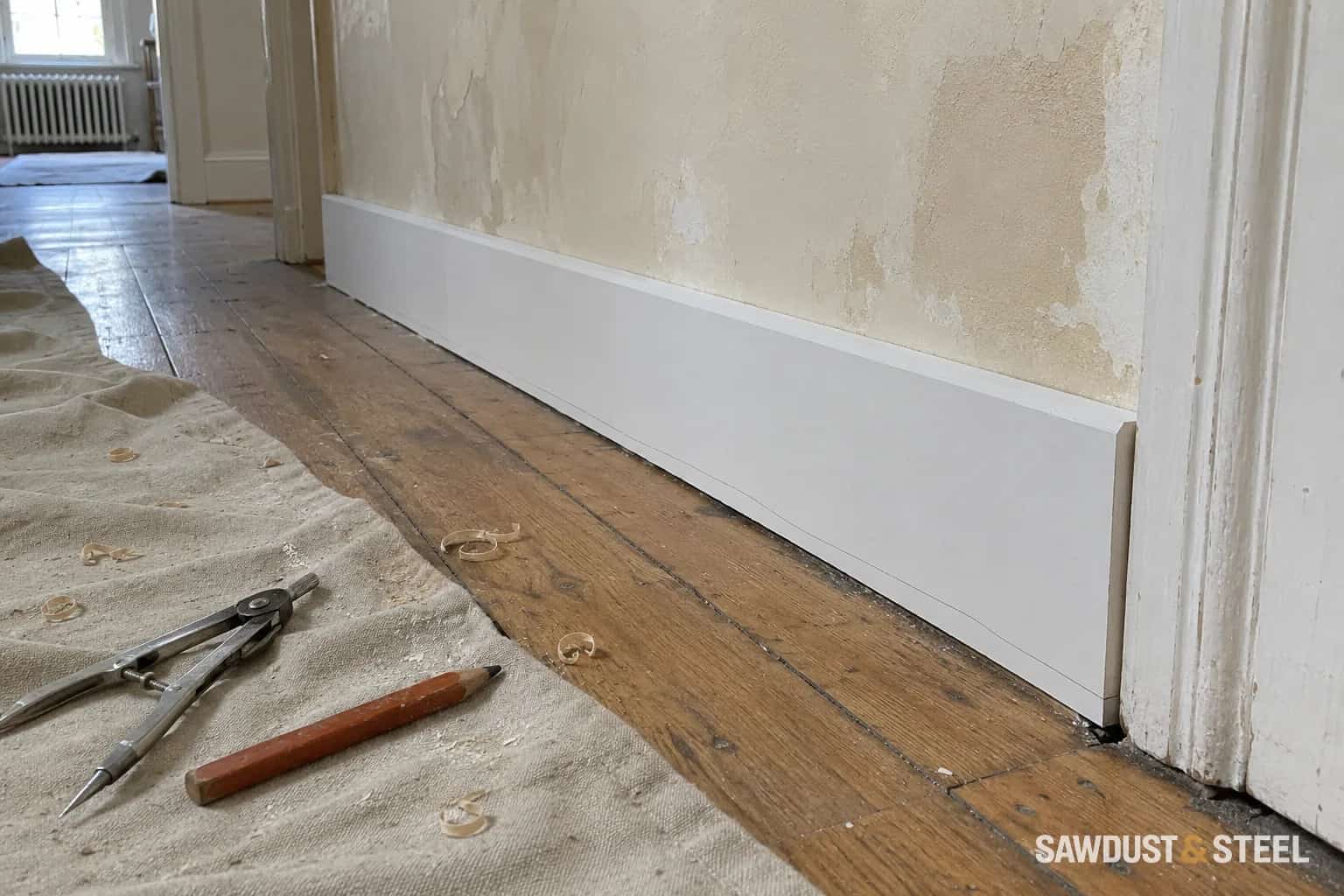
The line looked perfect until the tape came off with a strip of paint attached. Before touching up the scar, look at what came away: only the newest coat, several layers, or even the paper face of the wall.
Find the weak layer
A fresh coat may not have developed enough strength for masking. An older glossy, dusty or poorly prepared surface can also leave the new paint weakly bonded. If a broad sheet is releasing beyond the tape edge, the repair may need more than filling the visible strip.
Keep a piece of the removed material and note the paint, primer, tape and application dates. Ask the coating supplier which preparation and cure conditions apply. Avoid sanding unidentified older coatings until lead-paint questions are resolved.
Only the newest paint
Check coating cure and adhesion to the previous layer.
Several old layers
Investigate the existing coating system before more disturbance.
Wall paper or wood fibres
Repair the substrate with a compatible system before repainting.
Check the tape's job and time limit
Painter's tape, edge tape and seam tape are not interchangeable just because they come in convenient rolls. Ram Board: choosing surface-protection tapes distinguishes surface-contact tapes from aggressive products intended to join protection, and recommends a small compatibility test. Check the exact tape's permitted surfaces and removal window.
A tape rated for a long clean removal period on one sound surface may still be wrong for a newly painted wall. Heat, sunlight, texture and coating condition also belong in the conversation. Do not use a number printed on the package as a guarantee for every finish.
Repair a stable surface
Once the coating is known and the loose material has been dealt with appropriately, the repair needs a sound edge and a compatible preparation system. Torn drywall paper, bare wood and a simple paint ridge require different treatment. Prime as directed, then inspect the patch under the room's normal lighting before repainting a larger area.
A small touch-up can show because of sheen or texture even when the colour matches. Use the original product details, not just a colour name. If the repair remains visible, extending the finish to a natural boundary may look better than repeated tiny dabs.
Change the next masking attempt
Wait for the finish manufacturer's masking guidance, test discreetly and remove tape according to its own instructions. If lifting starts again, stop and reassess the bond. For floor protection, attach sheets to one another where the system allows rather than borrowing a vulnerable painted edge for every fixing.
Keep the tested tape and coating combination in the project notes. That is more useful than deciding that all blue tape is safe or that all tape is the enemy.