
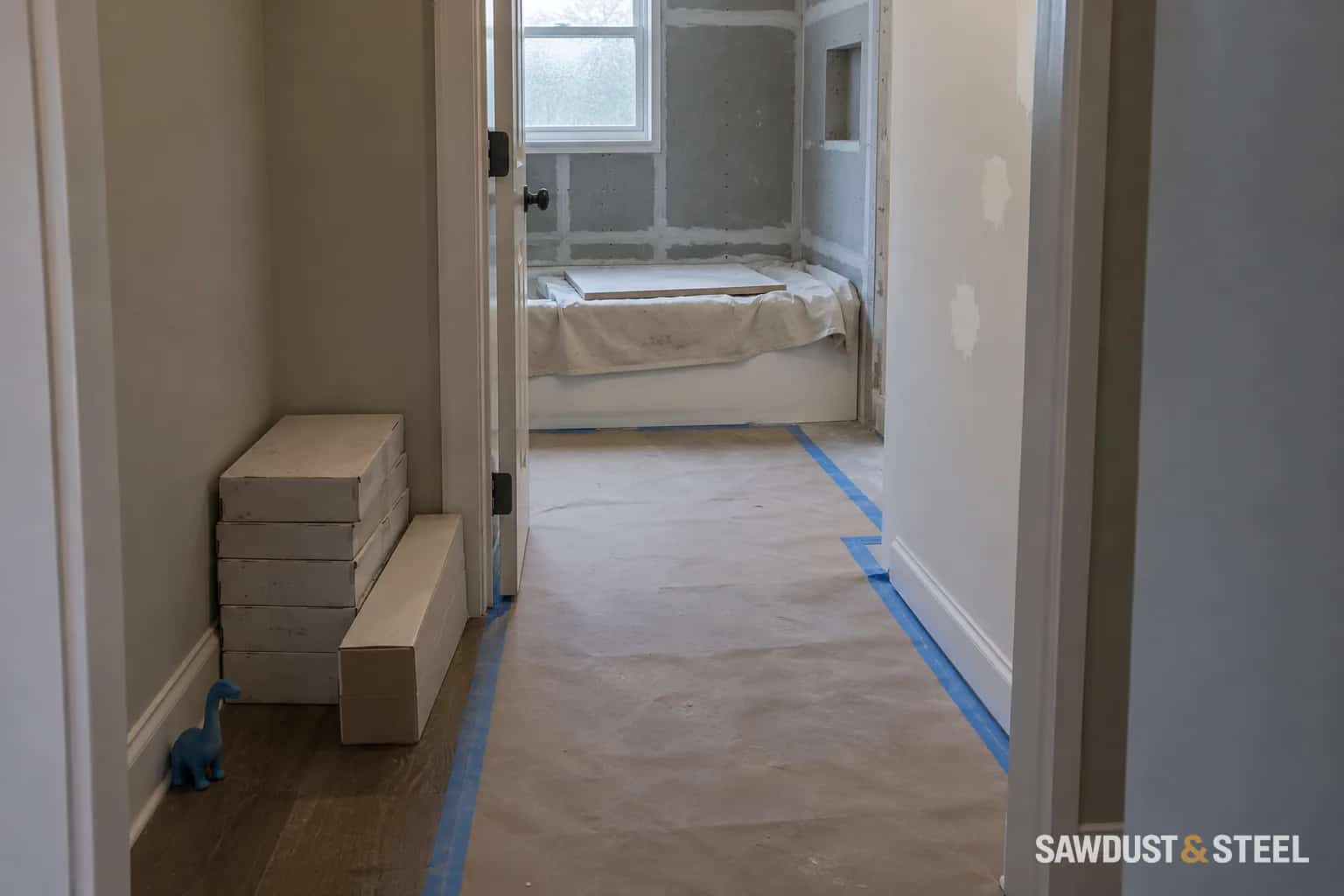
A floor can be scratched without anyone stepping directly on it. Put grit under a protective sheet, roll a loaded trolley over it, and the grit does the work. Preparation matters as much as the thickness of the covering.
Ask what the floor can tolerate
Identify the flooring and coating, including when it was installed or refinished. Ask the flooring or finish supplier when covering and heavy traffic are allowed. Dry to the touch is not a promise that adhesive tape, furniture or impermeable film is acceptable.
Ram Board: temporary floor protection describes its board as breathable temporary protection with resistance to spills. That is a product feature, not permission to ignore a coating's instructions. Specify a compatible protection system rather than asking for 'something over the floor'.
Foot traffic and dust
Clean the surface and secure a compatible covering along the route.
Wet work
Select appropriate spill protection and remove wet sections promptly.
Fresh finish
Get covering and tape permission from the finish manufacturer.
Heavy deliveries
Agree handling and load protection with the delivery team.
Clean, cover and secure the route
Remove grit before laying protection. Cover the working route, turning areas and the places where equipment will be set down. At room boundaries, make the edge visible and stable so it does not curl into a trip point. Keep doors operating and escape routes clear.
Use the appropriate joining tape on the covering. Ram Board: choosing surface-protection tapes warns against applying aggressive seam tape directly to floors or delicate surfaces. Any tape intended to contact a finish still needs compatibility checking and a small inconspicuous test. The paint-lifting guide explains why colour alone does not identify a tape's suitability.
Protection is something you maintain
Lift selected areas periodically to check for trapped grit, moisture or staining. Replace crushed, wet or contaminated sections. Clean spills promptly rather than relying on the covering until the end of the renovation. A damp patch underneath can remain hidden long after the top looks dry.
Agree who does this and how often the route is inspected. Inspect again after deliveries and demolition, when the load and debris change. Do not add layer after layer over a problem you have not looked at.
Plan the heavy moves separately
Rolling an appliance has different demands from walking through with a paint tray. Ask the delivery team what surface protection and handling method it needs, and coordinate before arrival. Cardboard alone should not be assumed to distribute a concentrated wheel load safely.
For steps and corners, use a separate delivery-route plan. Photograph the clean floor before covering and after removal. That gives everyone a useful condition record without making the hallway a permanent obstacle course.